Vicente Adrián, Rivero Pedro J, Palacio José F, Rodríguez Rafael
Engineering Department, Campus de Arrosadía S/N, Public University of Navarre, 31006 Pamplona, Spain.
Campus de Arrosadía S/N, Institute for Advanced Materials and Mathematics (INAMAT2), Public University of Navarre, 31006 Pamplona, Spain.
Polymers (Basel). 2021 Feb 1;13(3):464. doi: 10.3390/polym13030464.
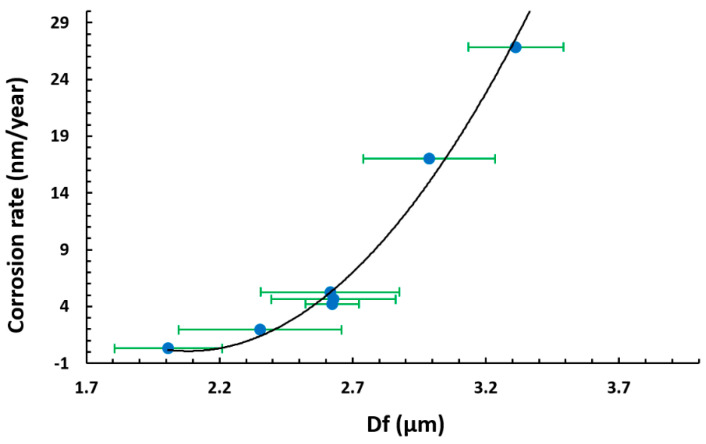
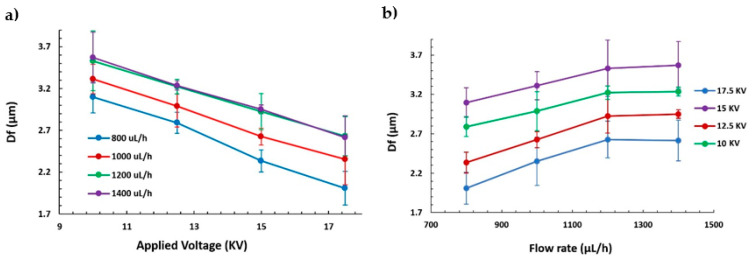
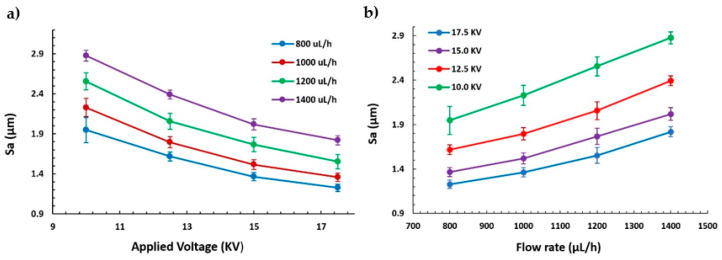
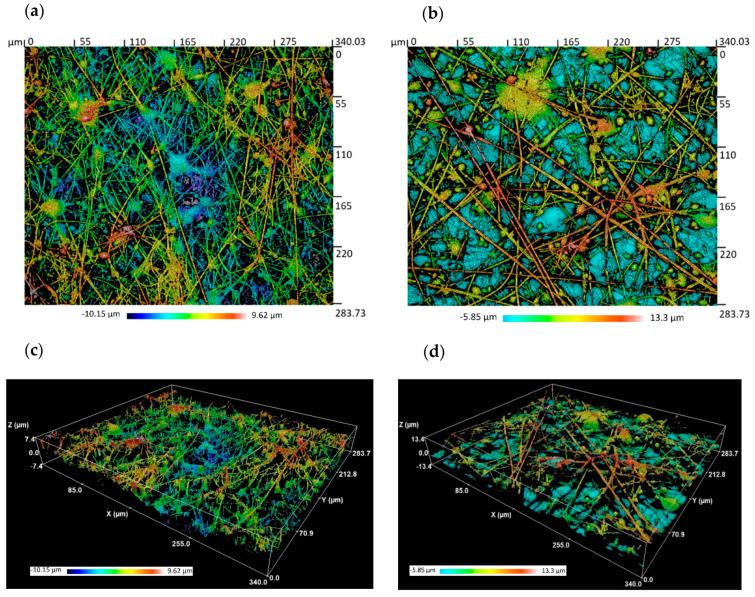
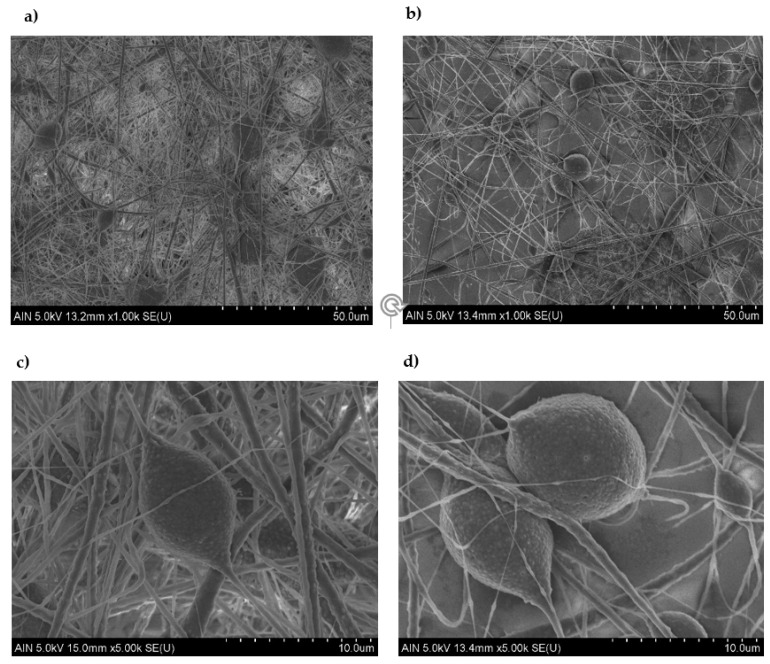
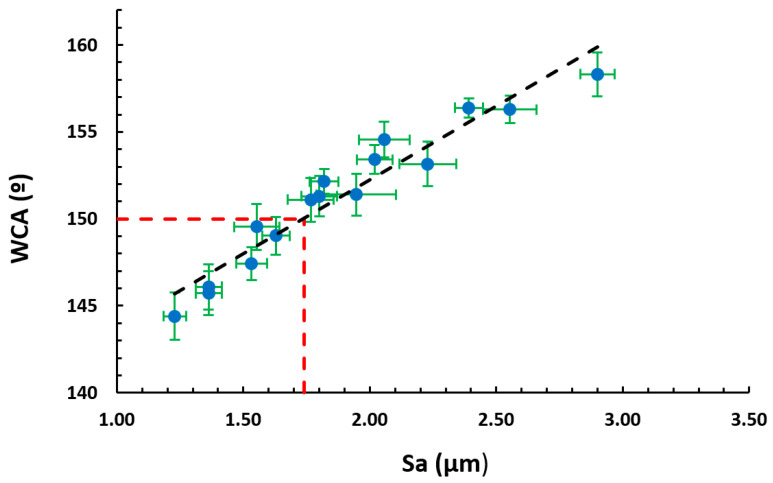
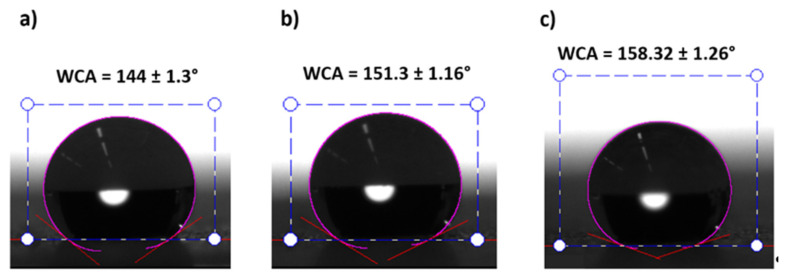
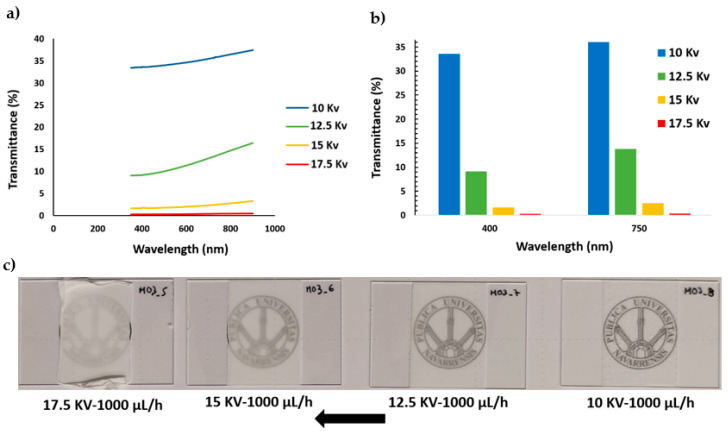
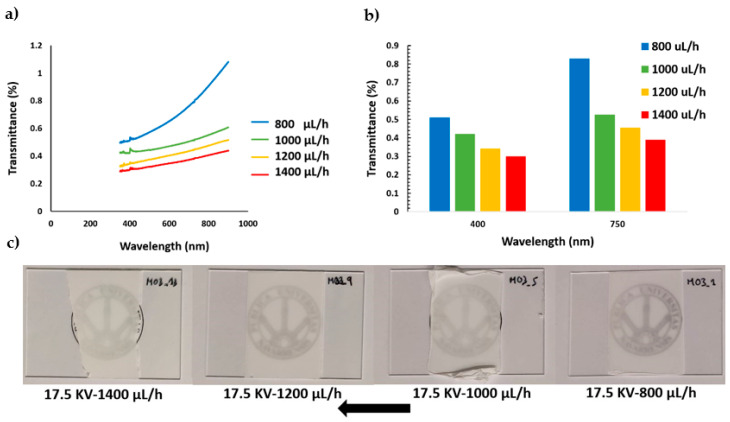
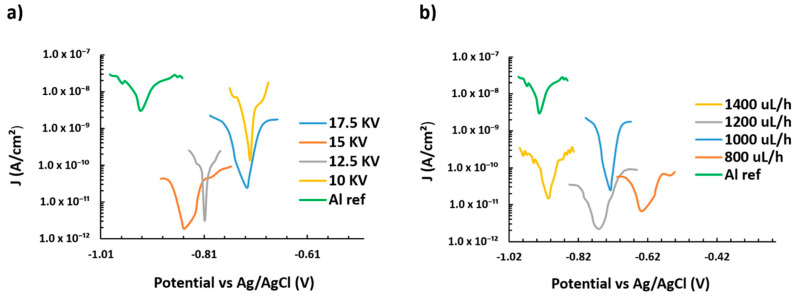
Among the various polymeric options employed for the deposition of electrospun coatings, poly(vinylidene fluoride) (PVDF) has been widely investigated thanks to its excellent mechanical properties, high chemical resistance, and good thermal stability. In this work, the electrospinning technique is used for the fabrication of functional PVDF fibers in order to identify and evaluate the influence of the experimental conditions on the nanofiber properties in terms of optical transmittance, wettability, corrosion resistance, and surface morphology. Some of these properties can play a relevant role in the prevention of ice formation in aircrafts. According to this, a matrix of 4 × 4 samples of aluminum alloy AA 6061T6 was successfully coated by controlling two operational input parameters such as the resultant applied voltage (from 10 up to 17.5 KV) and the flow rate (from 800 up to 1400 µL/h) for a fixed polymeric precursor concentration (15 wt.%). The experimental results have shown a multilevel fiber-bead structure where the formation of a fiber mesh directly depends on the selected operational parameters. Several microscopy and surface analysis techniques such as confocal microscopy (CM), field emission scanning electron microscopy (FE-SEM), UV/vis spectroscopy, and water contact angle (WCA) were carried out in order to corroborate the morphology, transmittance, and hydrophobicity of the electrospun fiber composite. Finally, the corrosion behavior was also evaluated by electrochemical tests (Tafel curves measurement), showing that the presence of electrospun PVDF fibers produces a relevant improvement in the resultant corrosion resistance of the coated aluminum alloys.
在用于电纺涂层沉积的各种聚合物材料中,聚偏氟乙烯(PVDF)因其优异的机械性能、高耐化学性和良好的热稳定性而受到广泛研究。在这项工作中,采用电纺丝技术制备功能性PVDF纤维,以确定和评估实验条件对纳米纤维在光学透过率、润湿性、耐腐蚀性和表面形态方面性能的影响。其中一些性能在防止飞机结冰方面可能发挥重要作用。据此,通过控制两个操作输入参数,即合成施加电压(从10到17.5千伏)和流速(从800到1400微升/小时),在固定聚合物前驱体浓度(15重量%)的情况下,成功地在铝合金AA 6061T6的4×4样品矩阵上进行了涂层。实验结果显示出一种多级纤维-珠结构,其中纤维网的形成直接取决于所选的操作参数。为了证实电纺纤维复合材料的形态、透过率和疏水性,进行了几种显微镜和表面分析技术,如共聚焦显微镜(CM)、场发射扫描电子显微镜(FE-SEM)、紫外/可见光谱和水接触角(WCA)测量。最后,还通过电化学测试(塔菲尔曲线测量)评估了腐蚀行为,结果表明电纺PVDF纤维的存在使涂层铝合金的耐腐蚀性有了显著提高。