Hepp Johanna, Schmitz Sara E, Urbild Jana, Zauner Kathrin, Niedtfeld Inga
Department of Psychosomatic Medicine and Psychotherapy, Central Institute of Mental Health, Medical Faculty Mannheim/Heidelberg University, J5, 68159, Mannheim, Germany.
University of Mannheim, Mannheim, Germany.
Borderline Personal Disord Emot Dysregul. 2021 Feb 3;8(1):5. doi: 10.1186/s40479-020-00143-5.
Cognitive models of post-traumatic stress disorder (PTSD) propose that trauma entails cognitive alterations of increased distrust and perceived threat from others. We tested whether these predictions also hold in individuals with varying levels of childhood maltreatment (CM), which is much more prevalent than traumatic events as required for a PTSD diagnosis. We hypothesized that higher levels of CM would entail greater distrust and perceived threat, and that distrust would be more change-resistant in participants with more CM.
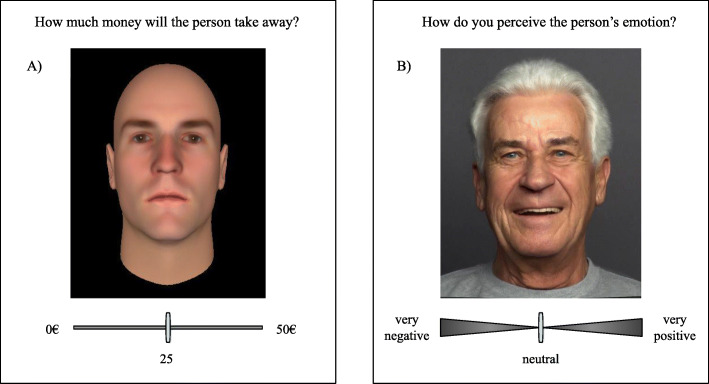
The study was pre-registered; the pre-registration protocol, data, and code are available at https://osf.io/pufy2/ . We recruited 549 participants (M age = 29.2, 74.5% women) for an online study via websites related to CM, Borderline Personality Disorder, and via snowball method on social media. Participants self-reported their level of CM on the childhood trauma questionnaire (CTQ). Next, they played two rounds of a hypothetical distrust game, indicating the perceived trustworthiness of avatars by way of estimating expected monetary deductions from them (i.e. higher amounts indicating greater distrust). After the first round, we provided participants with the feedback that very little money was taken from them. We expected those with more CM to be less responsive to the positive feedback and to adapt their estimates less in the subsequent round. Following the distrust game, participants completed an emotion rating task in which they rated the emotional expressions of 60 faces on a scale from 'very negative' to 'very positive'. We included angry, fearful, and happy facial expressions, and expected individuals with higher CM levels to provide more negative ratings. We conducted linear mixed effects models with random intercepts for raters and stimuli (crossed), and modelled random slopes for all within-person predictors.
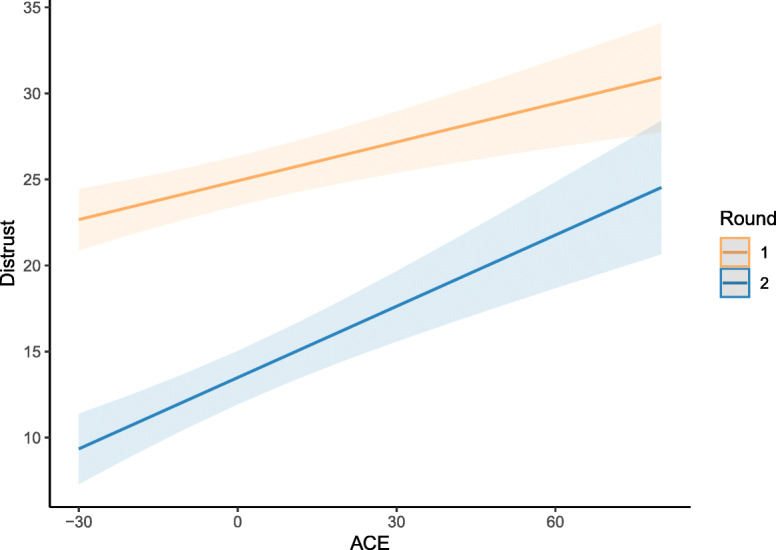
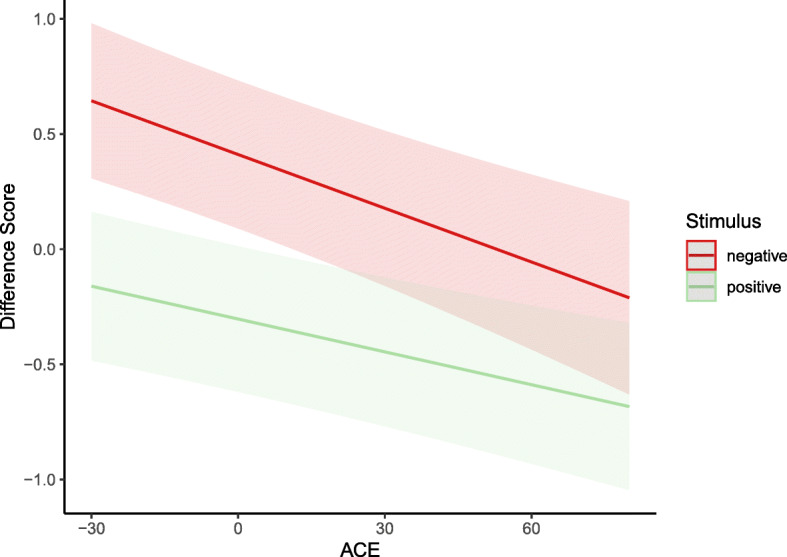
As hypothesized, higher levels of CM were associated with higher levels of distrust and a weaker decrease in distrust following positive feedback. Further supporting our hypotheses, individuals with higher levels of CM showed more negatively shifted emotion ratings.
Increased distrust and perceived interpersonal threat following trauma, as proposed in cognitive models of PTSD, likely also apply to individuals with CM, following a dose-response relationship. We discuss clinical implications of considering any level of CM as a potentially relevant treatment-factor, even when a trauma-related disorder is not the main diagnosis, and propose future research avenues.
创伤后应激障碍(PTSD)的认知模型提出,创伤会导致认知改变,表现为对他人的不信任增加和感知到的威胁加剧。我们测试了这些预测是否也适用于童年虐待(CM)程度不同的个体,童年虐待比PTSD诊断所需的创伤事件更为普遍。我们假设,更高水平的CM会导致更大的不信任和感知到的威胁,并且在CM程度更高的参与者中,不信任更难改变。
正如假设的那样,更高水平的CM与更高水平的不信任以及积极反馈后不信任的较弱降低相关。进一步支持我们的假设的是,CM水平较高的个体表现出更消极的情绪评分偏移。
PTSD认知模型中提出的创伤后不信任增加和感知到的人际威胁,可能也适用于CM个体,遵循剂量反应关系。我们讨论了将任何水平的CM视为潜在相关治疗因素的临床意义,即使当与创伤相关的障碍不是主要诊断时,并提出了未来的研究途径。