Fan Jianwei, Duan Lifang, Wu Nan, Xu Xiaofan, Xin Jiaqi, Jiang Shengnan, Zhang Cheng, Zhang Hong
Basic Medical Academy, Shaanxi University of Chinese Medicine, Xianyang, China.
Medical Experiment Center, Shaanxi University of Chinese Medicine, Xianyang, China.
Front Pharmacol. 2021 Jan 18;11:607133. doi: 10.3389/fphar.2020.607133. eCollection 2020.
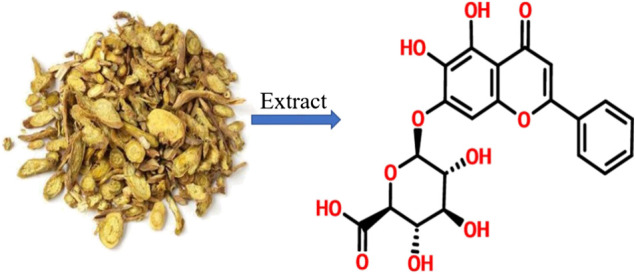
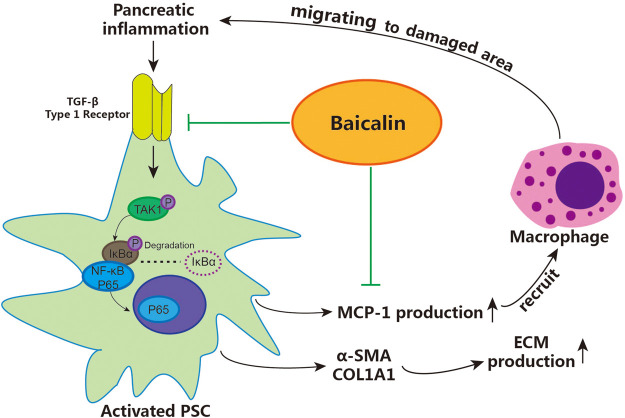
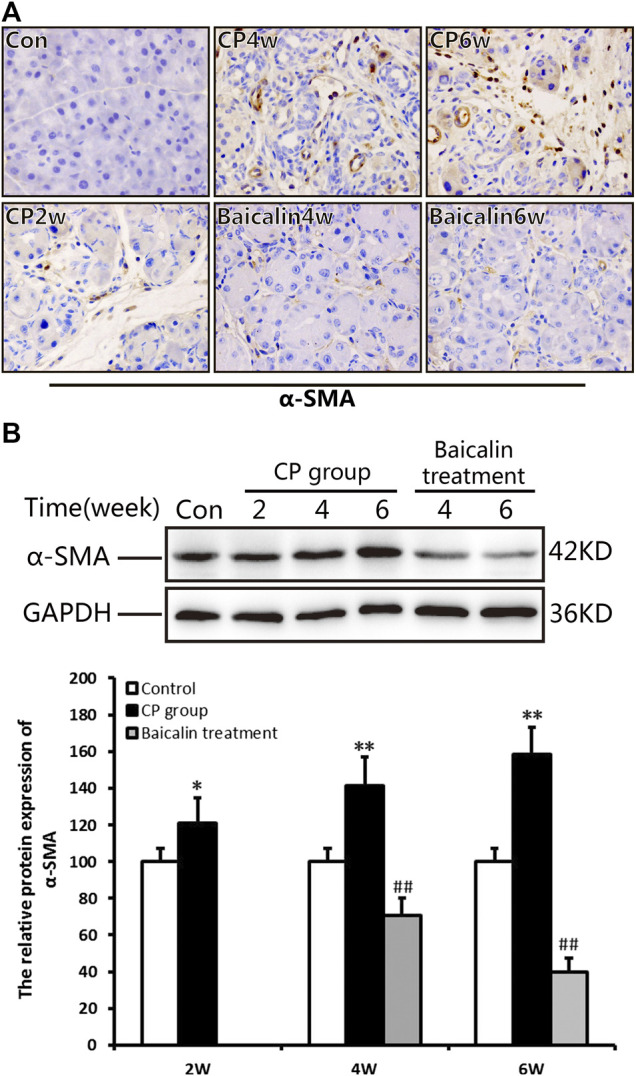
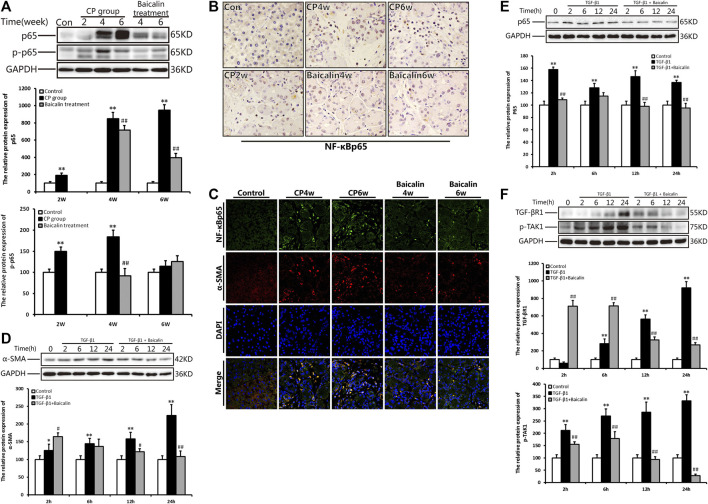
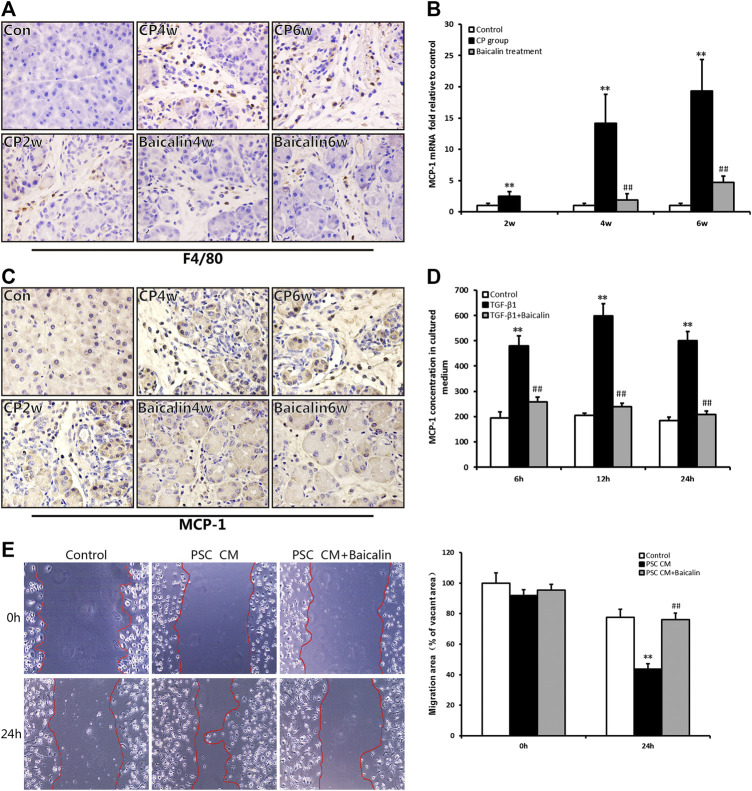
Pancreatic inflammation and fibrosis are typical pathological features in chronic pancreatitis (CP). Activated pancreatic stellate cells (PSCs) have been regarded as the core event in the development of pancreatic fibrosis and are considered to be the key target for treatment of CP. Baicalin (CHO), the main chemical composition of Baikal skullcap in the traditional Chinese medicines Dachaihu decoction (DCHD) and Xiaochaihu decoction (XCHD), has shown significant effects in the treatment of pancreatic fibrosis in CP mice; however, whether baicalin can inhibit the activation of PSCs and its underlying mechanism remain unclear. In this study, the influence of baicalin on activated PSCs and was investigated, and the results showed that Baicalin could significantly ameliorate the degree of pancreatic inflammation and fibrosis, while decreasing the levels of alpha-smooth muscle actin (α-SMA), F4/80 (surface markers of mouse macrophages), nuclear factor kappa-B (NF-κB), monocyte chemotactic protein 1 (MCP-1), and collagen type I alpha 1 (COL1A1)in the pancreas. Moreover, NF-κB and α-SMA were co-expressed in the pancreas of CP mice. Baicalin treatment markedly reduced the expression of co-location of α-SMA and NF-κB. , the protein expression levels of transforming growth factor-β receptor 1 (TGF-βR1), phosphorylated TGF-β activated kinase 1 p-TAK 1, and NF-κBp65 in PSCs were all remarkably reduced after treatment with baicalin. In addition, baicalin could inhibit MCP-1 mRNA expression in supernatant of activated PSCs, as well as the excessive migration of macrophages. Taken together, our findings indicated that baicalin could inhibit the TGF-β1/TGF-βR1/TAK1/NF-κB signaling pathway of activated PSCs, reduce the secretion of MCP-1, and further decrease the infiltration of macrophages and inflammation cells of the local microenvironment of the pancreas. Thus, this study provides a reliable experimental basis for baicalin in the prevention and treatment of CP.
胰腺炎症和纤维化是慢性胰腺炎(CP)的典型病理特征。活化的胰腺星状细胞(PSC)被认为是胰腺纤维化发展的核心事件,也是CP治疗的关键靶点。黄芩苷(CHO)是中药大柴胡汤(DCHD)和小柴胡汤(XCHD)中黄芩的主要化学成分,已显示出对CP小鼠胰腺纤维化的显著治疗作用;然而,黄芩苷是否能抑制PSC的活化及其潜在机制仍不清楚。在本研究中,研究了黄芩苷对活化PSC的影响,结果表明黄芩苷可显著改善胰腺炎症和纤维化程度,同时降低胰腺中α-平滑肌肌动蛋白(α-SMA)、F4/80(小鼠巨噬细胞表面标志物)、核因子κB(NF-κB)、单核细胞趋化蛋白1(MCP-1)和I型胶原α1(COL1A1)的水平。此外,NF-κB和α-SMA在CP小鼠胰腺中共同表达。黄芩苷治疗显著降低了α-SMA和NF-κB共定位的表达。黄芩苷处理后,PSC中转化生长因子-β受体1(TGF-βR1)、磷酸化TGF-β活化激酶1 p-TAK 1和NF-κBp65的蛋白表达水平均显著降低。此外,黄芩苷可抑制活化PSC上清液中MCP-1 mRNA的表达,以及巨噬细胞的过度迁移。综上所述,我们的研究结果表明,黄芩苷可抑制活化PSC的TGF-β1/TGF-βR1/TAK1/NF-κB信号通路,减少MCP-1的分泌,并进一步减少胰腺局部微环境中巨噬细胞和炎症细胞的浸润。因此,本研究为黄芩苷预防和治疗CP提供了可靠的实验依据。