Kivle Kjetil, Lindland Elisabeth S, Mjaaland Knut Erik, Svenningsen Svein, Nordsletten Lars
Division of Orthopaedic Surgery, Oslo University Hospital, Oslo, Norway.
Institute of Clinical Medicine, Faculty of Medicine, University of Oslo, Oslo, Norway.
Bone Jt Open. 2021 Jan 21;2(1):40-47. doi: 10.1302/2633-1462.21.BJO-2020-0179.R1. eCollection 2021 Jan.
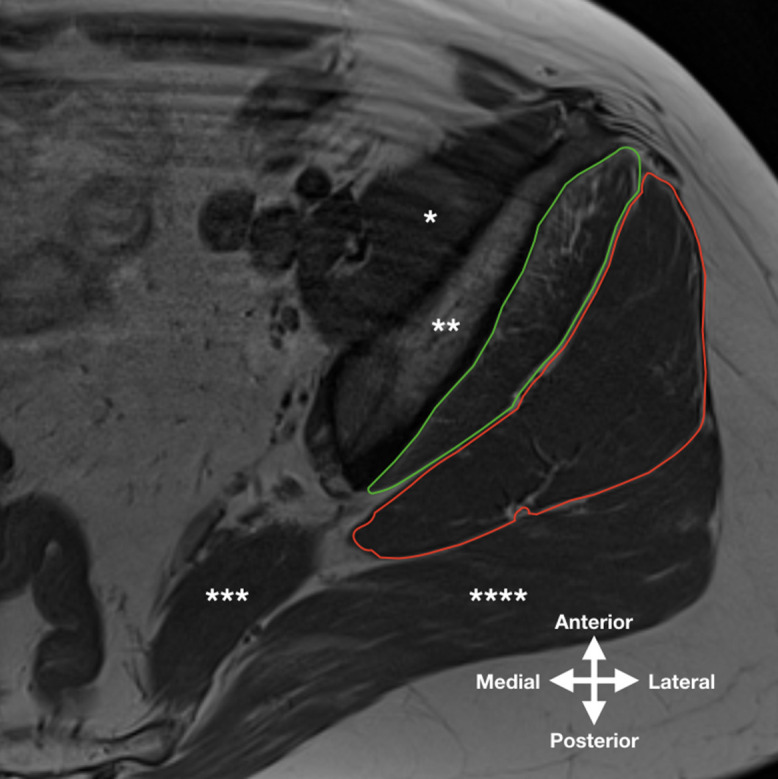
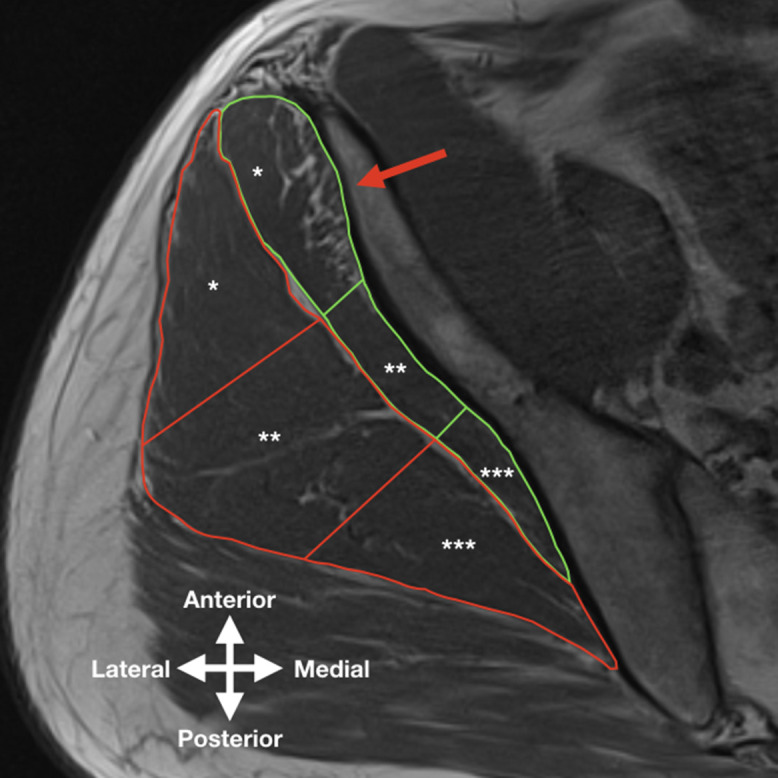
The gluteus minimus (GMin) and gluteus medius (GMed) have unique structural and functional segments that may be affected to varying degrees, by end-stage osteoarthritis (OA) and normal ageing. We used data from patients with end-stage OA and matched healthy controls to 1) quantify the atrophy of the GMin and GMed in the two groups and 2) describe the distinct patterns of the fatty infiltration in the different segments of the GMin and GMed in the two groups.
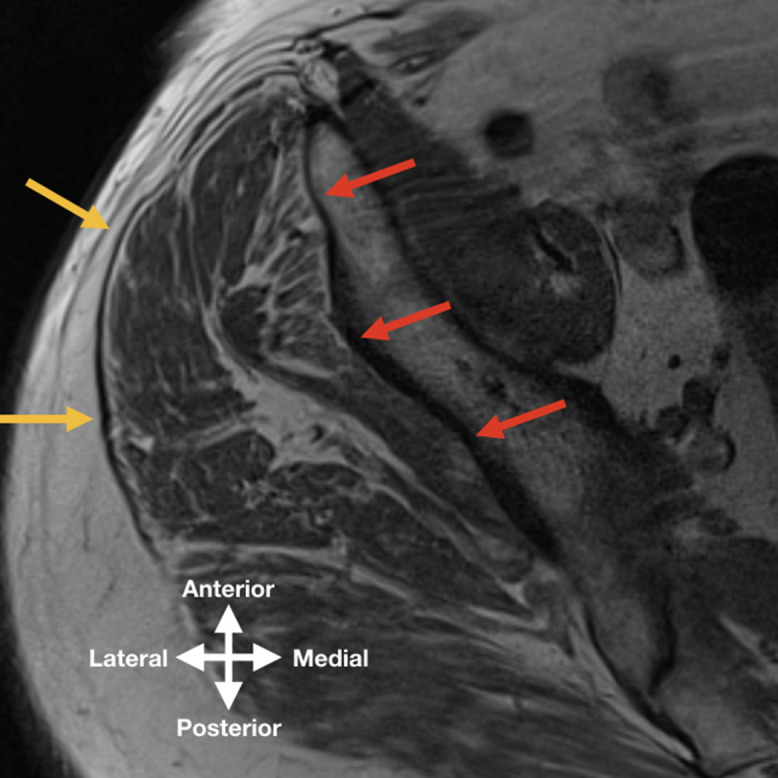
A total of 39 patients with end-stage OA and 12 age- and sex frequency-matched healthy controls were prospectively enrolled in the study. Fatty infiltration within the different segments of the GMin and the GMed was assessed on MRI according to the semiquantitative classification system of Goutallier and normalized cross-sectional areas were measured.
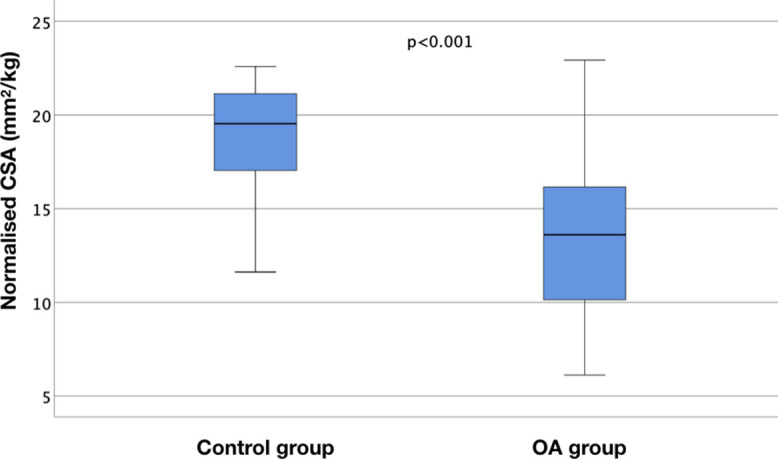
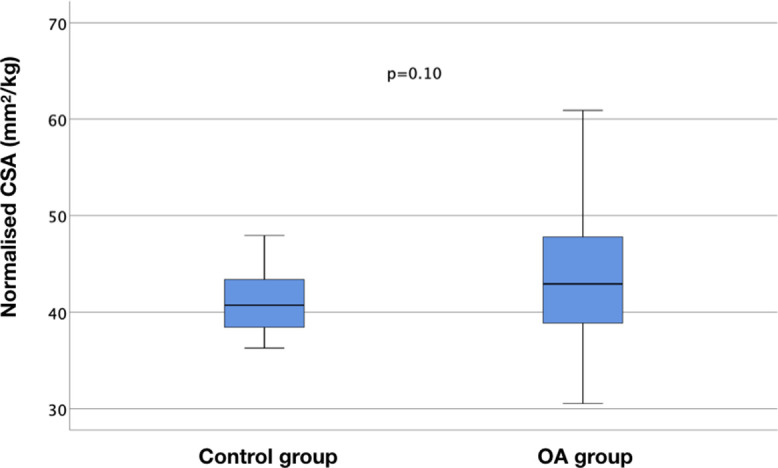
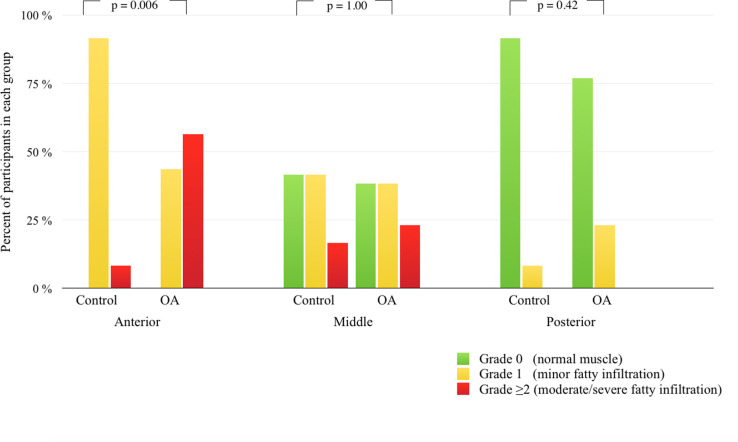
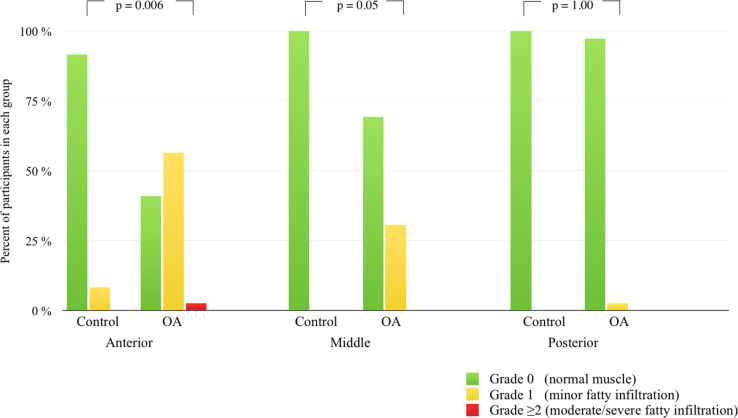
The GMin was smaller in the OA-group (p < 0.001) compared to the control group, but there was no group difference in the size of the GMed (p = 0.101). Higher levels of fatty infiltration were identified in the anterior segment of the GMin (p = 0.006) and the anterior (p = 0.006) and middle (p = 0.047) segments of the GMed in the OA group. All subjects in the control group had fatty infiltration of the anterior segment of the GMin, but all except one had no fatty infiltration in the entire GMed.
End-stage OA was associated with significant atrophy of the GMin and higher levels of fatty infiltration, particularly in the anterior segments of the GMin and GMed. Minor fatty infiltration of the anterior segment of GMin appears to be a normal part of ageing. Our study has demonstrated different patterns of atrophy and fatty infiltration between patients with end-stage OA and healthy matched peers.Cite this article: 2021;2(1):40-47.
臀小肌(GMin)和臀中肌(GMed)具有独特的结构和功能节段,可能会受到终末期骨关节炎(OA)和正常衰老的不同程度影响。我们使用来自终末期OA患者和匹配的健康对照的数据,以1)量化两组中GMin和GMed的萎缩情况,以及2)描述两组中GMin和GMed不同节段脂肪浸润的不同模式。
前瞻性纳入了39例终末期OA患者和12例年龄和性别频率匹配的健康对照进行研究。根据Goutallier半定量分类系统在MRI上评估GMin和GMed不同节段内的脂肪浸润情况,并测量标准化横截面积。
与对照组相比,OA组的GMin较小(p < 0.001),但GMed大小在两组间无差异(p = 0.101)。OA组中,GMin前节段(p = 0.006)以及GMed前节段(p = 0.006)和中间节段(p = 0.047)的脂肪浸润水平更高。对照组所有受试者GMin前节段均有脂肪浸润,但除1例之外,所有受试者GMed均无脂肪浸润。
终末期OA与GMin显著萎缩以及更高水平的脂肪浸润相关,尤其是在GMin和GMed的前节段。GMin前节段的轻微脂肪浸润似乎是衰老的正常部分。我们的研究表明终末期OA患者与健康匹配同龄人之间存在不同的萎缩和脂肪浸润模式。引用本文:2021;2(1):40 - 47。