Department of Clinical Medicine, School of Medicine, Taizhou University, Taizhou, China.
Graduate School of Medicine, Hebei North University, Zhangjiakou, China.
Cancer Sci. 2021 Apr;112(4):1624-1632. doi: 10.1111/cas.14837. Epub 2021 Mar 6.
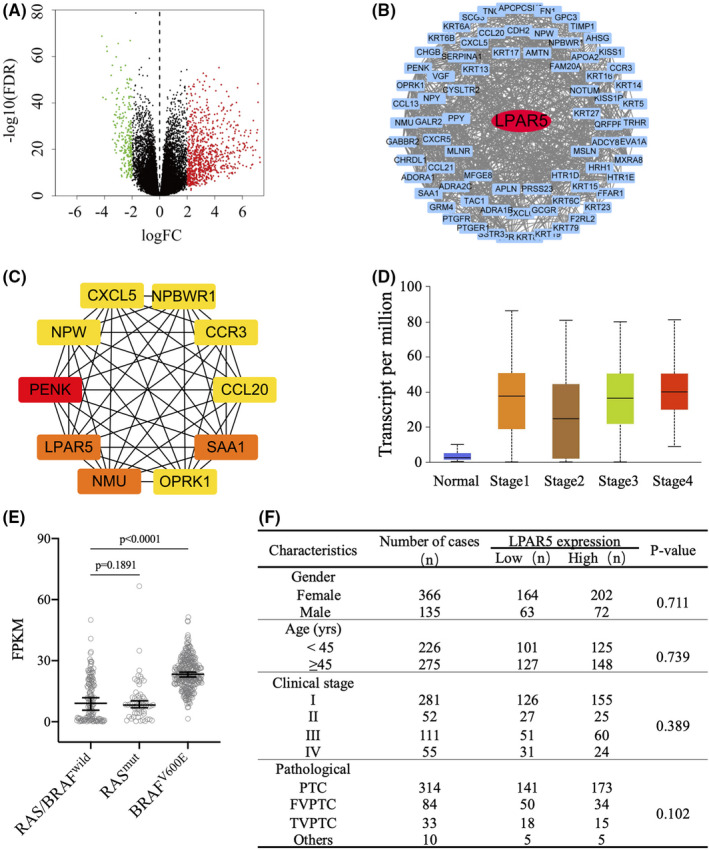
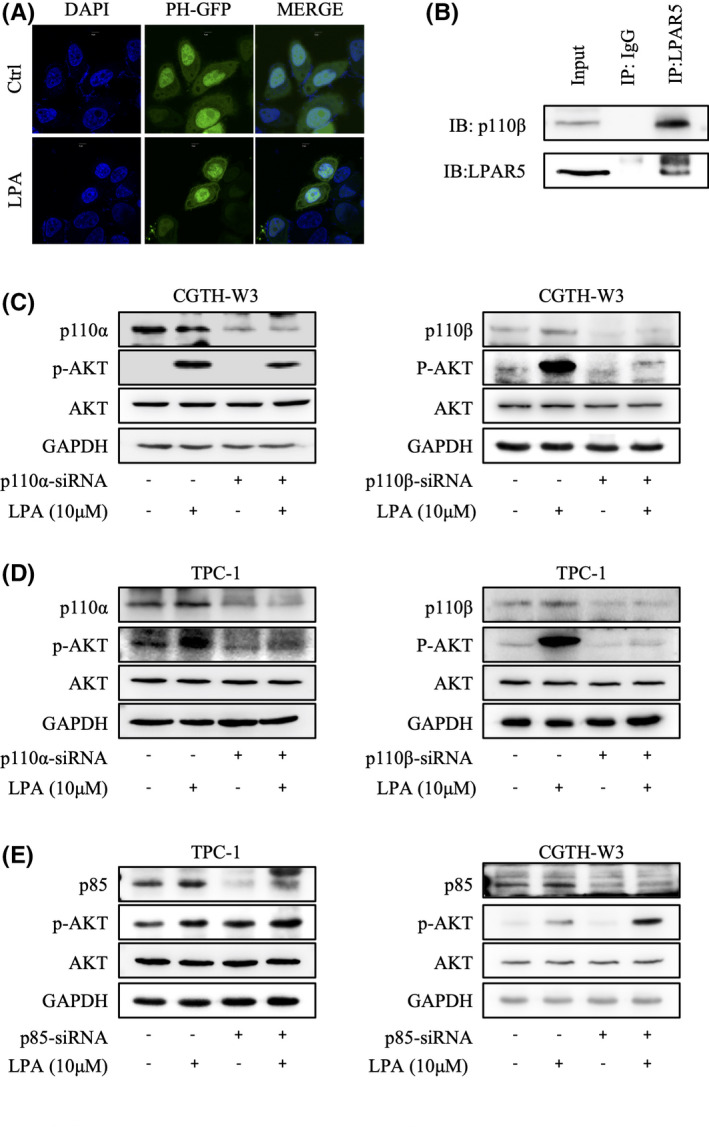
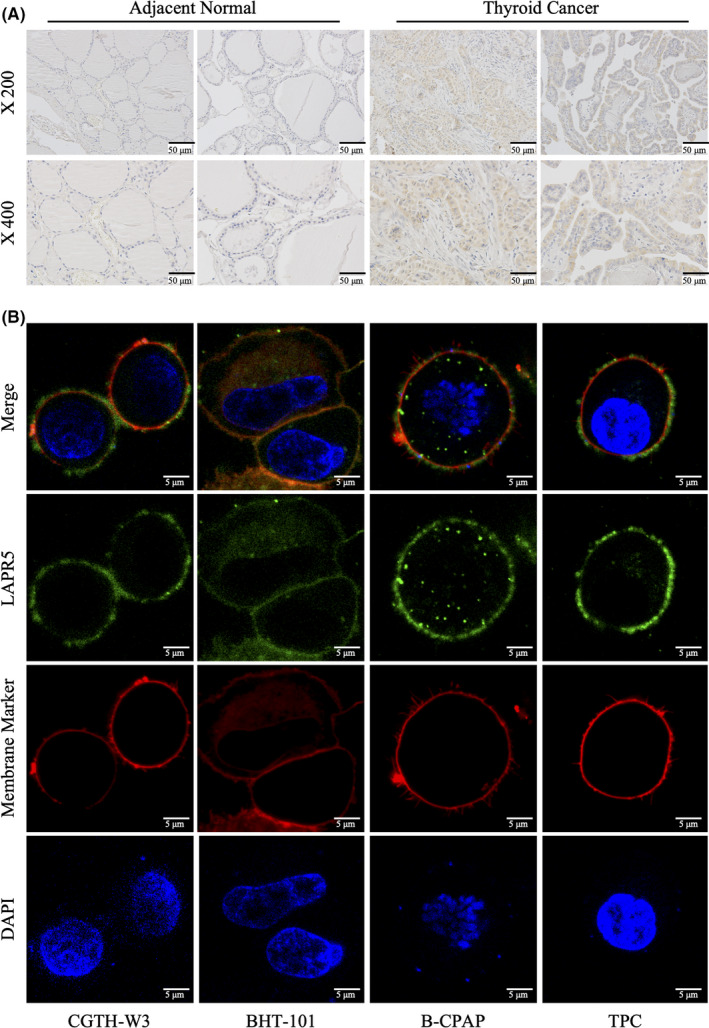
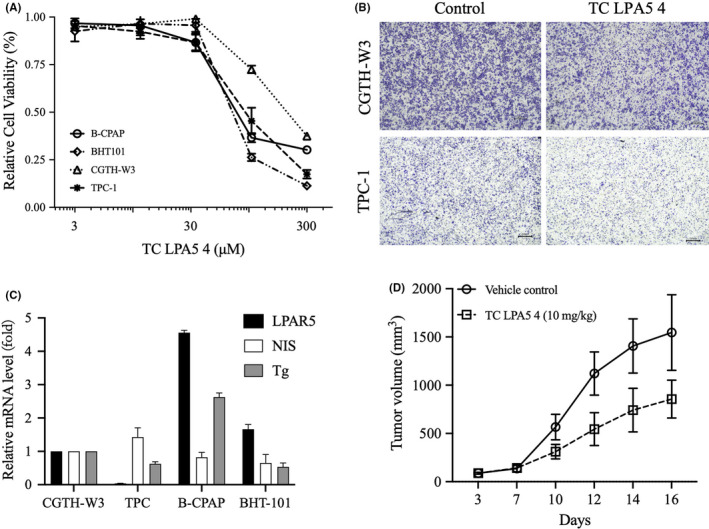
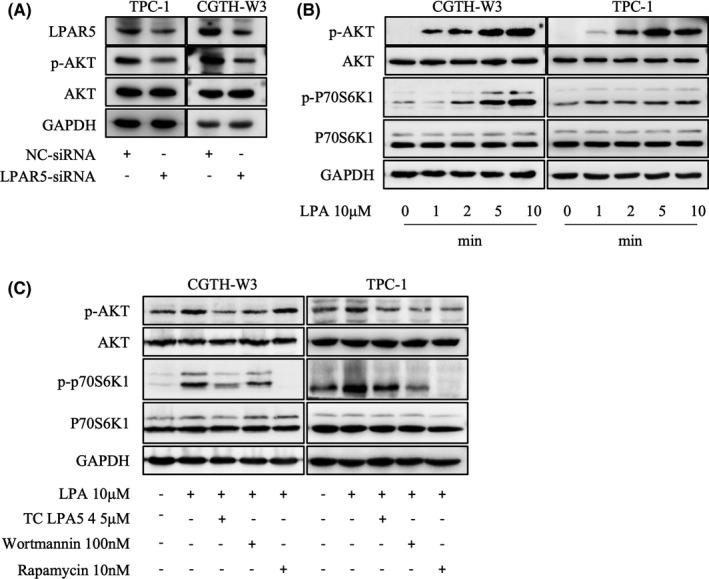
Lysophosphatidic acid receptor 5 (LPAR5) is involved in mediating thyroid cancer progression, but the underlying mechanism needs to be further revealed. In this study, we confirmed that LPAR5 is upregulated in papillary thyroid carcinoma (PTC), especially in BRAF-like PTC, by analyzing The Cancer Genome Atlas (TCGA) database and performing immunohistochemistry assay in human thyroid cancer tissues. LPAR5-specific antagonist TC LPA5 4 treatment inhibited CGTH-W3, TPC-1, B-CPAP, and BHT-101 cell proliferation, CGTH-W3 and TPC-1 cell migration significantly. In vivo, TC LPA5 4 treatment could delay CGTH-W3 xenograft growth in nude mice. We also found that LPAR5-specific antagonist TC LPA5 4, PI3K inhibitor wortmannin, or mTOR inhibitor rapamycin pretreatment abrogated phosphorylation of Akt and p70S6K1 stimulated by LPA in CGTH-W3 and TPC-1 cells. Stimulating CGTH-W3 cells transfected with pEGFPC1-Grp1-PH fusion protein with LPA resulted in the generation of phosphatidylinositol (3,4,5)-triphosphate, which indicates that PI3K was activated by LPA directly. The p110β-siRNA instead of p110α-siRNA transfection abrogated the increase of levels of phosphorylated Akt and S6K1 stimulated by LPA. Furthermore, immunoprecipitation assay confirmed an interaction between LPAR5 and p110β. Overall, we provide new insights that the downregulation of LPAR5 decreased the proliferation and migration phenotype via the PI3K/Akt pathway. Inhibition of LPAR5 or the PI3K/Akt signal may be a novel therapeutic strategy for treating thyroid cancer.
溶血磷脂酸受体 5(LPAR5)参与介导甲状腺癌的进展,但具体的作用机制仍需进一步阐明。本研究通过分析癌症基因组图谱(TCGA)数据库并在人甲状腺癌组织中进行免疫组化检测,证实 LPAR5 在甲状腺乳头状癌(PTC)中上调,尤其是在 BRAF 样 PTC 中上调。LPAR5 特异性拮抗剂 TC LPA5 4 处理可显著抑制 CGTH-W3、TPC-1、B-CPAP 和 BHT-101 细胞增殖,显著抑制 CGTH-W3 和 TPC-1 细胞迁移。在体内,TC LPA5 4 处理可延迟 CGTH-W3 裸鼠异种移植瘤的生长。我们还发现,LPAR5 特异性拮抗剂 TC LPA5 4、PI3K 抑制剂wortmannin 或 mTOR 抑制剂 rapamycin 预处理可阻断 LPA 刺激 CGTH-W3 和 TPC-1 细胞中 Akt 和 p70S6K1 的磷酸化。用 LPA 刺激转染了 pEGFPC1-Grp1-PH 融合蛋白的 CGTH-W3 细胞可产生磷脂酰肌醇(3,4,5)-三磷酸,表明 LPA 可直接激活 PI3K。用 p110β-siRNA 而不是 p110α-siRNA 转染可阻断 LPA 刺激 Akt 和 S6K1 的磷酸化水平的增加。此外,免疫沉淀实验证实了 LPAR5 与 p110β 之间的相互作用。总之,我们的研究结果提供了新的见解,即下调 LPAR5 通过 PI3K/Akt 通路降低了甲状腺癌细胞的增殖和迁移表型。抑制 LPAR5 或 PI3K/Akt 信号可能是治疗甲状腺癌的一种新的治疗策略。