Zhu Haochen, Hu Bo, Yang Fengrui
State Key Laboratory of Pollution Control and Resources Reuse, Key Laboratory of Yangtze River Water Environment, College of Environmental Science and Engineering, Tongji University, Ministry of Education, 1239 Siping Rd., Shanghai 200092, China.
Shanghai Institute of Pollution Control and Ecological Security, Shanghai 200092, China.
Membranes (Basel). 2021 Feb 2;11(2):104. doi: 10.3390/membranes11020104.
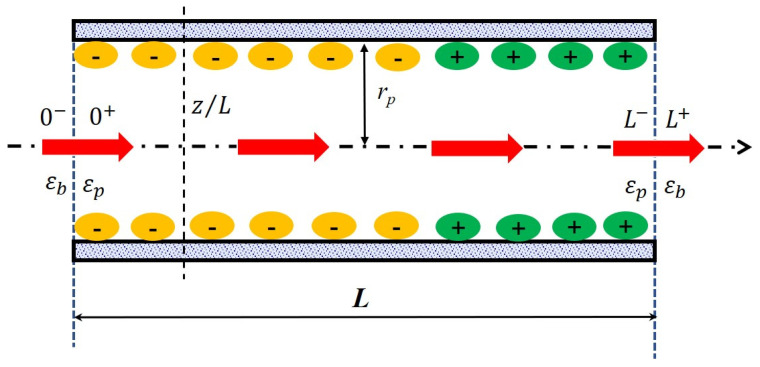
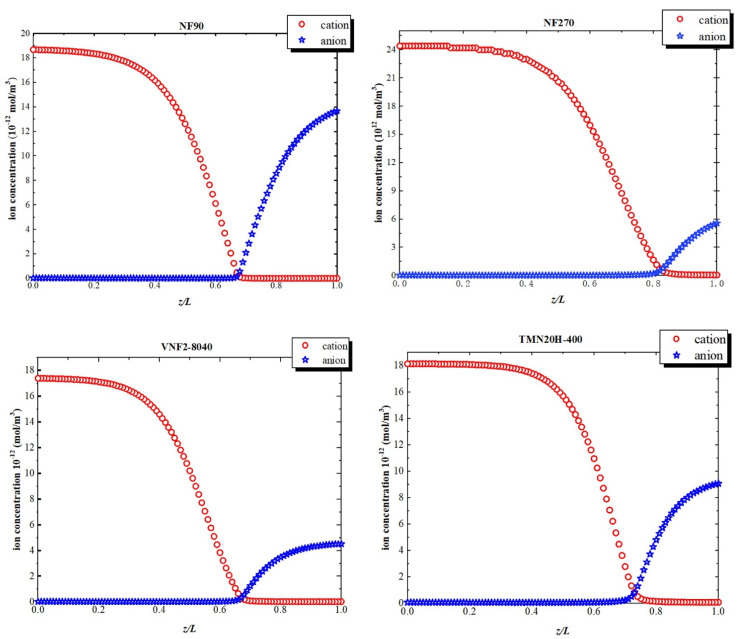
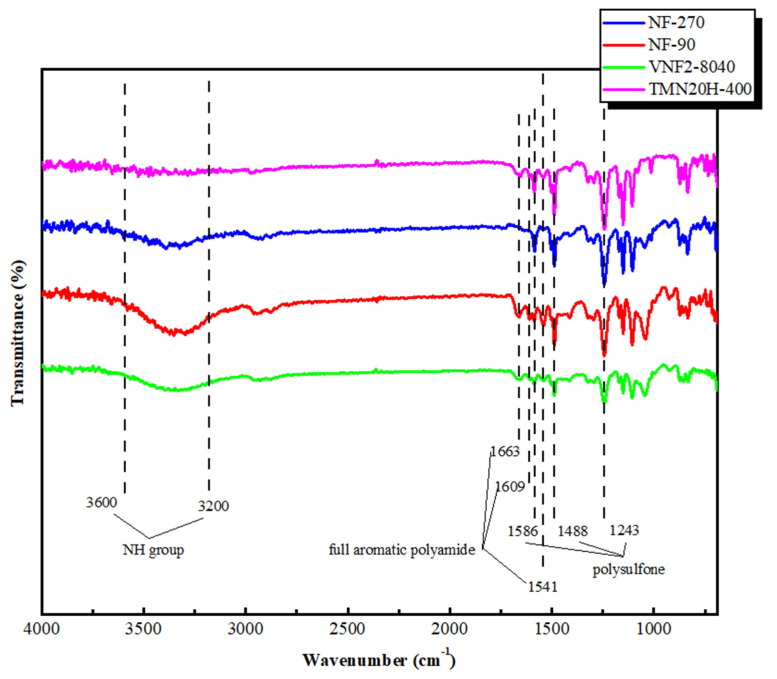
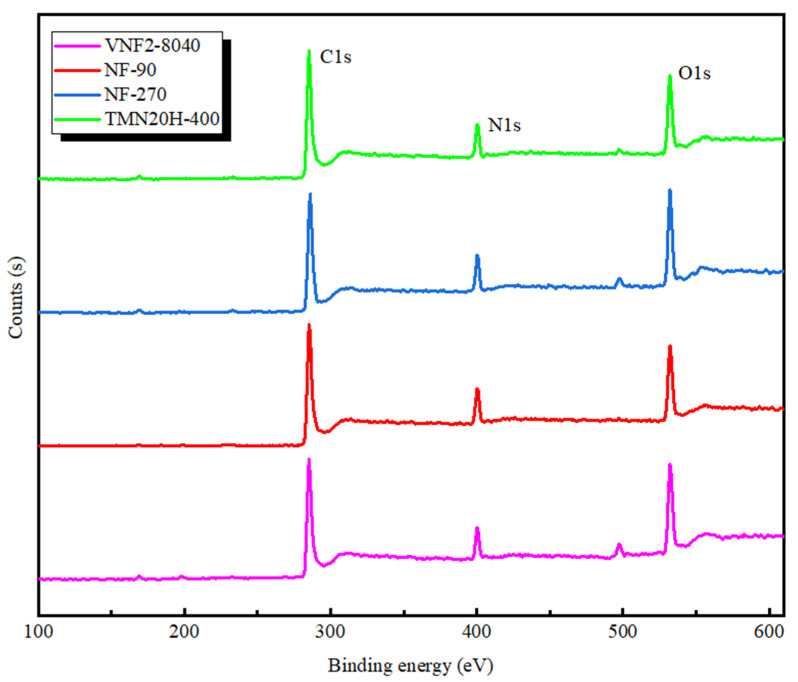
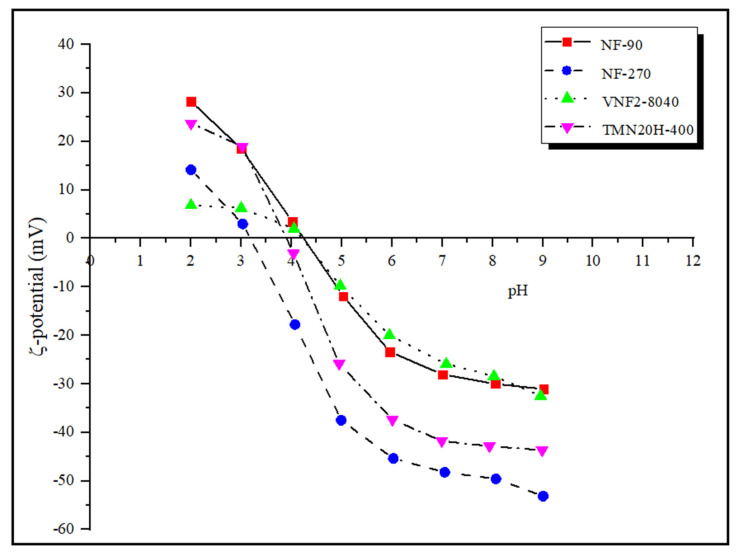
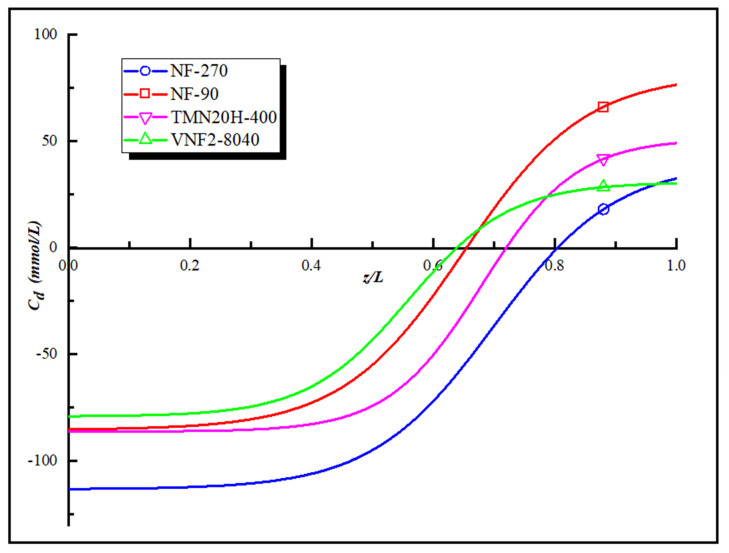
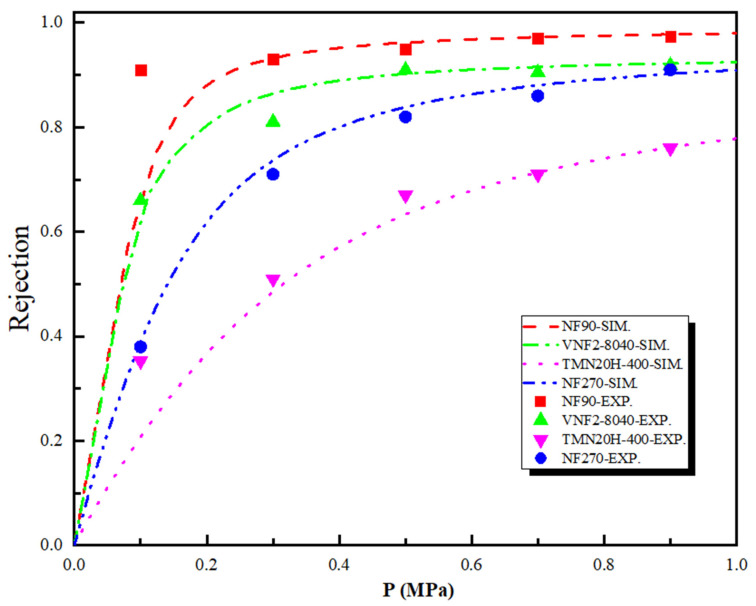
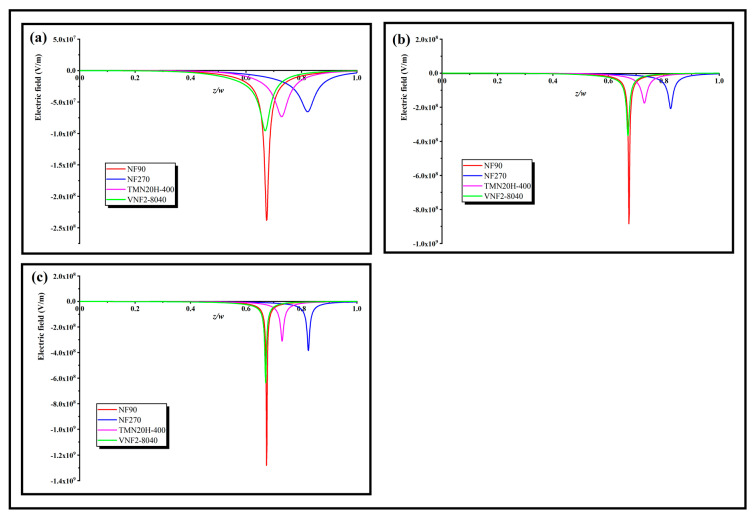
In this study, a complete steric, electrostatic, and dielectric mass transfer model is applied to investigate the separation mechanism of typical antibiotic sulfadiazine by NF90, NF270, VNF-8040 and TMN20H-400 nanofiltration membranes. FTIR and XPS analysis clearly indicate that the membranes we used possess skin layers containing both amine and carboxylic acid groups that can be distributed in an inhomogeneous fashion, leading to a bipolar fixed charge distribution. We compare the theoretical and experimental rejection rate of the sulfadiazine as a function of the pressure difference across the nanopore for the four polyamide membranes of inhomogeneously charged nanopores. It is shown that the rejection rate of sulfadiazine obtained by the solute transport model has similar qualitative results with that of experiments and follows the sequence: RNF90>RVNF2-8040>RNF270>RTMN20H-400. The physical explanation can be attributed to the influence of the inhomogeneous charge distribution on the electric field that arises spontaneously so as to maintain the electroneutrality within the nanopore.
在本研究中,应用完整的空间、静电和介电传质模型来研究NF90、NF270、VNF - 8040和TMN20H - 400纳滤膜对典型抗生素磺胺嘧啶的分离机理。傅里叶变换红外光谱(FTIR)和X射线光电子能谱(XPS)分析清楚地表明,我们所使用的膜具有含胺基和羧基的皮层,这些基团可以以不均匀的方式分布,从而导致双极固定电荷分布。我们比较了四种具有不均匀带电纳米孔的聚酰胺膜上,磺胺嘧啶的理论截留率和实验截留率与跨纳米孔压差的函数关系。结果表明,溶质传输模型得到的磺胺嘧啶截留率与实验结果具有相似的定性结果,且遵循以下顺序:RNF90>RVNF2 - 8040>RNF270>RTMN20H - 。物理解释可归因于不均匀电荷分布对自发产生的电场的影响,以便维持纳米孔内的电中性。