Colabella Claudia, Casagrande Pierantoni Debora, Corte Laura, Roscini Luca, Conti Angela, Bassetti Matteo, Tascini Carlo, Robert Vincent, Cardinali Gianluigi
Department of Pharmaceutical Sciences, University of Perugia, 06121 Perugia, Italy.
Istituto Zooprofilattico Sperimentale dell'Umbria e delle Marche "Togo Rosati", 06126 Perugia, Italy.
Microorganisms. 2021 Feb 2;9(2):302. doi: 10.3390/microorganisms9020302.
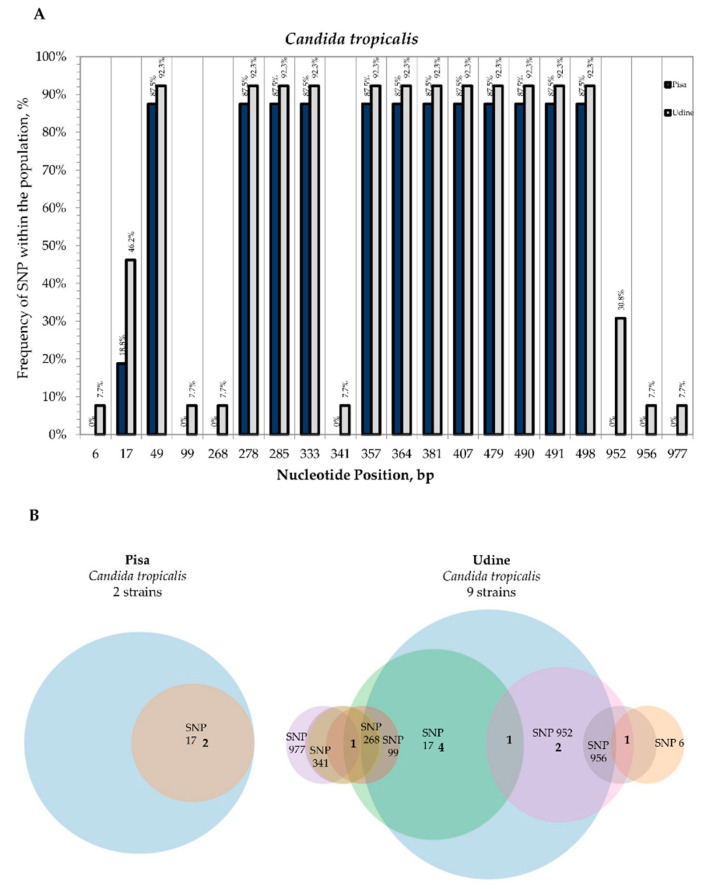
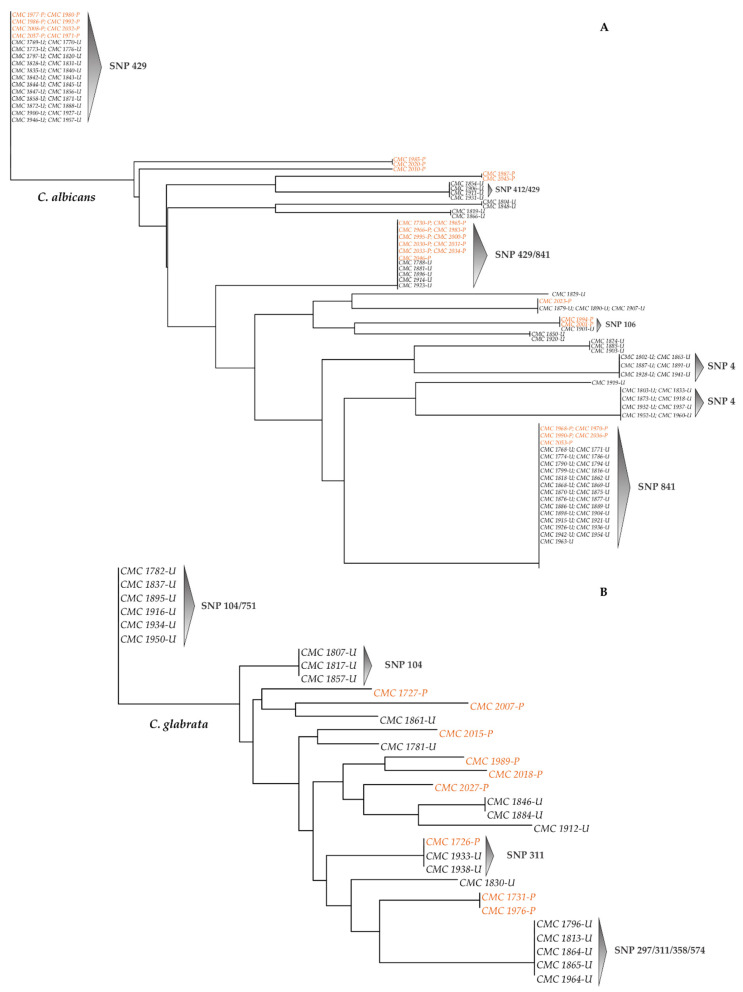
Ribosomal RNA in fungi is encoded by a series of genes and spacers included in a large operon present in 100 tandem repeats, normally in a single locus. The multigene nature of this locus was somehow masked by Sanger sequencing, which produces a single sequence reporting the prevalent nucleotide of each site. The introduction of next generation sequencing led to deeper knowledge of the individual sequences (reads) and therefore of the variants between the same DNA sequences located in different tandem repeats. In this framework, NGS sequencing of the rDNA region was used to elucidate the extent of intra- and inter-genomic variation at both the strain and species level. Specifically, the use of an innovative NGS technique allowed the high-throughput high-depth sequencing of the ITS1-LSU D1/D2 amplicons of 252 strains belonging to four opportunistic yeast species of the genus . Results showed the presence of a large extent of variability among strains and species. These variants were differently distributed throughout the analyzed regions with a higher concentration within the Internally Transcribed Spacer (ITS) region, suggesting that concerted evolution was not able to totally homogenize these sequences. Both the internal variability and the SNPs between strain can be used for a deep typing of the strains and to study their ecology.
真菌中的核糖体RNA由一系列基因和间隔区编码,这些基因和间隔区包含在一个大操纵子中,该操纵子以100个串联重复的形式存在,通常位于单个位点。该位点的多基因性质在某种程度上被桑格测序所掩盖,桑格测序产生的单一序列报告了每个位点的优势核苷酸。新一代测序技术的引入使人们对单个序列(读数)有了更深入的了解,从而也对位于不同串联重复中的相同DNA序列之间的变异有了更深入的了解。在此框架下,rDNA区域的NGS测序被用于阐明菌株和物种水平上基因组内和基因组间变异的程度。具体而言,使用一种创新的NGS技术对属于该属四种机会性酵母物种的252个菌株的ITS1-LSU D1/D2扩增子进行了高通量深度测序。结果显示菌株和物种之间存在很大程度的变异性。这些变异在整个分析区域中的分布不同,在内部转录间隔区(ITS)区域内浓度更高,这表明协同进化无法使这些序列完全同质化。菌株内部的变异性和单核苷酸多态性都可用于对菌株进行深度分型并研究其生态学。