Zhang Man, Ma Zhaokun, Song Huaihe
Beijing Key Laboratory of Electrochemical Process and Technology for Materials, Beijing University of Chemical Technology, Beijing 100029, China.
Nanomaterials (Basel). 2021 Feb 2;11(2):377. doi: 10.3390/nano11020377.
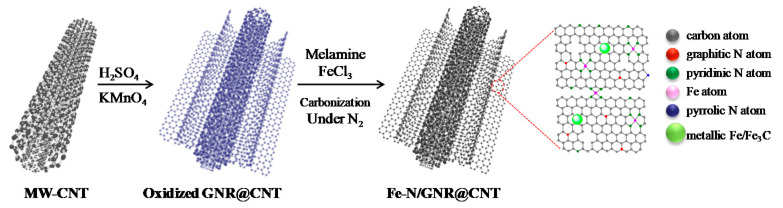
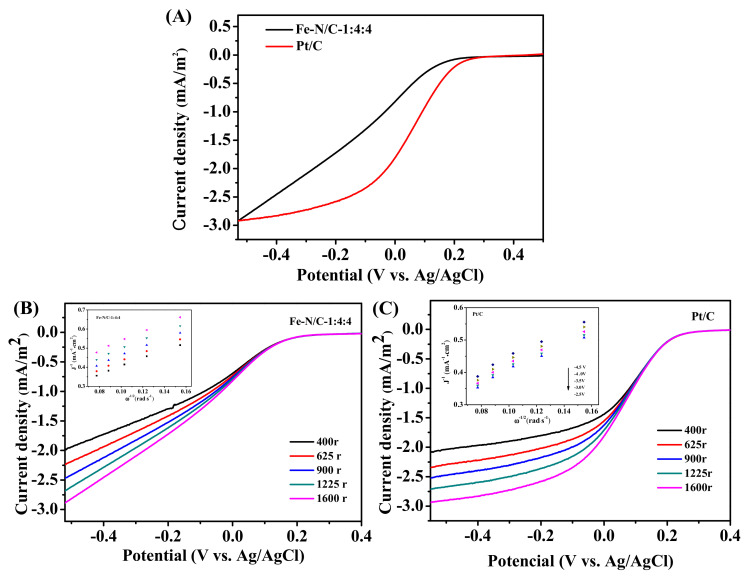
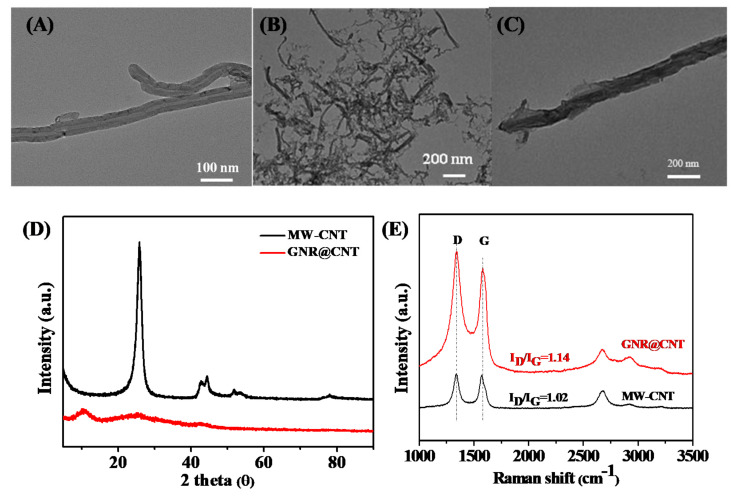
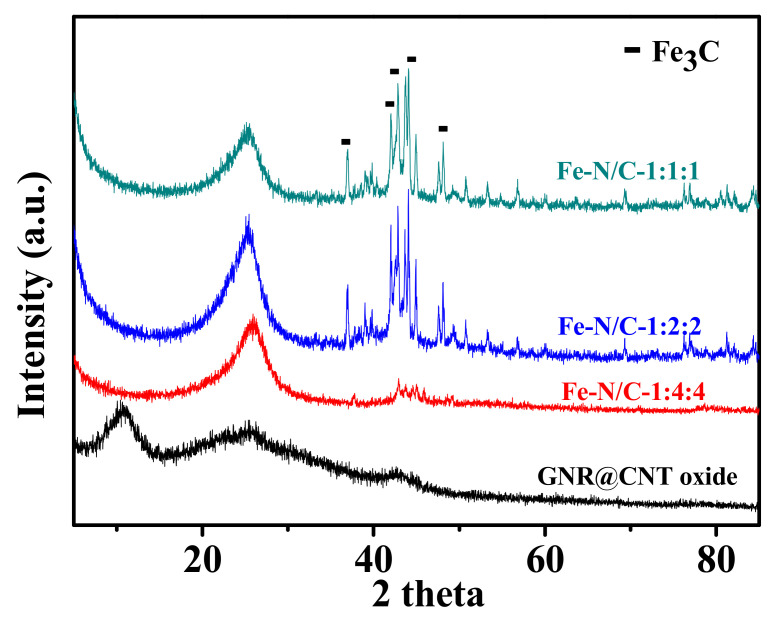
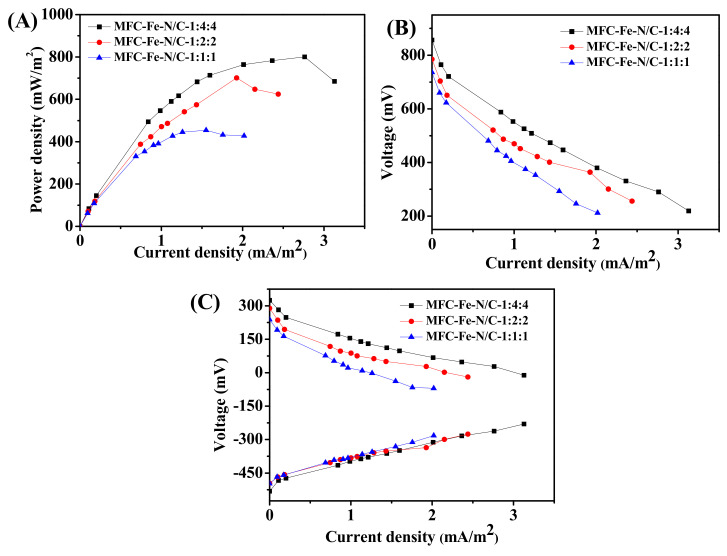
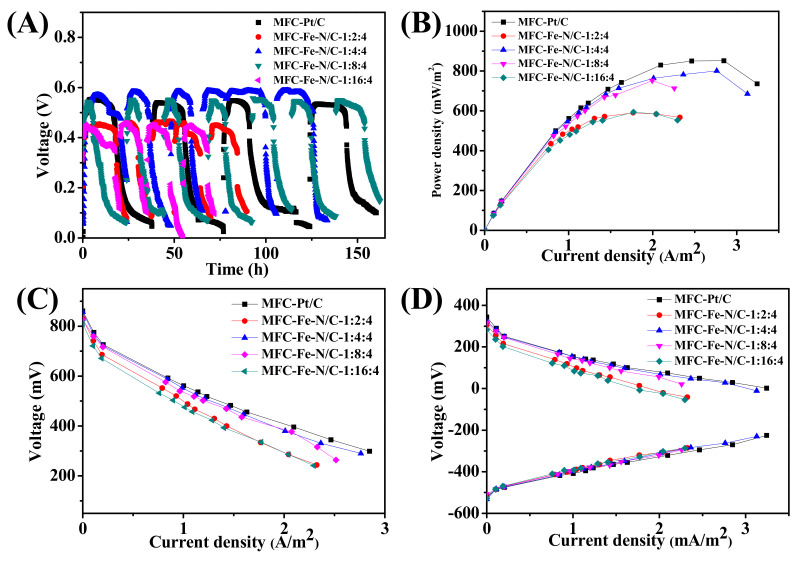
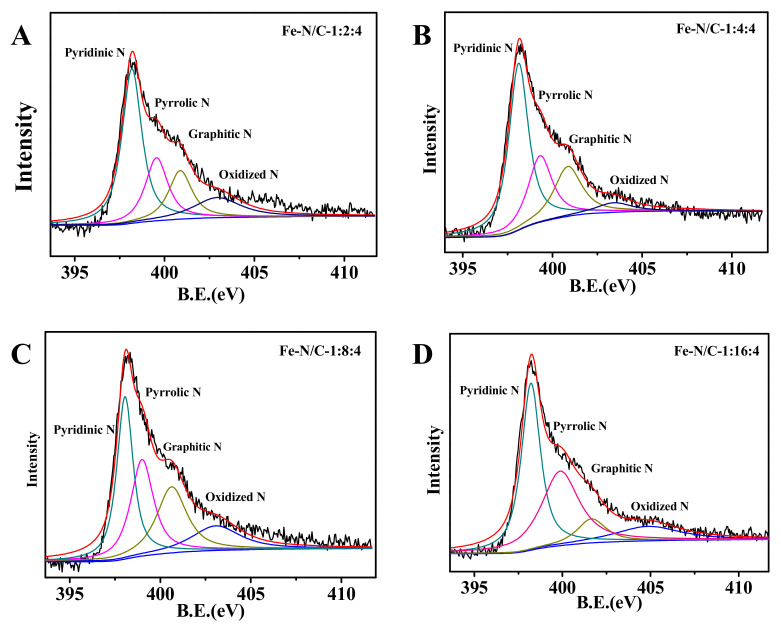
Through one-step pyrolysis, non-noble-metal oxygen reduction reaction (ORR) electrocatalysts were constructed from ferric trichloride, melamine, and graphene nanoribbon@carbon nanotube (GNR@CNT), in which a portion of the multiwall carbon nanotube is unwrapped/unzipped radially, and thus graphene nanoribbon is exposed. In this study, Fe-N/GNR@CNT materials were used as an air-cathode electrocatalyst in microbial fuel cells (MFCs) for the first time. The Fe-N/C shows similar power generation ability to commercial Pt/C, and its electron transfer number is 3.57, indicating that the ORR process primarily occurs with 4-electron. Fe species, pyridinic-N, graphitic-N, and oxygen-containing groups existing in GNR@CNT frameworks are likely to endow the electrocatalysts with good ORR performance, suggesting that a GNR@CNT-based carbon supporter would be a good candidate for the non-precious metal catalyst to replace Pt-based precious metal.
通过一步热解,由三氯化铁、三聚氰胺和石墨烯纳米带@碳纳米管(GNR@CNT)构建了非贵金属氧还原反应(ORR)电催化剂,其中一部分多壁碳纳米管沿径向展开/解缠,从而暴露出石墨烯纳米带。在本研究中,Fe-N/GNR@CNT材料首次被用作微生物燃料电池(MFC)中的空气阴极电催化剂。Fe-N/C表现出与商业Pt/C相似的发电能力,其电子转移数为3.57,表明ORR过程主要通过4电子进行。GNR@CNT框架中存在的铁物种、吡啶氮、石墨氮和含氧基团可能赋予电催化剂良好的ORR性能,这表明基于GNR@CNT的碳载体将是替代铂基贵金属的非贵金属催化剂的良好候选者。