Simpson K, Conquer-van Heumen G, Watson K L, Roth M, Martin C J, Moorehead R A
Department of Biomedical Sciences, Ontario Veterinary College, University of Guelph, Guelph, ON, Canada.
Cancer Cell Int. 2021 Feb 4;21(1):89. doi: 10.1186/s12935-021-01784-4.
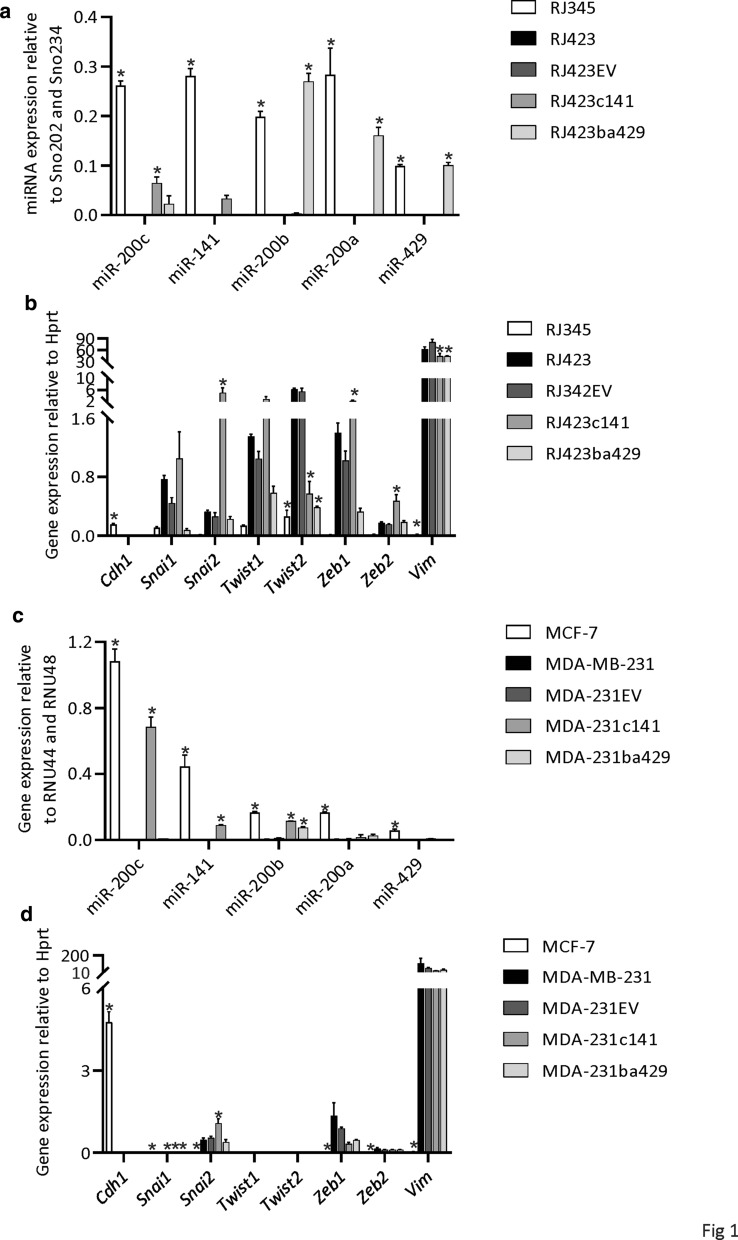
MicroRNAs are a class of non-coding RNAs that regulate gene expression through binding to mRNAs and preventing their translation. One family of microRNAs known as the miR-200 family is an important regulator of epithelial identity. The miR-200 family consists of five members expressed in two distinct clusters; the miR-200c/141 cluster and the miR-200b/200a/429 cluster. We have found that murine and human mammary tumor cells with claudin-low characteristics are associated with very low levels of all five miR-200s.
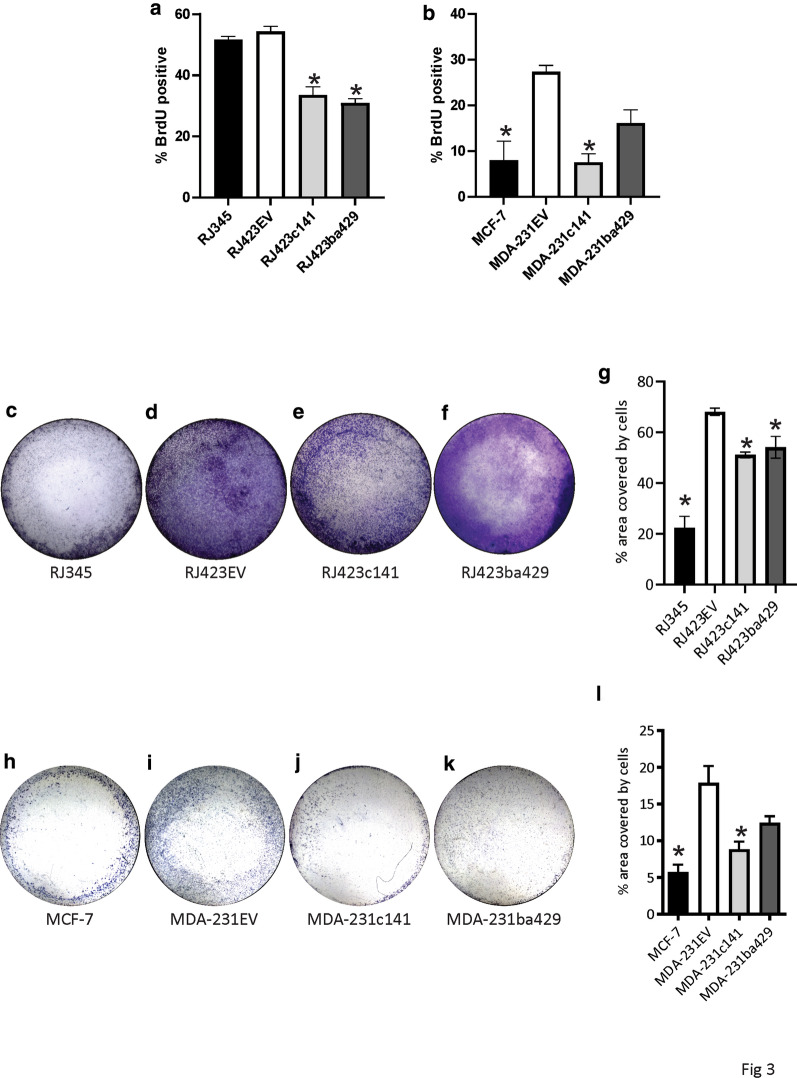
To determine the impact of miR-200s on claudin-low mammary tumor cells, the miR-200c/141 cluster and the miR-200b/200a/429 cluster were stably re-expressed in murine (RJ423) and human (MDA-MB-231) claudin-low mammary tumor cells. Cell proliferation and migration were assessed using BrdU incorporation and transwell migration across Matrigel coated inserts, respectively. miRNA sequencing and RNA sequencing were performed to explore miRNAs and mRNAs regulated by miR-200 re-expression while Enrichr-based pathway analysis was utilized to identify cellular functions modified by miR-200s.
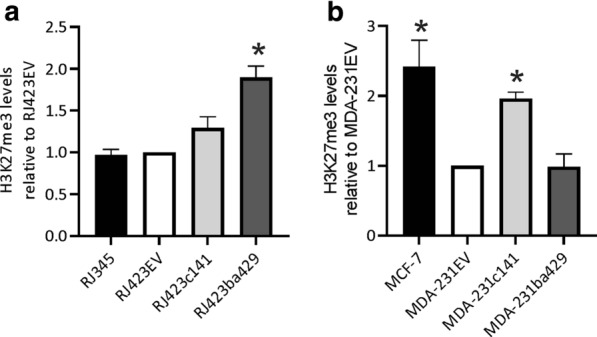
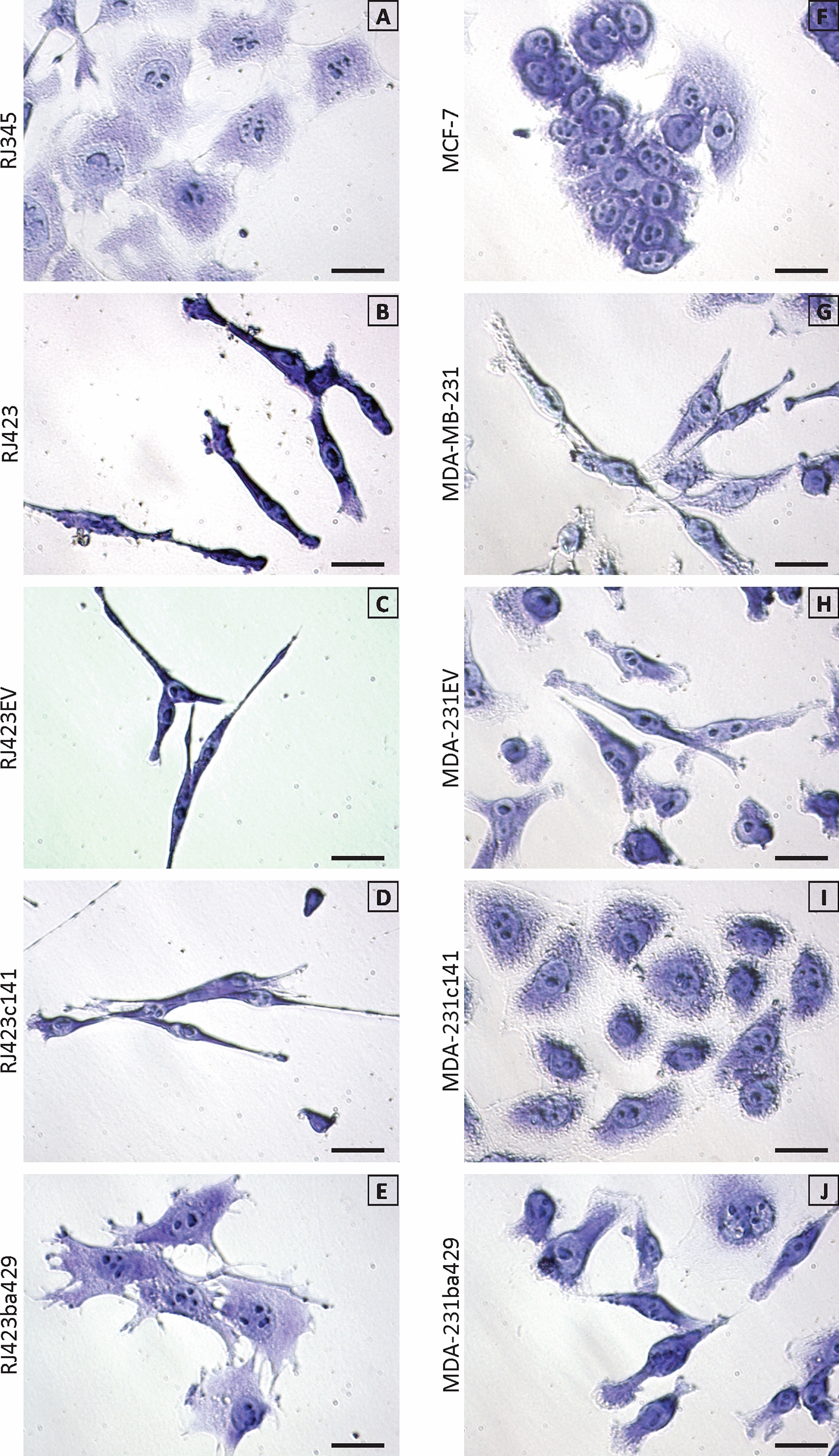
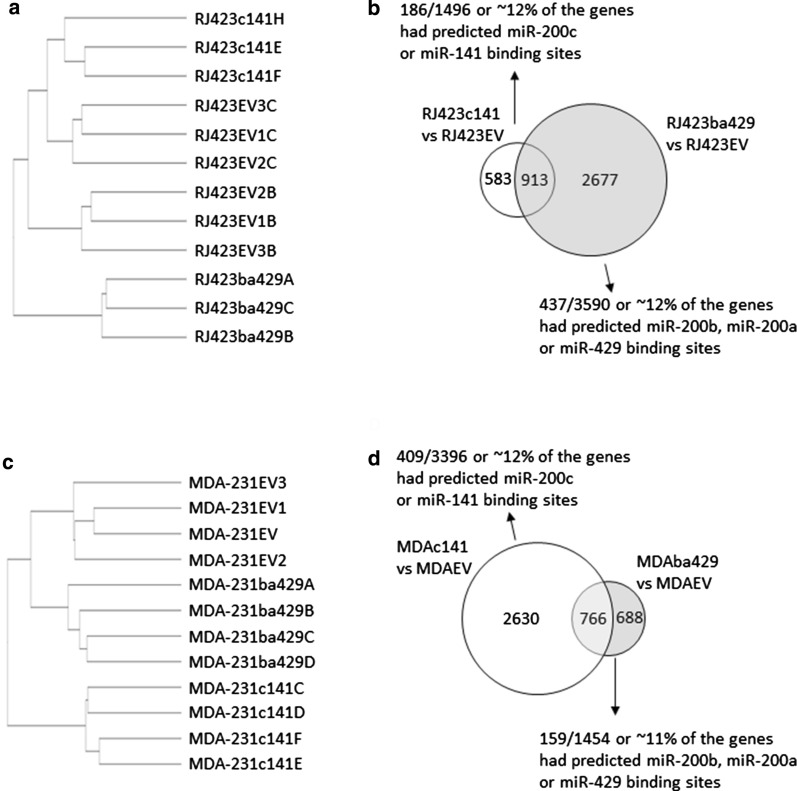
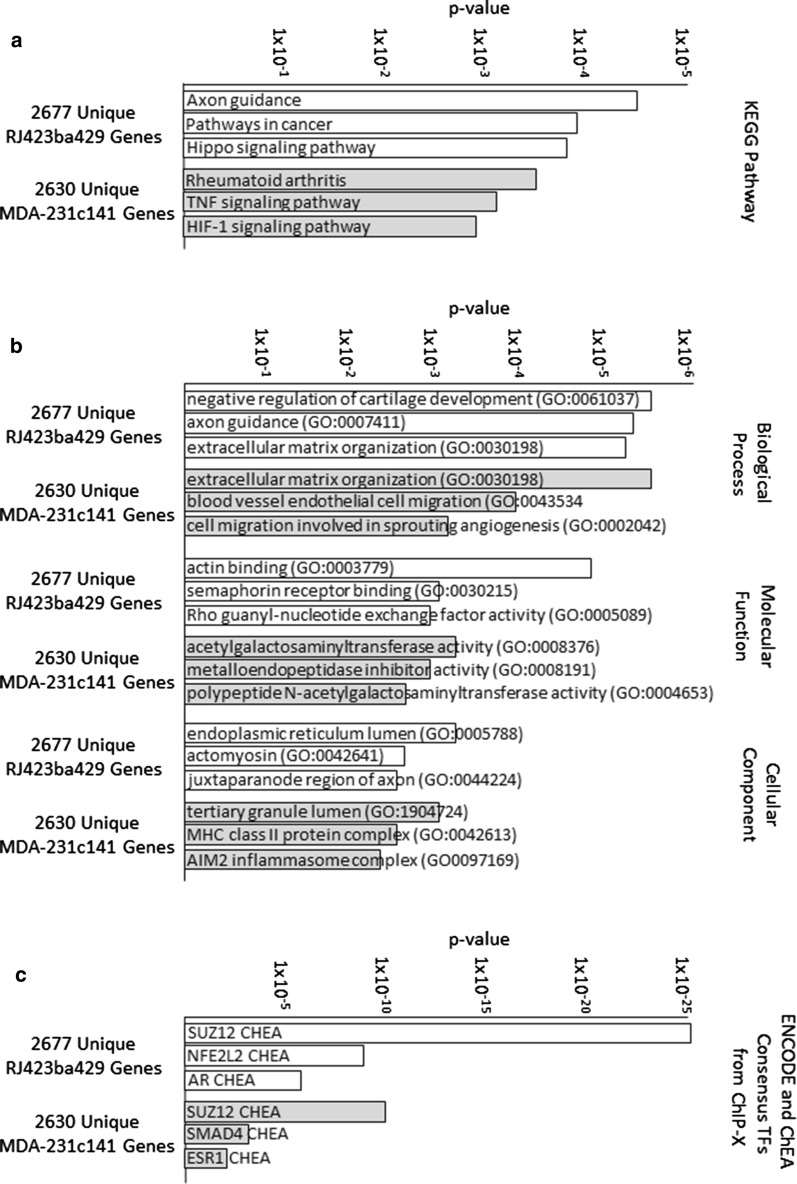
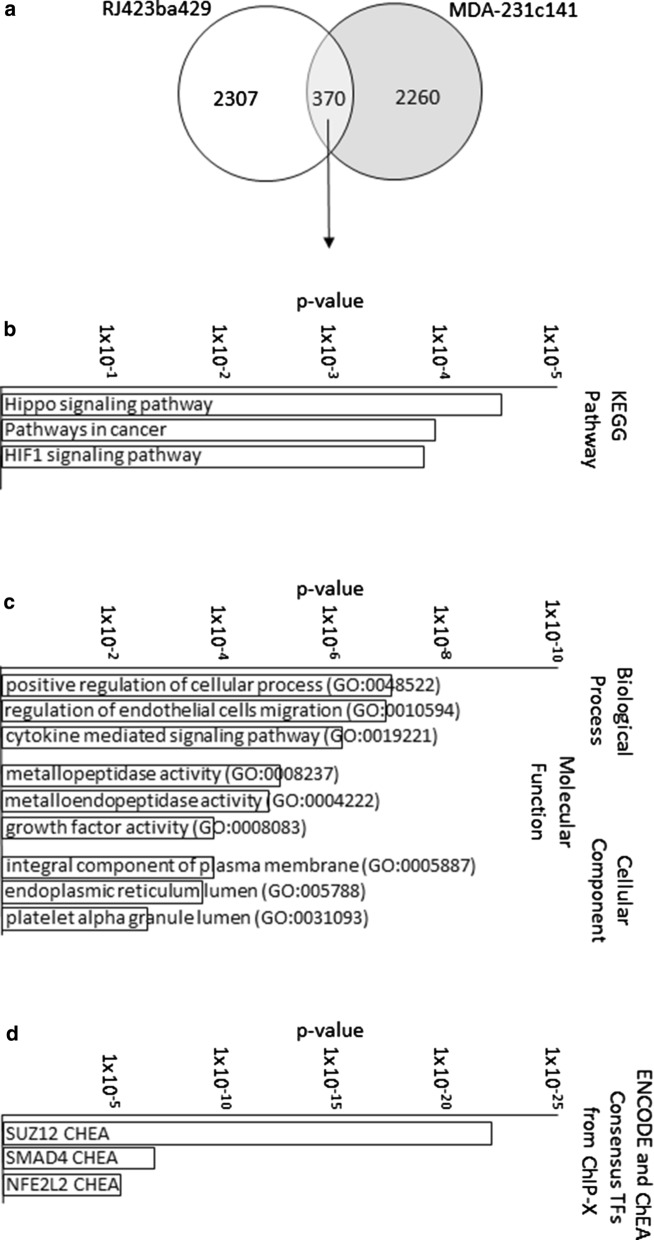
Re-expression of the miR-200s in murine and human claudin-low mammary tumor cells partially restored an epithelial cell morphology and significantly inhibited proliferation and cell invasion in vitro. miRNA sequencing and mRNA sequencing revealed that re-expression of miR-200s altered the expression of other microRNAs and genes regulated by SUZ12 providing insight into the complexity of miR-200 function. SUZ12 is a member of the polycomb repressor complex 2 that suppresses gene expression through methylating histone H3 at lysine 27. Flow cytometry confirmed that re-expression of miR-200s increased histone H3 methylation at lysine 27.
Re-expression of miR-200s in claudin-low mammary tumor cells alters cell morphology and reduces proliferation and invasion, an effect potentially mediated by SUZ12-regulated genes and other microRNAs.
微小RNA是一类非编码RNA,通过与信使核糖核酸结合并阻止其翻译来调节基因表达。被称为miR-200家族的微小RNA家族是上皮特性的重要调节因子。miR-200家族由五个成员组成,以两个不同的簇表达;miR-200c/141簇和miR-200b/200a/429簇。我们发现具有低紧密连接蛋白特征的鼠类和人类乳腺肿瘤细胞与所有五种miR-200的极低水平相关。
为了确定miR-200对低紧密连接蛋白乳腺肿瘤细胞的影响,在鼠类(RJ423)和人类(MDA-MB-231)低紧密连接蛋白乳腺肿瘤细胞中稳定重新表达miR-200c/141簇和miR-200b/200a/429簇。分别使用BrdU掺入法和跨Matrigel包被小室的transwell迁移法评估细胞增殖和迁移。进行微小RNA测序和RNA测序以探索受miR-200重新表达调控的微小RNA和信使核糖核酸,同时利用基于Enrichr的通路分析来鉴定由miR-200改变的细胞功能。
在鼠类和人类低紧密连接蛋白乳腺肿瘤细胞中重新表达miR-200部分恢复了上皮细胞形态,并在体外显著抑制了增殖和细胞侵袭。微小RNA测序和信使核糖核酸测序显示,miR-200的重新表达改变了其他微小RNA和受SUZ12调控的基因的表达,从而深入了解了miR-200功能的复杂性。SUZ12是多梳抑制复合物2的成员,通过在赖氨酸27处甲基化组蛋白H3来抑制基因表达。流式细胞术证实,miR-200的重新表达增加了赖氨酸27处的组蛋白H3甲基化。
在低紧密连接蛋白乳腺肿瘤细胞中重新表达miR-200会改变细胞形态并减少增殖和侵袭,这种作用可能由SUZ12调控的基因和其他微小RNA介导。