Department of Ophthalmology, University of Texas Southwestern Medical Center, 5323 Harry Hines Blvd, Dallas, TX, USA.
Department of Pharmacology, University of Texas Southwestern Medical Center, 5323 Harry Hines Blvd, Dallas, TX, USA.
Sci Rep. 2021 Feb 4;11(1):2998. doi: 10.1038/s41598-020-79570-x.
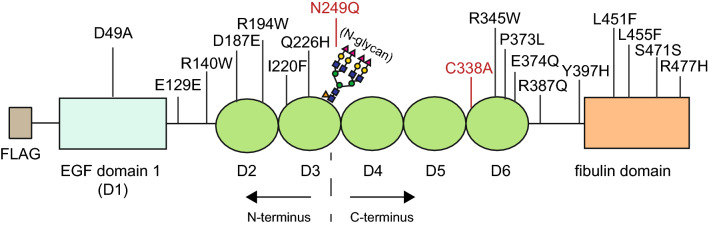
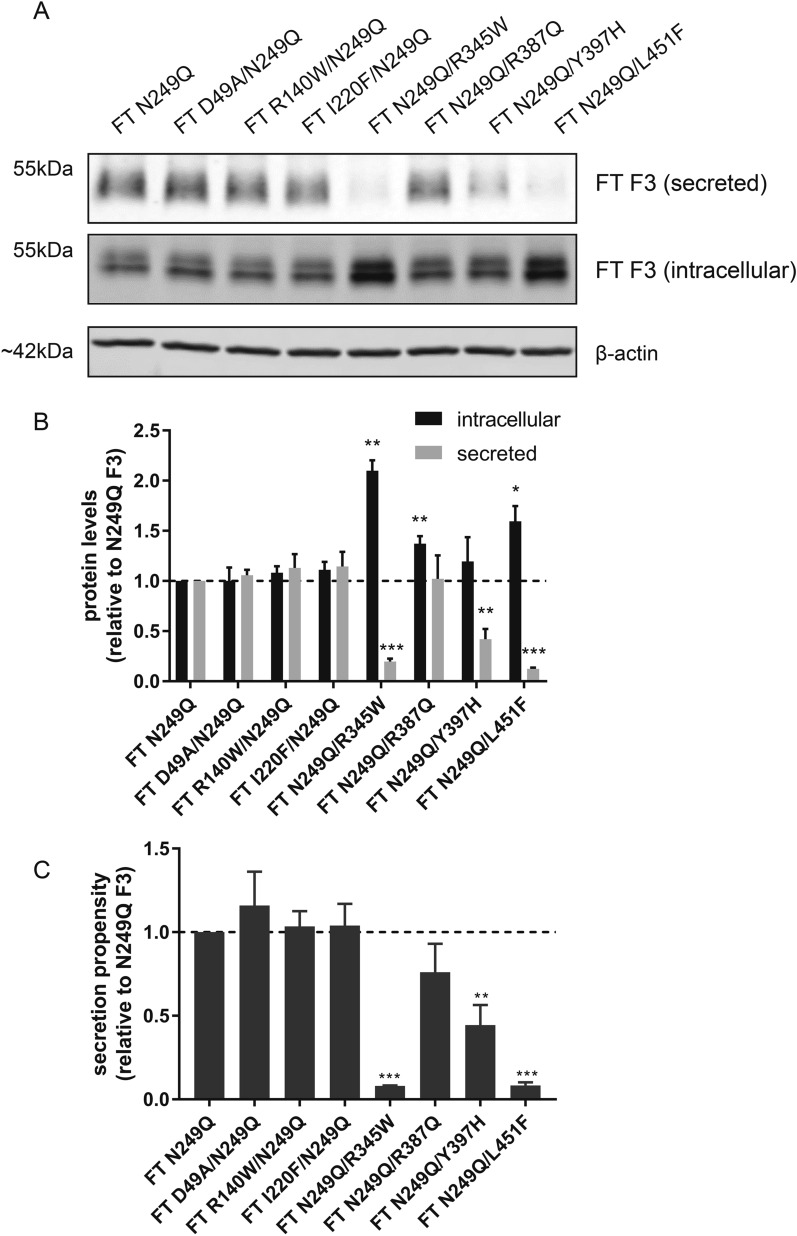
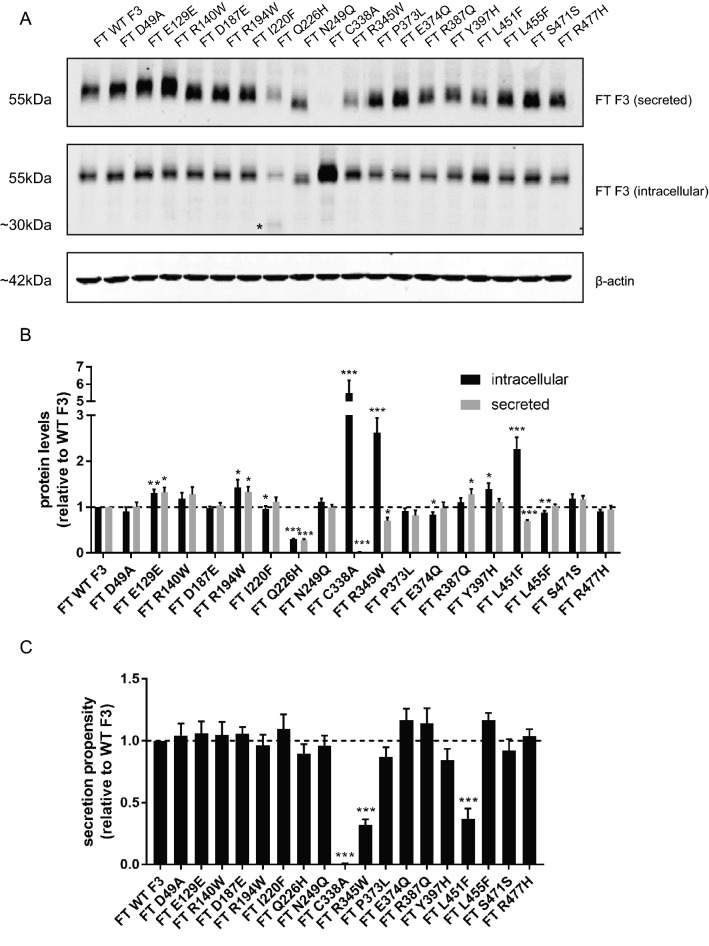
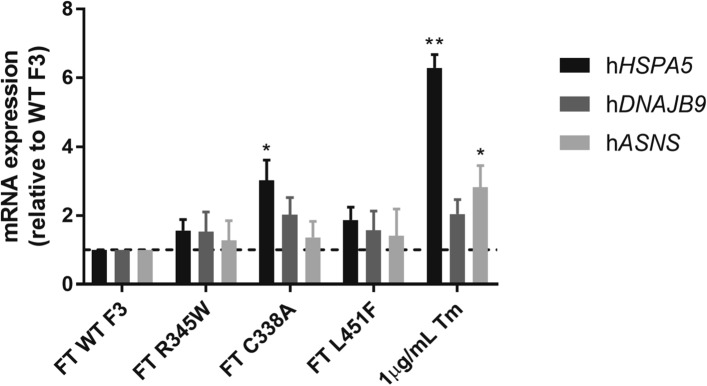
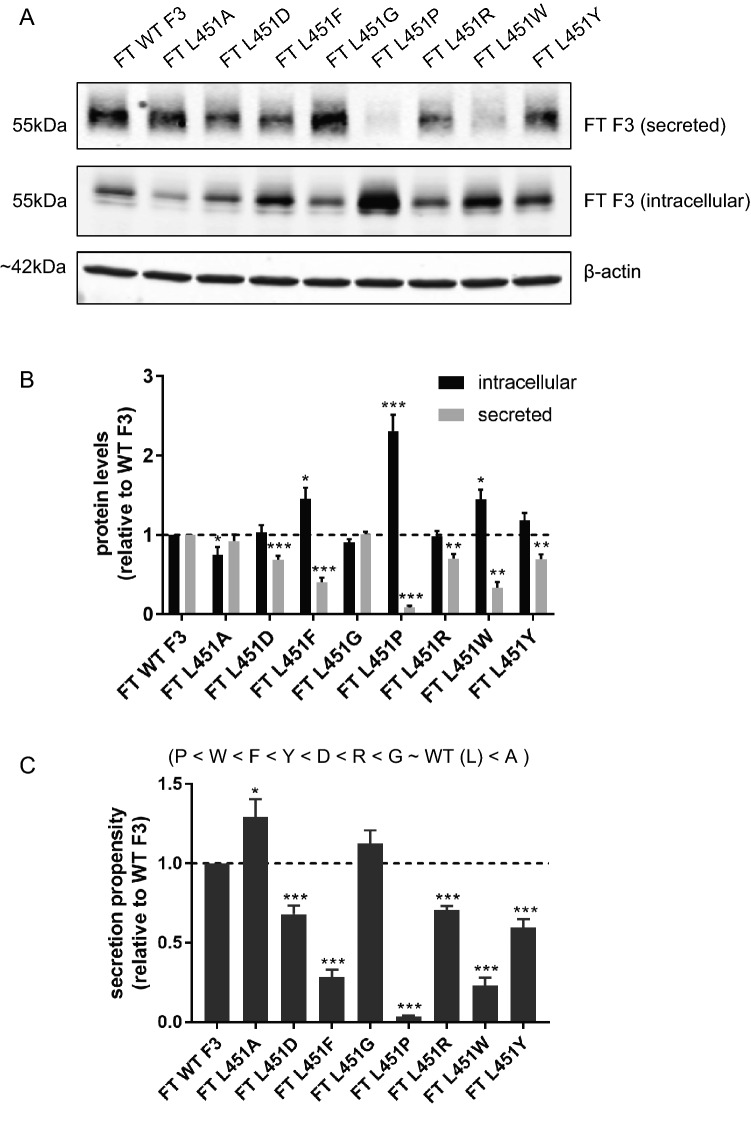
Distinct mutations in the secreted extracellular matrix protein, fibulin-3 (F3), have been associated with a number of ocular diseases ranging from primary open angle glaucoma to cuticular age-related macular degeneration to a rare macular dystrophy, Malattia Leventinese (ML). The R345W F3 mutation that causes ML leads to F3 misfolding, inefficient secretion and accumulation at higher intracellular steady state levels in cultured cells. Herein, we determined whether fifteen other clinically-identified F3 mutations also led to similar levels of misfolding and secretion defects, which might provide insight into their potential pathogenicity. Surprisingly, we found that only a single F3 variant, L451F, presented with a significant secretion defect (69.5 ± 2.4% of wild-type (WT) F3 levels) and a corresponding increase in intracellular levels (226.8 ± 25.4% of WT F3 levels). Upon follow-up studies, when this conserved residue (L451) was mutated to a charged (Asp or Arg) or bulky (Pro, Trp, Tyr) residue, F3 secretion was also compromised, indicating the importance of small side chains (Leu, Ala, or Gly) at this residue. To uncover potential inherent F3 instability not easily observed under typical culture conditions, we genetically eliminated the sole stabilizing N-linked glycosylation site (N249) from select clinically-identified F3 mutants. This removal exacerbated R345W and L451F secretion defects (19.8 ± 3.0% and 12.4 ± 1.2% of WT F3 levels, respectively), but also revealed a previously undiscovered secretion defect in another C-terminal variant, Y397H (42.0 ± 10.1% of WT F3 levels). Yet, glycan removal did not change the relative secretion of the N-terminal mutants tested (D49A, R140W, I220F). These results highlight the uniqueness and molecular similarities between the R345W and L451F variants and also suggest that previously identified disease-associated mutations (e.g., R140W) are indistinguishable from WT with respect to secretion, hinting that they may lead to disease by an alternative mechanism.
分泌型细胞外基质蛋白纤连蛋白-3(F3)中的不同突变与多种眼部疾病相关,从原发性开角型青光眼到皮质性年龄相关性黄斑变性,再到罕见的黄斑营养不良 Malattia Leventinese(ML)。导致 ML 的 R345W F3 突变导致 F3 错误折叠,在培养细胞中细胞内稳态水平较高时,F3 的分泌效率降低,积累增加。在此,我们确定了其他 15 种临床鉴定的 F3 突变是否也导致类似水平的错误折叠和分泌缺陷,这可能有助于深入了解其潜在的致病性。令人惊讶的是,我们发现只有一种 F3 变体 L451F 表现出明显的分泌缺陷(野生型(WT)F3 水平的 69.5±2.4%)和相应的细胞内水平升高(WT F3 水平的 226.8±25.4%)。进一步研究表明,当这个保守残基(L451)突变为带电荷(天冬氨酸或精氨酸)或大体积(脯氨酸、色氨酸、酪氨酸)残基时,F3 的分泌也受到影响,表明该残基的小侧链(亮氨酸、丙氨酸或甘氨酸)的重要性。为了揭示在典型培养条件下不易观察到的潜在固有 F3 不稳定性,我们从选定的临床鉴定的 F3 突变体中遗传消除了唯一稳定的 N-连接糖基化位点(N249)。这种去除加剧了 R345W 和 L451F 的分泌缺陷(分别为 WT F3 水平的 19.8±3.0%和 12.4±1.2%),但也揭示了另一个 C 末端变体 Y397H 中以前未发现的分泌缺陷(WT F3 水平的 42.0±10.1%)。然而,糖基去除并没有改变所测试的 N 端突变体的相对分泌(D49A、R140W、I220F)。这些结果突出了 R345W 和 L451F 变体之间的独特性和分子相似性,也表明先前鉴定的与疾病相关的突变(例如 R140W)在分泌方面与 WT 无法区分,暗示它们可能通过另一种机制导致疾病。