Huang Ji, Ladeiras Diogo, Yu Yi, Ming Xiu-Fen, Yang Zhihong
Department of Endocrinology, Metabolism, and Cardiovascular System, Laboratory of Cardiovascular and Aging Research, Faculty of Science and Medicine, University of Fribourg, Fribourg, Switzerland.
National Center of Competence in Research "Kidney.CH", University of Zürich, Zürich, Switzerland.
Front Pharmacol. 2021 Jan 19;11:582155. doi: 10.3389/fphar.2020.582155. eCollection 2020.
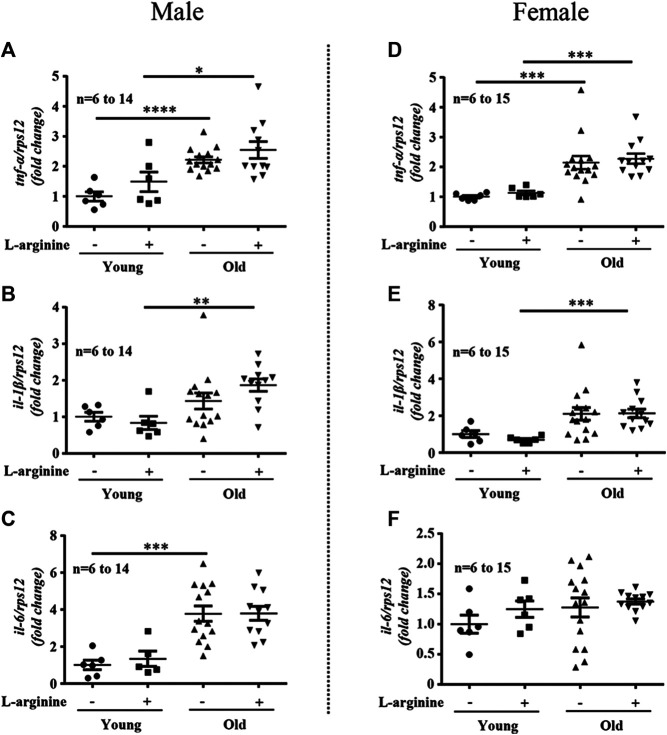
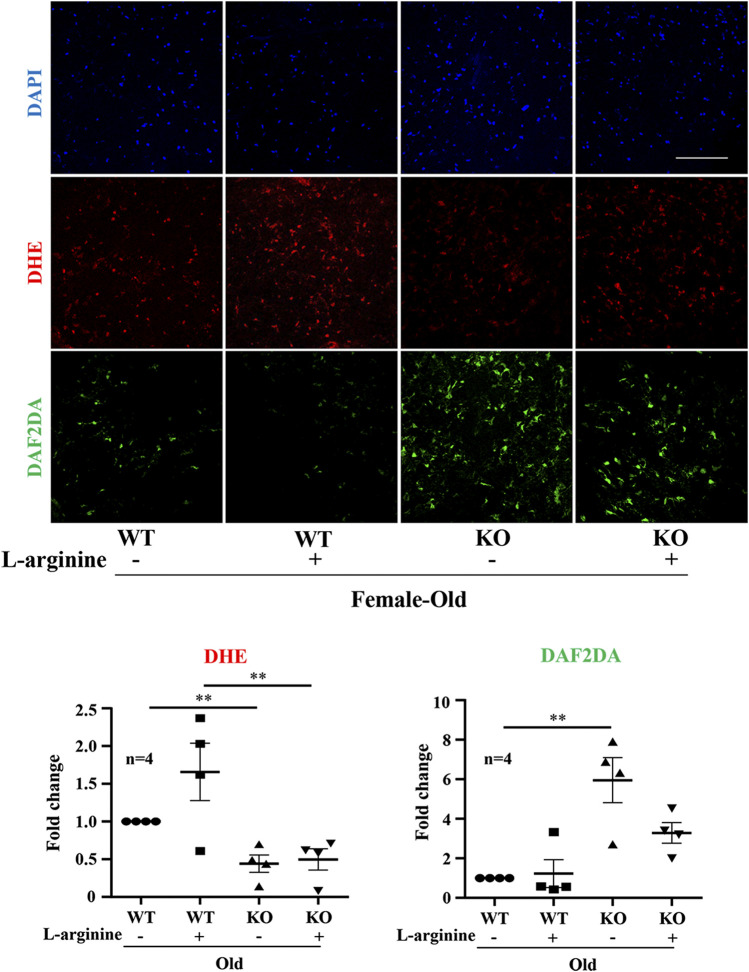
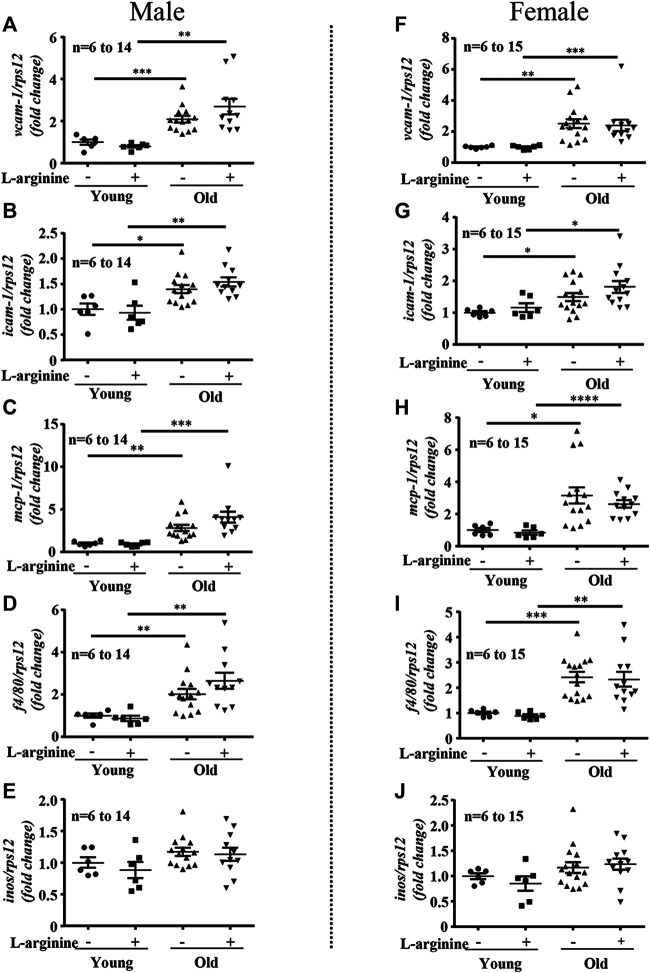
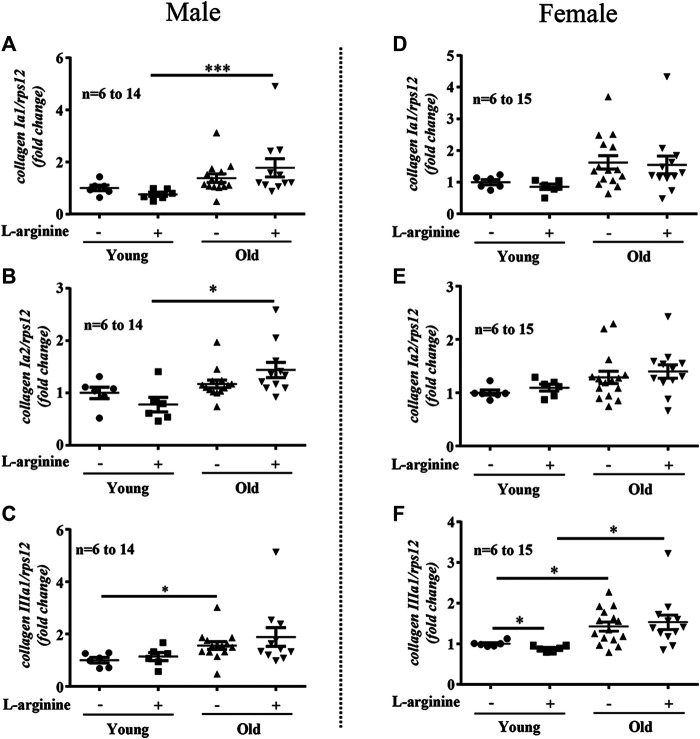
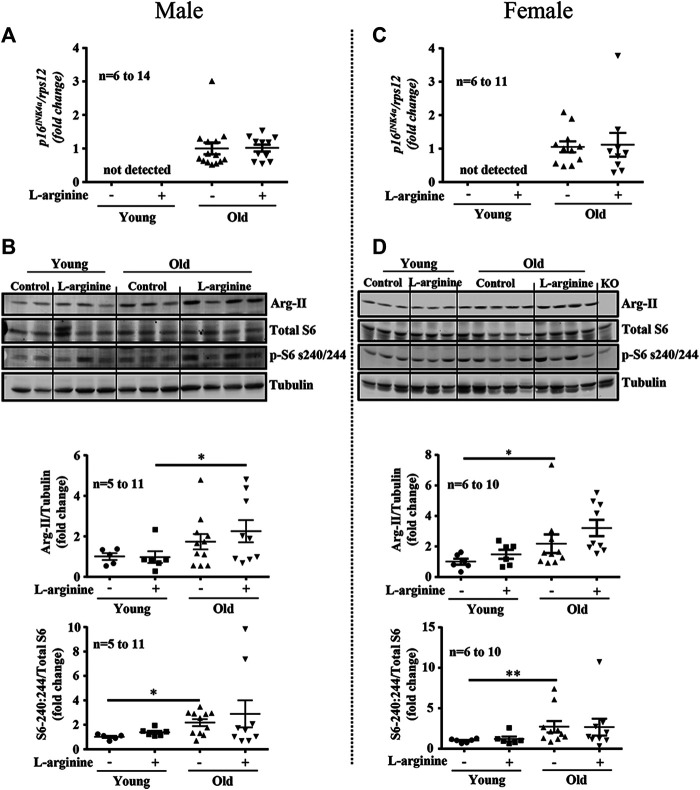
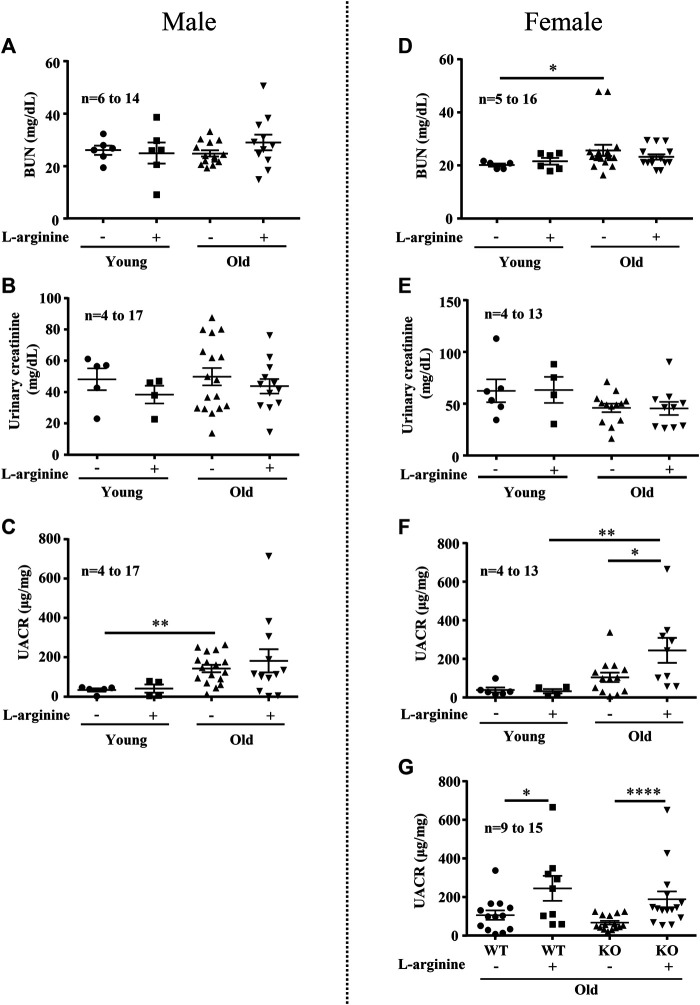
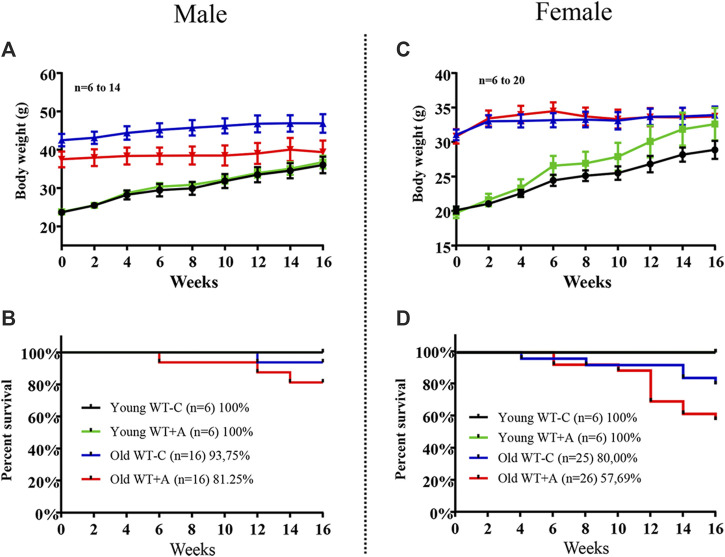
The impaired L-arginine/nitric oxide pathway is a well-recognized mechanism for cardiovascular and renal diseases with aging. Therefore, supplementation of L-arginine is widely proposed to boost health or as adjunct therapy for the patients. However, clinical data, show adverse effects and even enhanced mortality in patients receiving long-term L-arginine supplementation. The effects of long-term L-arginine supplementation on kidney aging and the underlying mechanisms remain elusive. Moreover, high protein and high amino acid diet has been thought detrimental for kidney. We therefore investigated effects of chronic dietary L-arginine supplementation on kidney aging. In both young (4 months) and old (18-24 months) mice, animals either receive standard chow containing 0.65% L-arginine or diet supplemented with L-arginine to 2.46% for 16 weeks. Inflammation and fibrosis markers and albuminuria are then analyzed. Age-associated increases in , , , , , , , and macrophage infiltration, collagen expression, and S6K1 activation are observed, which is not favorably affected, but rather further enhanced, by L-arginine supplementation. Importantly, L-arginine supplementation further enhances age-associated albuminuria and mortality particularly in females, accompanied by elevated renal arginase-II (Arg-II) levels. The enhanced albuminuria by L-arginine supplementation in aging is not protected in Arg-II mice. In contrast, L-arginine supplementation increases ROS and decreases nitric oxide production in old mouse aortas, which is reduced in Arg-II mice. The results do not support benefits of long-term L-arginine supplementation. It rather accelerates functional decline of kidney and vasculature in aging. Thus, the long-term dietary L-arginine supplementation should be avoided particularly in elderly population.
随着衰老,L-精氨酸/一氧化氮途径受损是心血管和肾脏疾病中一种公认的机制。因此,广泛建议补充L-精氨酸以促进健康或作为患者的辅助治疗。然而,临床数据显示,长期补充L-精氨酸的患者会出现不良反应,甚至死亡率增加。长期补充L-精氨酸对肾脏衰老的影响及其潜在机制仍不清楚。此外,高蛋白和高氨基酸饮食被认为对肾脏有害。因此,我们研究了长期饮食补充L-精氨酸对肾脏衰老的影响。在年轻(4个月)和年老(18 - 24个月)小鼠中,动物分别接受含0.65% L-精氨酸的标准饲料或补充L-精氨酸至2.46%的饲料,持续16周。然后分析炎症和纤维化标志物以及蛋白尿。观察到与年龄相关的 、 、 、 、 、 、 和巨噬细胞浸润、胶原蛋白表达以及S6K1激活增加,补充L-精氨酸对此没有产生有利影响,反而使其进一步增强。重要的是,补充L-精氨酸进一步增加了与年龄相关的蛋白尿和死亡率,尤其是在雌性小鼠中,同时肾精氨酸酶-II(Arg-II)水平升高。在Arg-II基因敲除小鼠中,衰老过程中补充L-精氨酸导致的蛋白尿增加并未得到改善。相反,补充L-精氨酸会增加老年小鼠主动脉中的活性氧并减少一氧化氮生成,而在Arg-II基因敲除小鼠中这种情况有所减轻。这些结果不支持长期补充L-精氨酸的益处。相反,它会加速衰老过程中肾脏和血管的功能衰退。因此,应避免长期饮食补充L-精氨酸,尤其是在老年人群中。