Department of Community Health and Epidemiology, University of Saskatchewan, Saskatoon, Saskatchewan, Canada.
Saskatchewan Health Quality Council, Saskatoon, Saskatchewan, Canada.
PLoS One. 2021 Feb 5;16(2):e0246515. doi: 10.1371/journal.pone.0246515. eCollection 2021.
During health disaster events such as the current devastating havoc being inflicted on countries globally by the SARS-CoV-19 pandemic, mental health problems among survivors and frontline workers are likely concerns. However, during such health disaster events, stakeholders tend to give more precedence to the socio-economic and biomedical health consequences at the expense of mental health. Meanwhile, studies show that regardless of the kind of disaster/antecedent, all traumatic events trigger similar post-traumatic stress symptoms among survivors, families, and frontline workers. Thus, our study investigated the prevalence of anxiety, depression and insomnia symptoms among survivors of the 2014-2016 Ebola virus disease that plagued the West African sub-region.
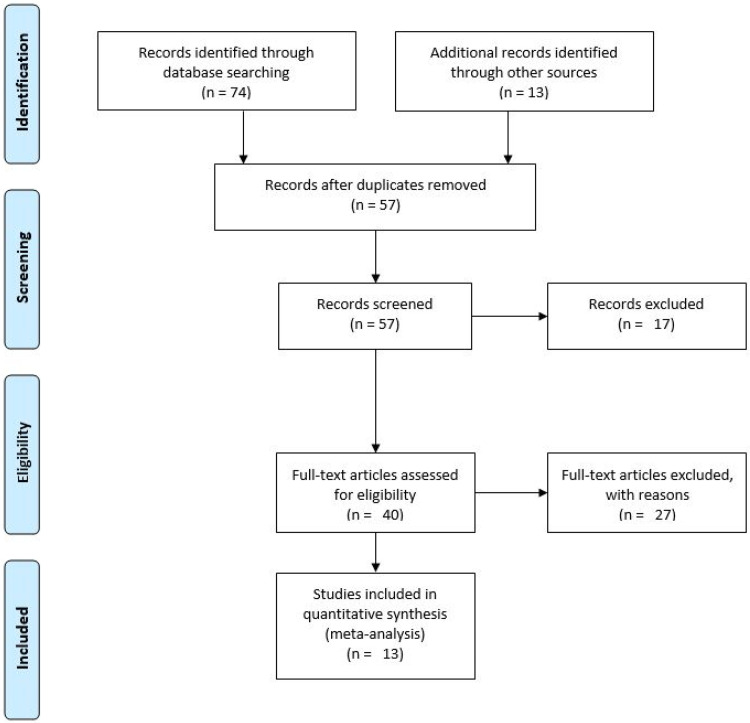
We systematically retrieved peer-reviewed articles published between 1970 and 2019 from seven electronic databases, including Google Scholar, MEDLINE, PsychInfo, PubMed, Scopus, Springer Link, Web of Science on Ebola and post-traumatic stress disorder symptoms. A comprehensive hand search complemented this literature search. Of the 87 articles retrieved, only 13 met the inclusion criteria for this meta-analysis.
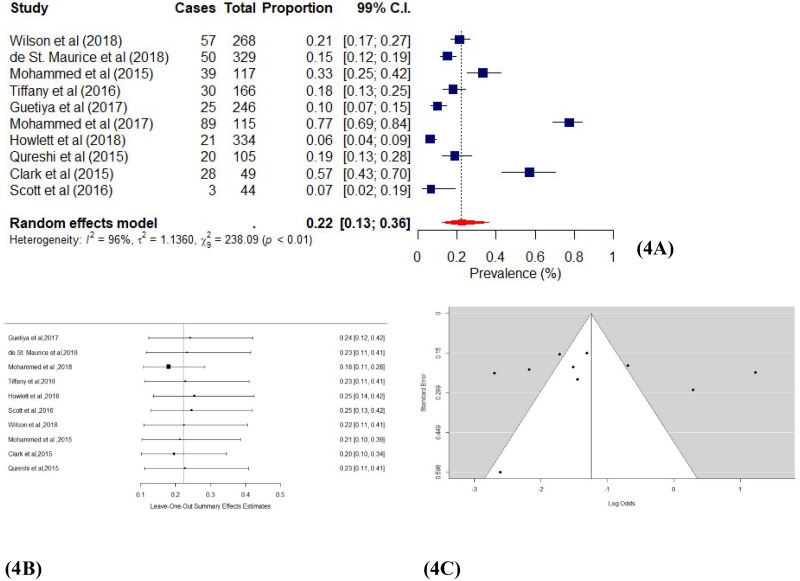
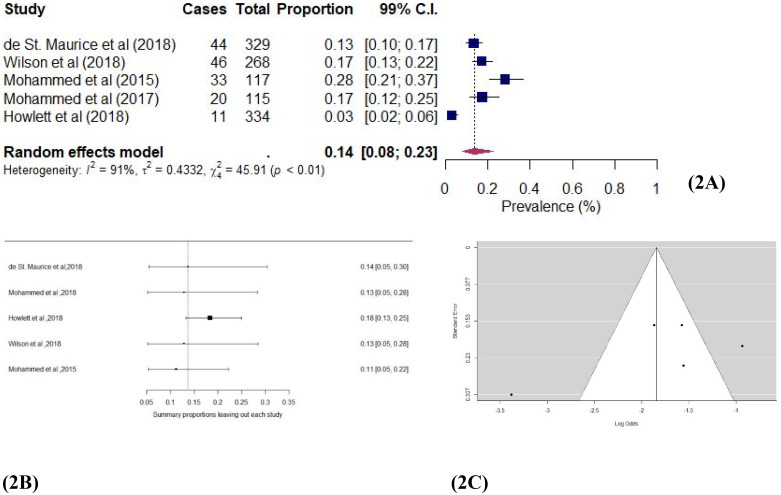
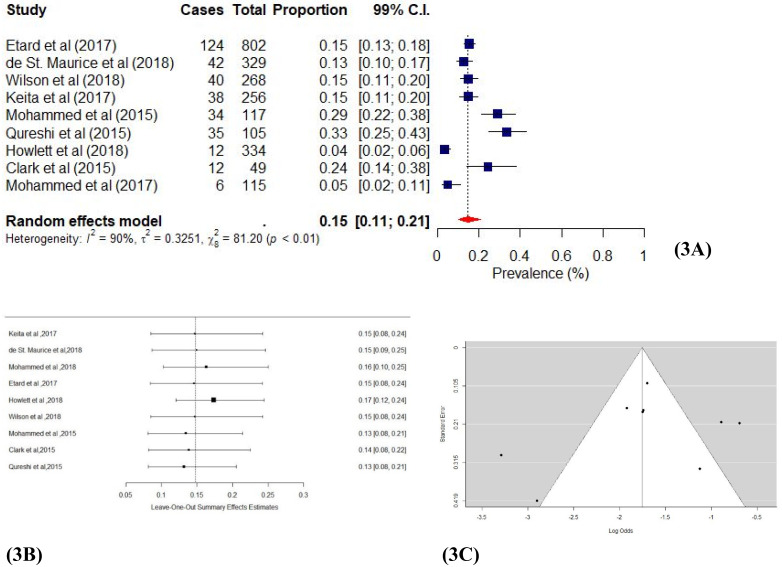
After heterogeneity, influence, and publication bias analysis, our meta-analysis pooled proportion effects estimates showed a moderate to a high prevalence of anxiety (14%; 99% CI: 0.05-0.30), depression (15%; 99% CI: 0.11-0.21), and insomnia (22%; 99% CI: 0.13-0.36). Effect estimates ranging from (0.13; 99% CI: 0.05, 0.28) through to (0.11; 99% CI: 0.05-0.22), (0.15; 99% CI: 0.09-0.25) through to (0.13; 99% CI: 0.08-0.21) and (0.23; 99% CI: 0.11-0.41) to (0.23; 99% CI: 0.11-0.41) were respectively reported for anxiety, depression and insomnia symptoms. These findings suggest a significant amount of EVD survivors are struggling with anxiety, depression and insomnia symptoms.
Our study provided the first-ever meta-analysis evidence of anxiety, depression, and insomnia symptoms among EVD survivors, and suggest that the predominant biomedical health response to regional and global health disasters should be complemented with trauma-related mental health services.
在健康灾难事件中,例如当前 SARS-CoV-19 大流行对全球各国造成的毁灭性破坏,幸存者和一线工作人员的心理健康问题可能令人担忧。然而,在这种健康灾难事件中,利益相关者往往更优先考虑社会经济和生物医学健康后果,而忽略心理健康。同时,研究表明,无论灾难/前因如何,所有创伤性事件都会在幸存者、家庭和一线工作人员中引发类似的创伤后应激症状。因此,我们的研究调查了 2014-2016 年埃博拉病毒病流行期间困扰西非次区域的幸存者中焦虑、抑郁和失眠症状的患病率。
我们系统地从七个电子数据库(包括 Google Scholar、MEDLINE、PsychInfo、PubMed、Scopus、Springer Link 和 Web of Science)中检索了 1970 年至 2019 年发表的同行评议文章,全面的手工搜索补充了文献检索。在检索到的 87 篇文章中,只有 13 篇符合本荟萃分析的纳入标准。
经过异质性、影响和发表偏倚分析,我们的荟萃分析汇总了比例效应估计,表明焦虑(14%;99%CI:0.05-0.30)、抑郁(15%;99%CI:0.11-0.21)和失眠(22%;99%CI:0.13-0.36)的患病率较高。效应估计范围从(0.13;99%CI:0.05,0.28)到(0.11;99%CI:0.05-0.22)、(0.15;99%CI:0.09-0.25)到(0.13;99%CI:0.08-0.21)和(0.23;99%CI:0.11-0.41)到(0.23;99%CI:0.11-0.41)分别报告了焦虑、抑郁和失眠症状。这些发现表明,相当数量的埃博拉病毒病幸存者正在与焦虑、抑郁和失眠症状作斗争。
我们的研究首次提供了埃博拉病毒病幸存者中焦虑、抑郁和失眠症状的荟萃分析证据,并表明,区域和全球卫生灾难的主要生物医学健康应对措施应辅以与创伤相关的心理健康服务。