Strillacci Maria Giuseppina, Marelli Stefano Paolo, Milanesi Raffaella, Zaniboni Luisa, Punturiero Chiara, Cerolini Silvia
Department of Veterinary Medicine, University of Milan, Via dell'Università 6, 26900 Lodi, Italy.
Animals (Basel). 2021 Feb 3;11(2):391. doi: 10.3390/ani11020391.
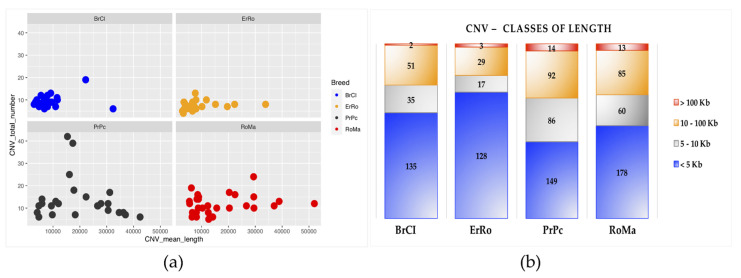
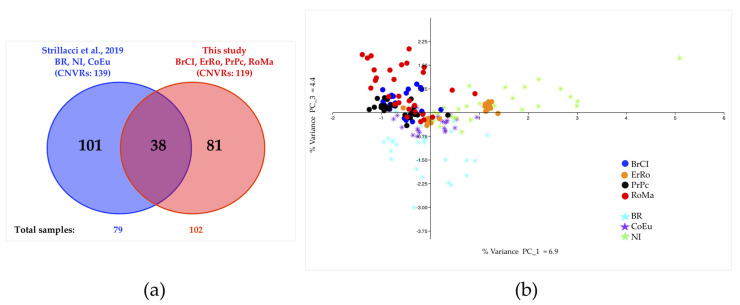
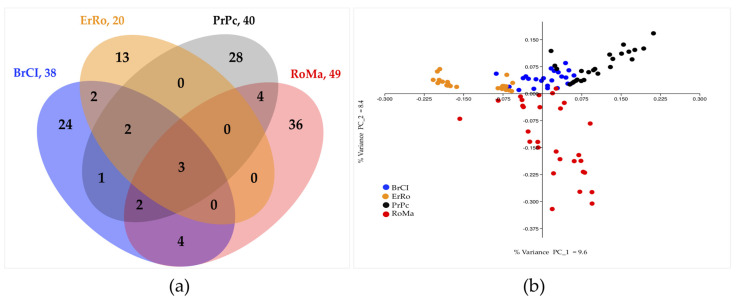
Heritage breeds can be considered a genetic reservoir of genetic variability to be conserved and valorized considering their historical, cultural, and adaptive characteristics and possibly for their high potential in commercial hybrid genetic improvement by gene introgression. The aim of the present research is to investigate via Copy Number Variant (CNVs) the genomic makeup of 4 Italian autochthonous turkey breeds (Bronzato Comune-BrCI, 24; Ermellinato di Rovigo-ErRo, 24; Parma e Piacenza-PrPc, 25; Romagnolo-RoMa, 29). CNVs detection was performed using two different software and an interbreed CNVs comparison was carried out. A total of 1077 CNVs were identified in 102 turkeys, summarized into 519 CNV regions (CNVRs), which resulted after merging in 101 and 18 breed and shared regions. Biodiversity was analyzed using the effective information supplied by CNVs analysis, and BrCI and ErRo were characterized by a low mapped CNV number. Differences were described at a genomic level related to physiological, reproductive, and behavioral traits. The comparison with other three Italian turkey breeds (Brianzolo, Colle Euganei, and Nero Italiano) using a CNV data set available in the literature showed high clustering properties at the genomic level, and their relationships are strictly linked to the geographical origin and to the history of the rural structure of their native regions.
考虑到其历史、文化和适应特征,以及通过基因渗入在商业杂交遗传改良中的高潜力,传统品种可被视为一个有待保护和增值的遗传变异基因库。本研究的目的是通过拷贝数变异(CNV)来研究4个意大利本土火鸡品种(普通青铜色火鸡-BrCI,24只;罗维戈的埃梅利纳托火鸡-ErRo,24只;帕尔马和皮亚琴察火鸡-PrPc,25只;罗马涅火鸡-RoMa,29只)的基因组构成。使用两种不同软件进行CNV检测,并进行品种间CNV比较。在102只火鸡中总共鉴定出1077个CNV,汇总为519个CNV区域(CNVR),合并后形成101个品种特异性区域和18个共享区域。利用CNV分析提供的有效信息分析生物多样性,BrCI和ErRo的特点是映射的CNV数量较少。描述了与生理、繁殖和行为特征相关的基因组水平差异。使用文献中可用的CNV数据集与其他三个意大利火鸡品种(布里安佐洛火鸡、尤加内山火鸡和意大利黑火鸡)进行比较,结果表明在基因组水平上具有高度聚类特性,它们之间的关系与地理起源及其原生地区农村结构的历史密切相关。