Department of Animal Biology, Faculty of Biology Sciences, University of Kharazmi, Tehran, Iran; Research Center for Immunodeficiencies, Children's Medical Center, Tehran University of Medical Sciences, Tehran, Iran.
Laser Research Centre, Faculty of Health Science, University of Johannesburg, Doornfontein 2028, South Africa; Cancer Immunology Project (CIP), Universal Scientific Education and Research Network (USERN), Doornfontein, South Africa.
Am J Emerg Med. 2021 Oct;48:357-360. doi: 10.1016/j.ajem.2021.01.067. Epub 2021 Jan 28.
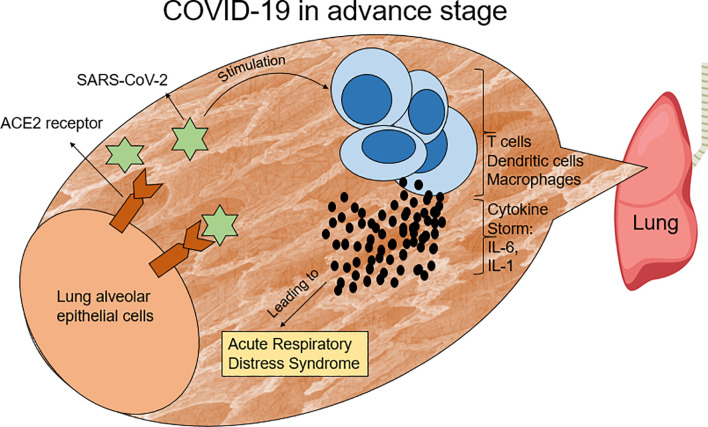
Severe acute respiratory syndrome coronavirus 2 (SARS-CoV-2) is a member of the coronavirus family, which causes coronavirus disease 2019 (COVID-19). The phenotype of the disease varies from asymptomatic, to a mild phenotype, through to the severe form of acute respiratory distress syndrome (ARDS), which often leads to death, especially in those with underlying diseases. It has been reported that those who suffer from cancer (especially lung cancer and hematological malignancies) are at higher risk of serious complications and death from COVID-19. Some cancer treatments such as CAR T cell therapy can produce a cytokine storm, which is also a hallmark of severe COVID-19. Therefore, patients receiving CAR T cells are at higher risk if they become infected with COVID-19, and could be treated with anti-cytokine approaches.
严重急性呼吸综合征冠状病毒 2(SARS-CoV-2)是冠状病毒科的一个成员,可引起 2019 年冠状病毒病(COVID-19)。疾病的表型从无症状到轻症,再到急性呼吸窘迫综合征(ARDS)的严重形式,这往往导致死亡,特别是在有基础疾病的患者中。据报道,患有癌症(特别是肺癌和血液系统恶性肿瘤)的患者患 COVID-19 后出现严重并发症和死亡的风险更高。一些癌症治疗方法,如嵌合抗原受体 T 细胞(CAR T)疗法,可产生细胞因子风暴,这也是严重 COVID-19 的一个标志。因此,如果 COVID-19 感染,接受 CAR T 细胞治疗的患者风险更高,并且可以用抗细胞因子方法治疗。