Department of Neurology, Kyoto University Graduate School of Medicine, Kyoto, Japan.
Department of Pathology and Laboratory Medicine, Institute on Aging and Center for Neurodegenerative Disease Research, University of Pennsylvania School of Medicine, Philadelphia, Pennsylvania, USA.
Mov Disord. 2021 Sep;36(9):2036-2047. doi: 10.1002/mds.28512. Epub 2021 Feb 6.
Patients with Parkinson's disease (PD) show motor symptoms as well as various non-motor symptoms. Postmortem studies of PD have suggested that initial alpha-synuclein (α-Syn) pathology develops independently in the olfactory bulb and lower brainstem, spreading from there stereotypically. However, it remains unclear how these two pathological pathways contribute to the clinicopathological progression of PD.
The objective of this study was to examine the clinicopathological contribution of α-Syn spread from the olfactory bulb.
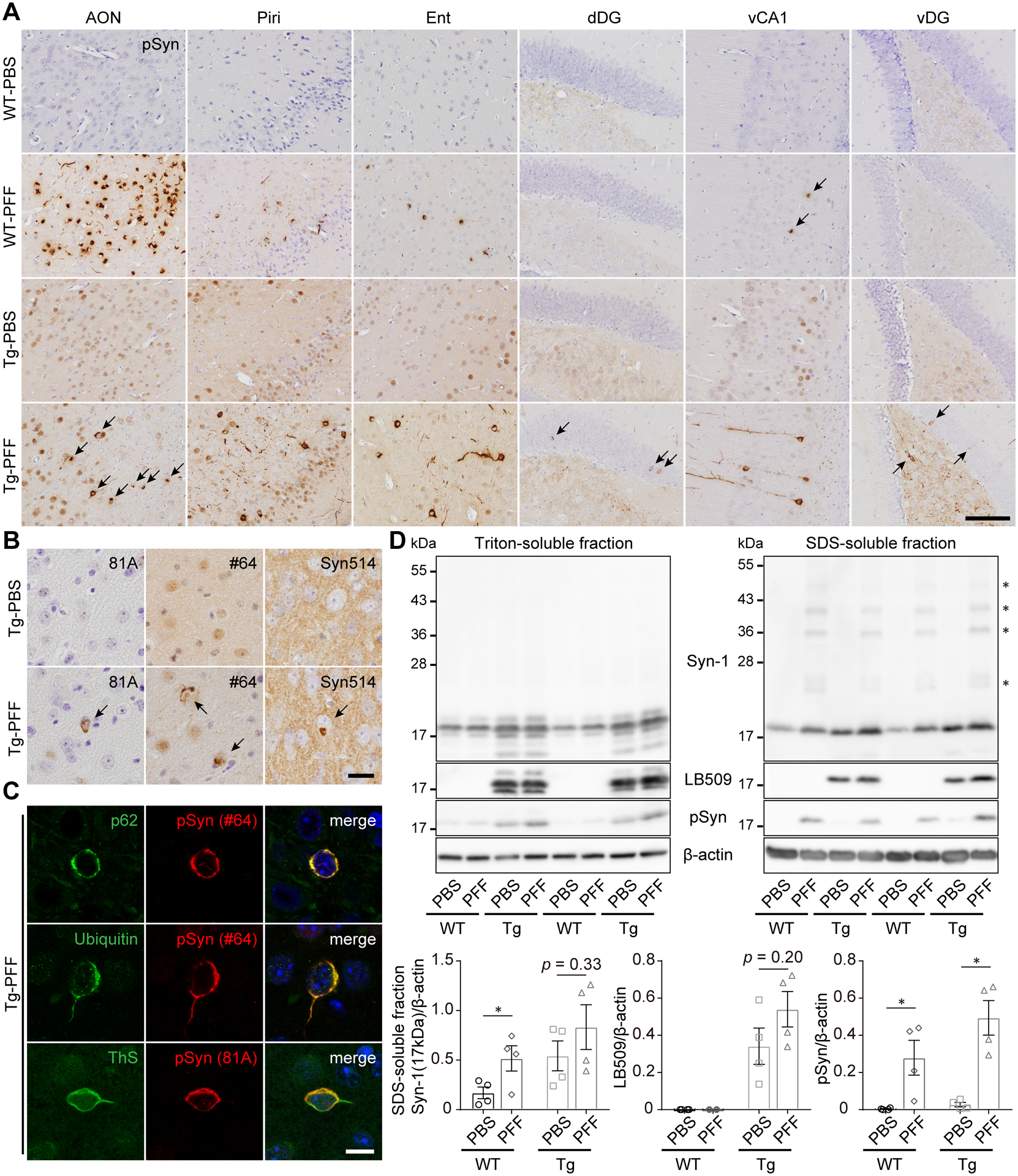
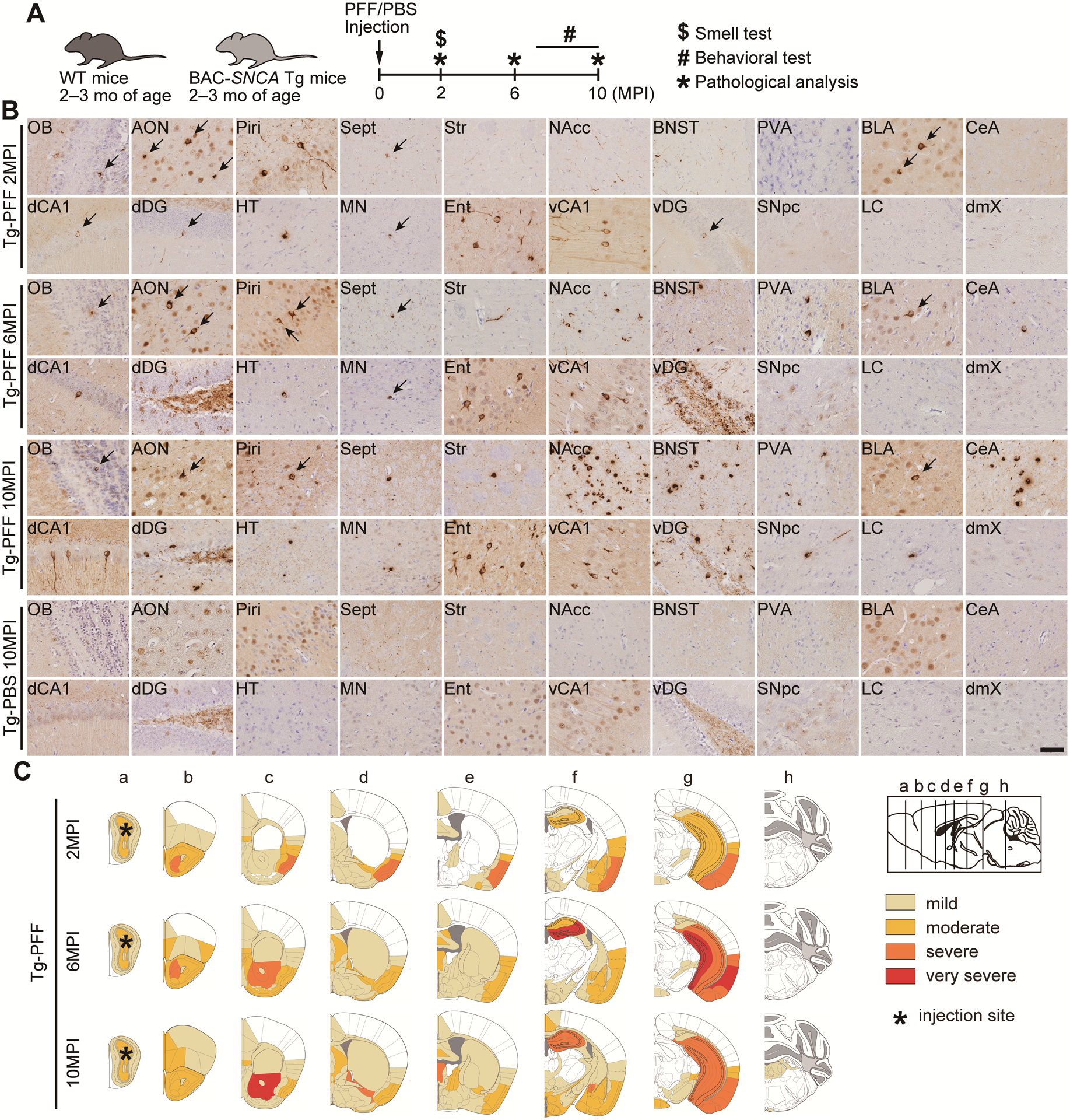
We conducted pathological and behavioral analyses of human α-Syn bacterial artificial chromosome transgenic mice injected with α-Syn preformed fibrils into the bilateral olfactory bulb up to 10 months postinjection.
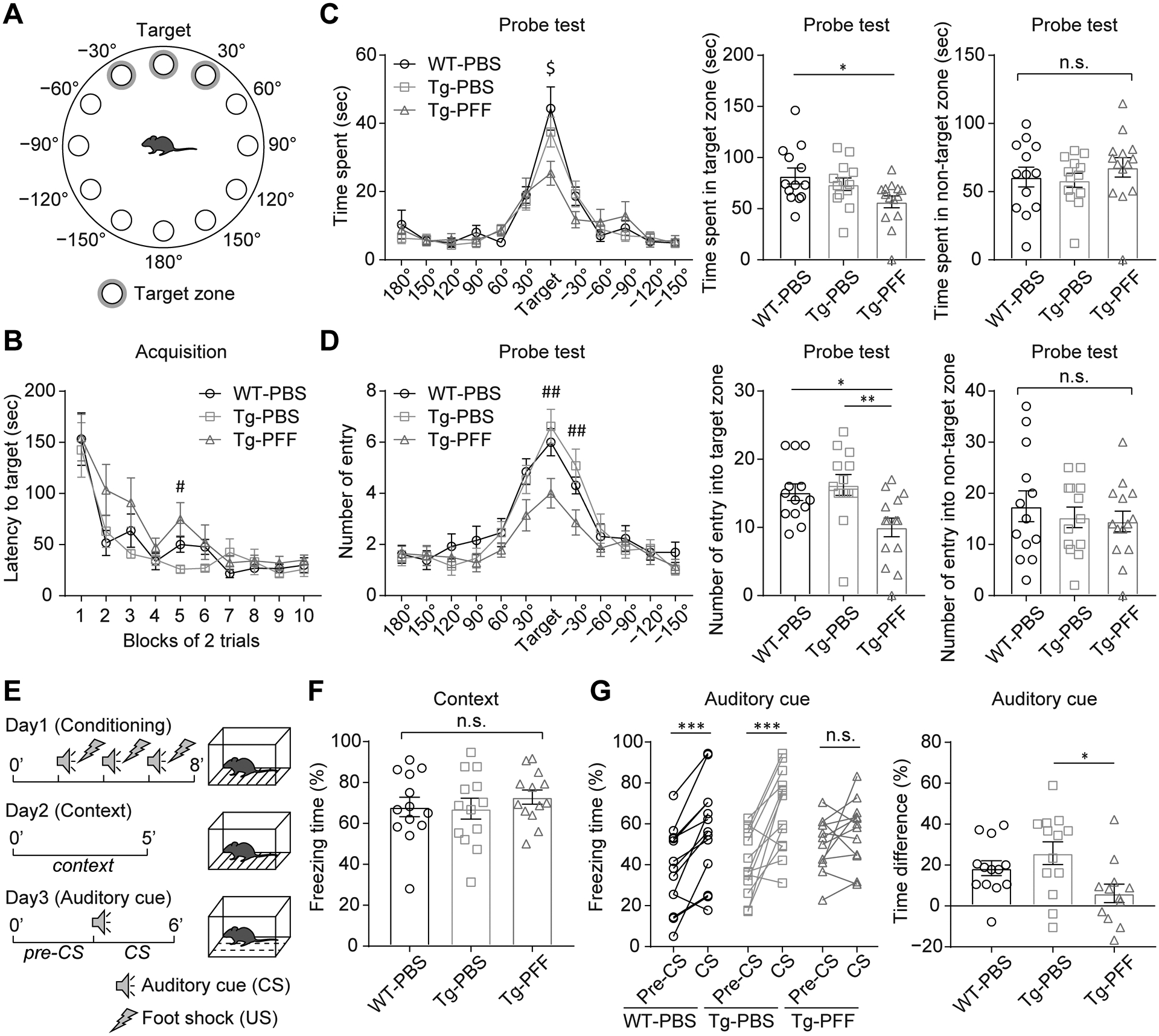
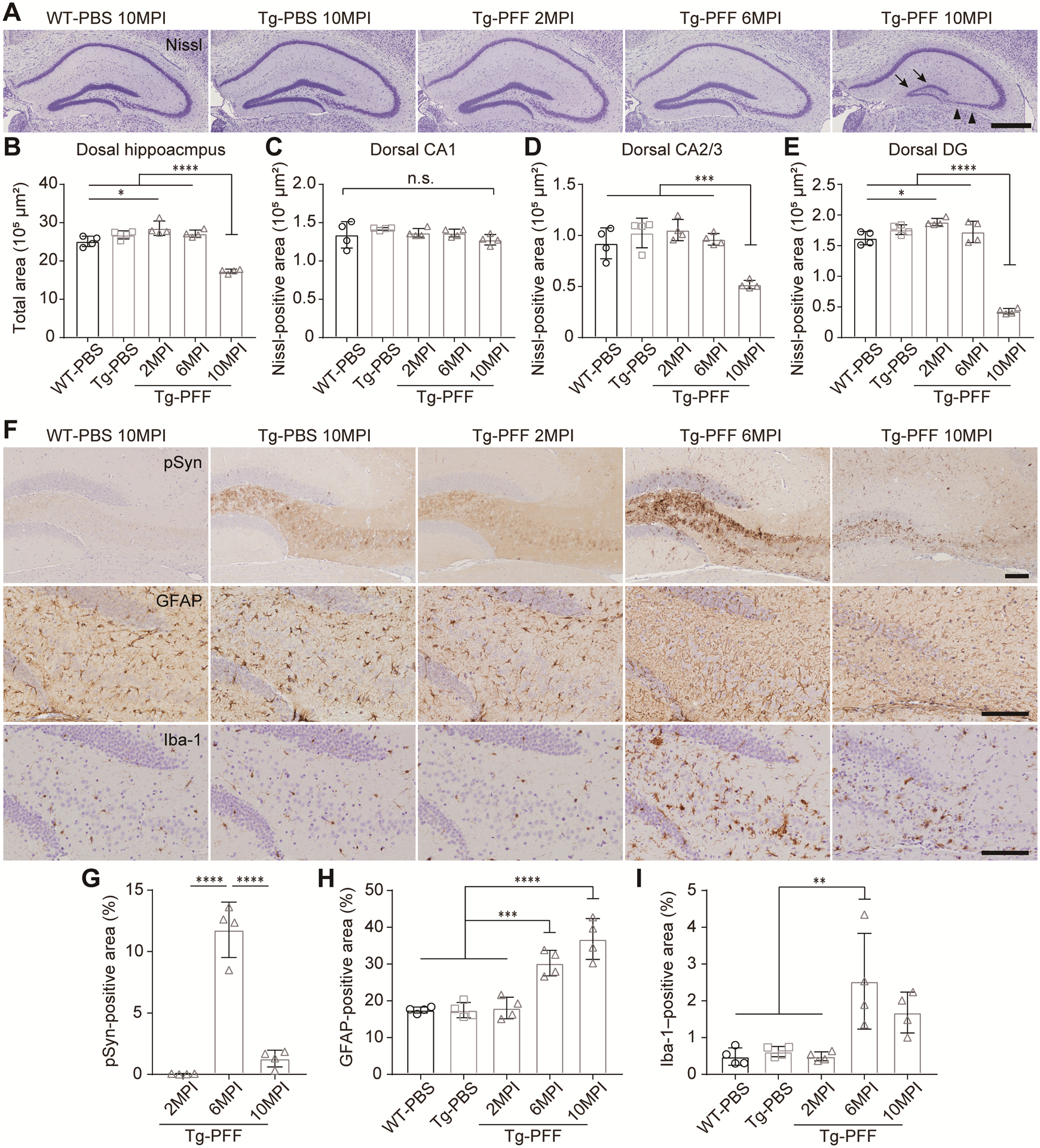
α-Syn preformed fibril injections induced more widespread α-Syn pathology in the transgenic mice than that in wild-type mice. Severe α-Syn pathology in the transgenic mice injected with α-Syn preformed fibrils was initially observed along the olfactory pathway and later in the brain regions that are included in the limbic system and have connections with it. The α-Syn pathology was accompanied by regional atrophy, neuron loss, reactive astrogliosis, and microglial activation, which were remarkable in the hippocampus. Behavioral analyses revealed hyposmia, followed by anxiety-like behavior and memory impairment, but not motor dysfunction, depression-like behavior, or circadian rhythm disturbance.
Our data suggest that α-Syn spread from the olfactory bulb mainly affects the olfactory pathway and limbic system as well as its related regions, leading to the development of hyposmia, anxiety, and memory loss in PD. © 2021 International Parkinson and Movement Disorder Society.
帕金森病(PD)患者表现出运动症状和各种非运动症状。PD 的尸检研究表明,最初的α-突触核蛋白(α-Syn)病理学在嗅球和下脑于独立发展,从那里呈刻板样扩散。然而,尚不清楚这两个病理途径如何导致 PD 的临床病理进展。
本研究旨在检查 α-Syn 从嗅球扩散对临床病理的贡献。
我们对双侧嗅球注射α-Syn 原纤维的人α-Syn 细菌人工染色体转基因小鼠进行了病理和行为分析,注射后最多 10 个月。
α-Syn 原纤维注射诱导转基因小鼠比野生型小鼠更广泛的 α-Syn 病理学。在注射了 α-Syn 原纤维的转基因小鼠中,嗅球通路和包含在边缘系统及其连接的脑区中首先观察到严重的 α-Syn 病理学。α-Syn 病理学伴随着区域性萎缩、神经元丧失、反应性星形胶质细胞增生和小胶质细胞激活,在海马中尤为明显。行为分析显示嗅觉减退,随后出现焦虑样行为和记忆障碍,但没有运动功能障碍、抑郁样行为或昼夜节律紊乱。
我们的数据表明,α-Syn 从嗅球扩散主要影响嗅觉通路和边缘系统及其相关区域,导致 PD 患者出现嗅觉减退、焦虑和记忆丧失。© 2021 国际帕金森病和运动障碍学会。