Institute on Aging and Center for Neurodegenerative Disease Research, Department of Pathology and Laboratory Medicine, Perelman School of Medicine, University of Pennsylvania, Philadelphia, PA, USA.
Department of Bioengineering, School of Engineering and Applied Science, University of Pennsylvania, Philadelphia, PA, USA.
Nat Neurosci. 2019 Aug;22(8):1248-1257. doi: 10.1038/s41593-019-0457-5. Epub 2019 Jul 25.
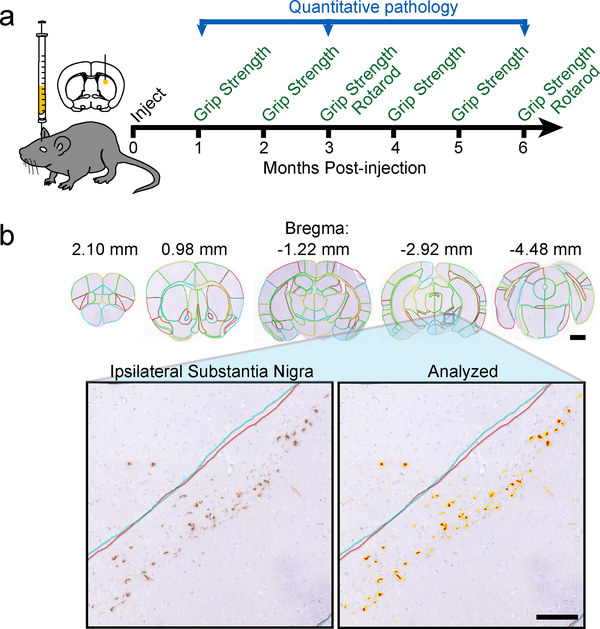
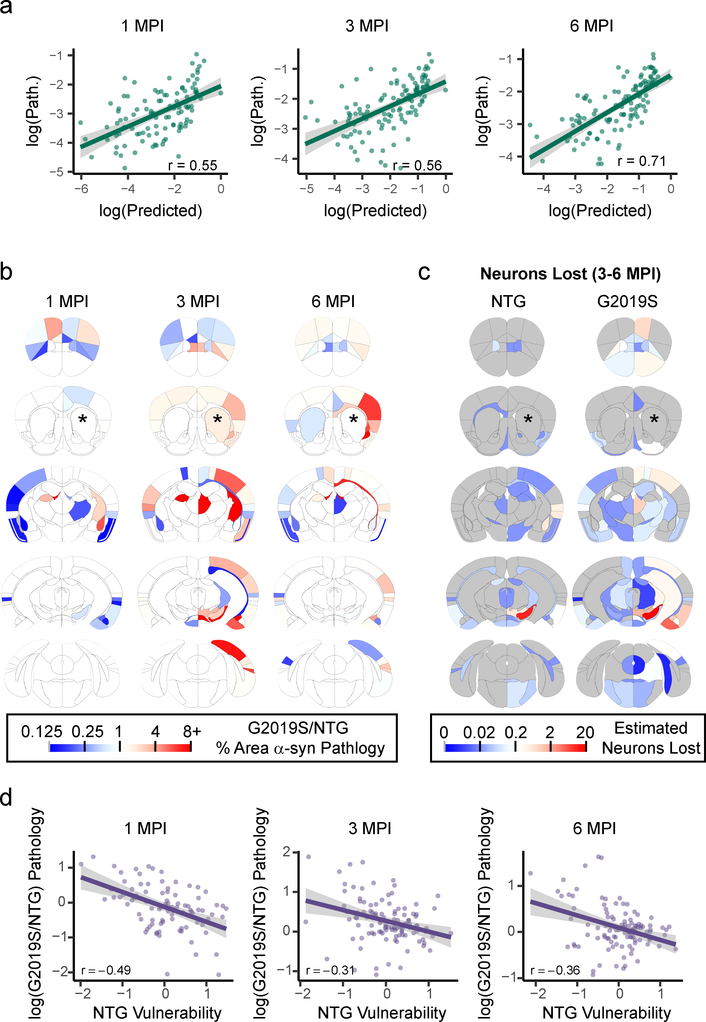
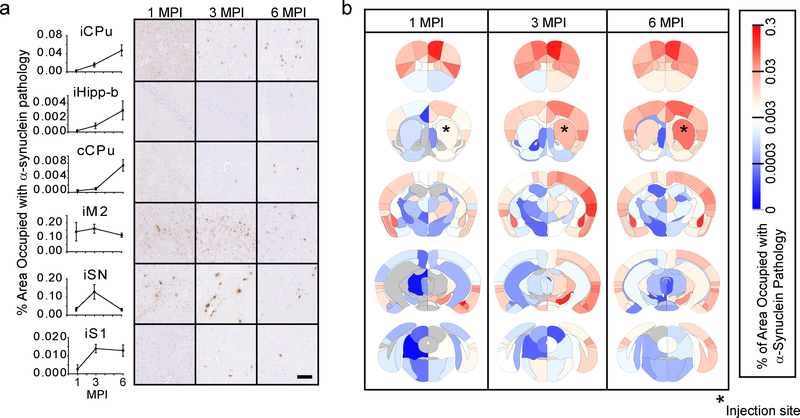
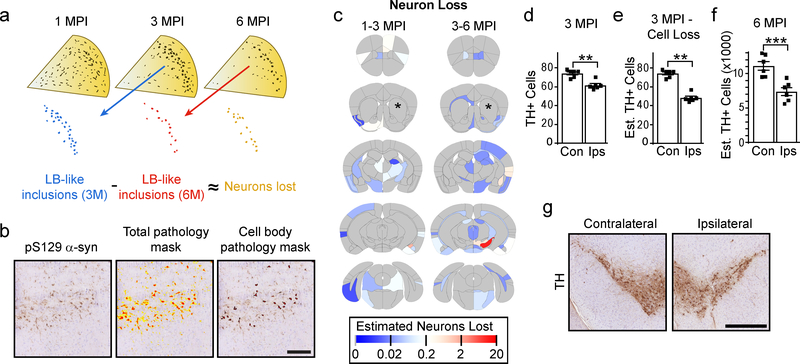
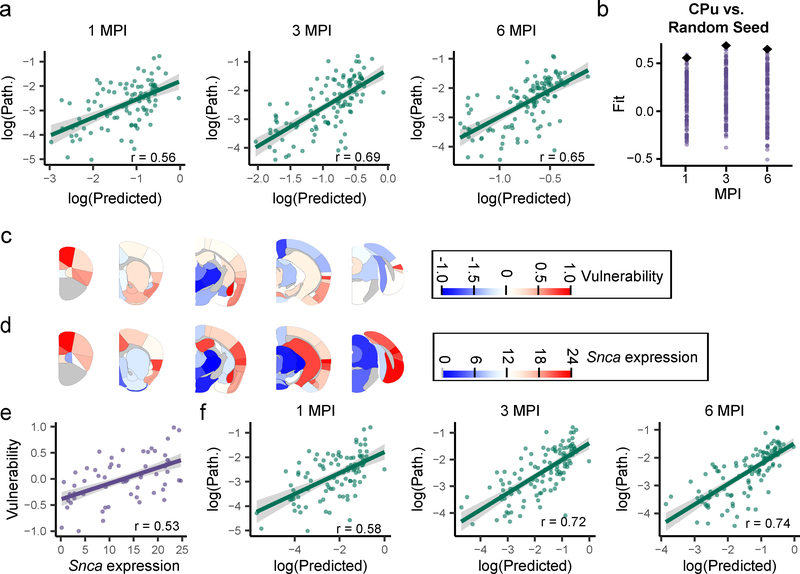
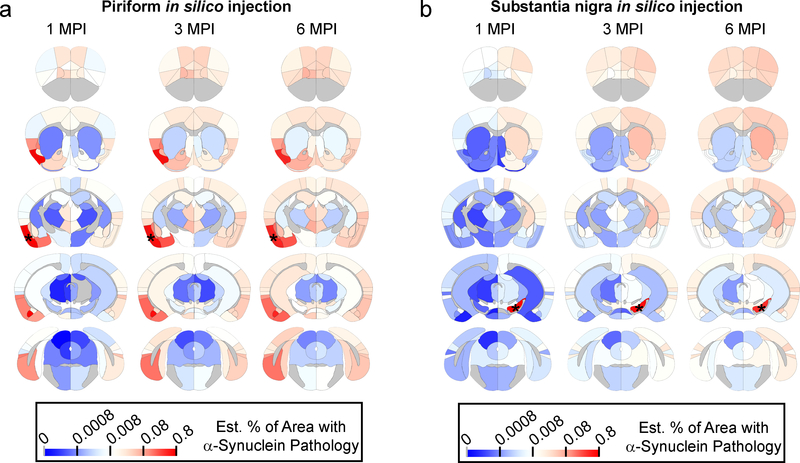
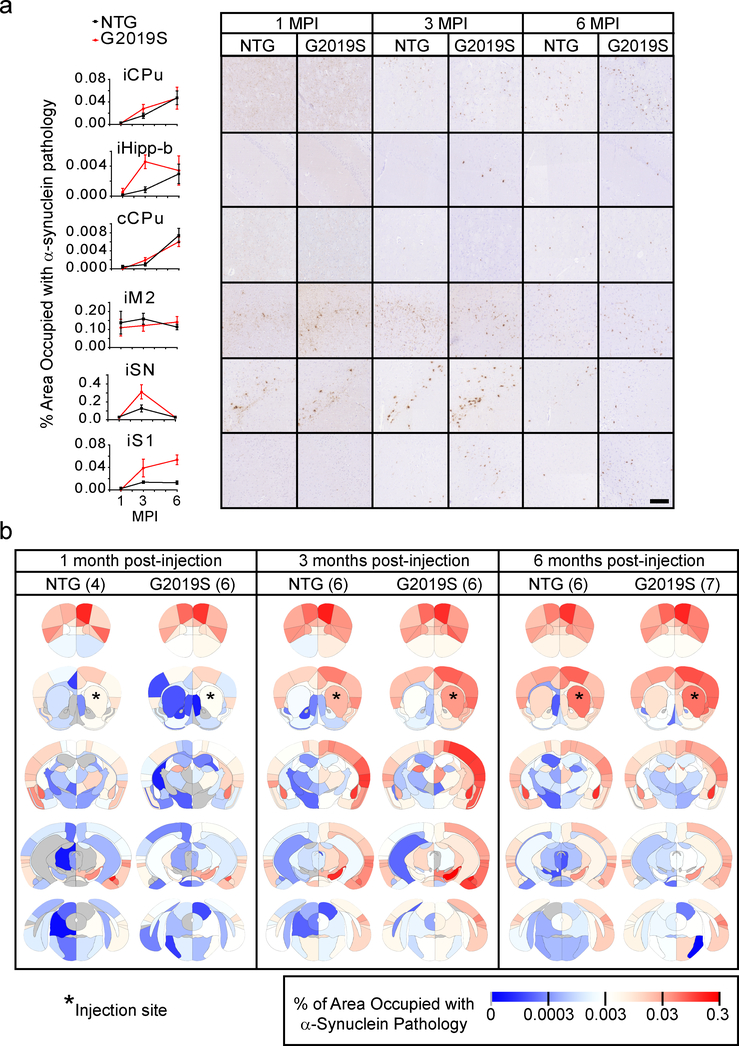
Studies of patients afflicted by neurodegenerative diseases suggest that misfolded proteins spread through the brain along anatomically connected networks, prompting progressive decline. Recently, mouse models have recapitulated the cell-to-cell transmission of pathogenic proteins and neuron death observed in patients. However, the factors regulating the spread of pathogenic proteins remain a matter of debate due to an incomplete understanding of how vulnerability functions in the context of spread. Here we use quantitative pathology mapping in the mouse brain, combined with network modeling to understand the spatiotemporal pattern of spread. Patterns of α-synuclein pathology are well described by a network model that is based on two factors: anatomical connectivity and endogenous α-synuclein expression. The map and model allow the assessment of selective vulnerability to α-synuclein pathology development and neuron death. Finally, we use quantitative pathology to understand how the G2019S LRRK2 genetic risk factor affects the spread and toxicity of α-synuclein pathology.
对患有神经退行性疾病的患者的研究表明,错误折叠的蛋白质沿着解剖学上连接的网络在大脑中传播,导致进行性衰退。最近,小鼠模型再现了在患者中观察到的致病性蛋白质的细胞间传递和神经元死亡。然而,由于对易感性在传播背景下的作用的理解不完整,调节致病性蛋白质传播的因素仍然存在争议。在这里,我们使用小鼠大脑中的定量病理学图谱,结合网络建模来了解传播的时空模式。基于两个因素的网络模型很好地描述了 α-突触核蛋白病理学模式:解剖连接和内源性 α-突触核蛋白表达。该图谱和模型允许评估对 α-突触核蛋白病理学发展和神经元死亡的选择性易感性。最后,我们使用定量病理学来了解 G2019S LRRK2 遗传风险因素如何影响 α-突触核蛋白病理学的传播和毒性。