College of Medicine, Northeast Ohio Medical University, Rootstown, Ohio.
Feinberg School of Medicine, Northwestern University, Chicago, Ill.
J Vasc Surg. 2021 Jun;73(6):1852-1857. doi: 10.1016/j.jvs.2020.12.087. Epub 2021 Feb 4.
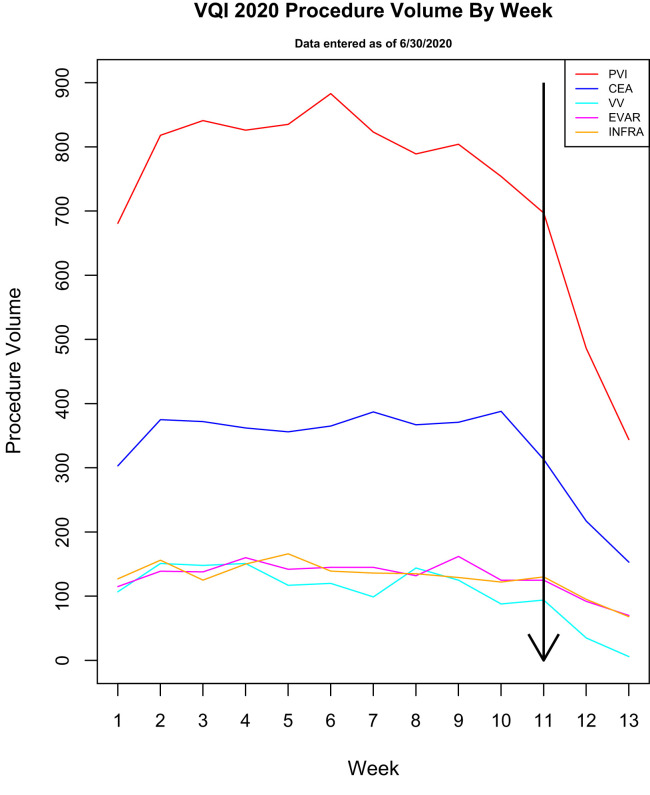
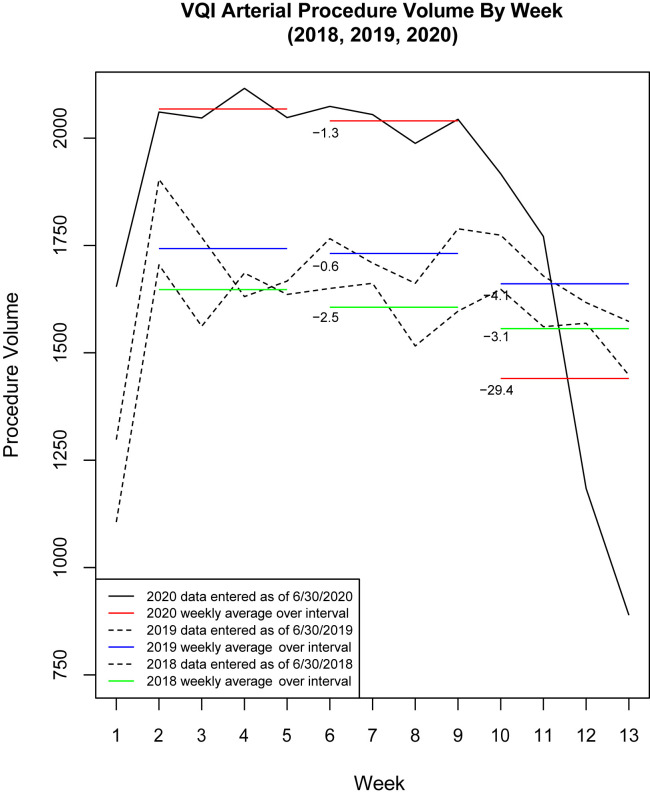
In the present report, we have described the abrupt pivot of Vascular Quality Initiative physician members away from standard clinical practice to a restrictive phase of emergent and urgent vascular procedures in response to the coronavirus disease 2019 (COVID-19) pandemic. The Society for Vascular Surgery Patient Safety Organization queried both data managers and physicians in May 2020 to discern the effects of the COVID-19 pandemic. Approximately three fourths of physicians (74%) had adopted a restrictive operating policy for urgent and emergent cases only. However, one half had considered "time sensitive" elective cases as urgent. Data manager case entry was affected by both low case volumes and low staffing resulting from reassignment or furlough. A sevenfold reduction in arterial Vascular Quality Initiative case volume entry was noted in the first quarter of 2020 compared with the same period in 2019. The downstream consequences of delaying vascular procedures for carotid artery stenosis, aortic aneurysm repair, vascular access, and chronic limb ischemia remain undetermined. Further ramifications of the COVID-19 pandemic shutdown will likely be amplified if resumption of elective vascular care is delayed beyond a short window of time.
在本报告中,我们描述了血管质量倡议医生成员突然从标准临床实践转向紧急和紧急血管手术的限制阶段,以应对 2019 年冠状病毒病 (COVID-19) 大流行。血管外科学会患者安全组织在 2020 年 5 月询问了数据管理员和医生,以了解 COVID-19 大流行的影响。大约四分之三的医生 (74%) 仅对紧急和紧急病例采取了限制手术政策。然而,有一半人认为“时间敏感”的择期病例为紧急。数据管理员的病例输入受到病例数量低和重新分配或休假导致的人员配备不足的影响。与 2019 年同期相比,2020 年第一季度的动脉血管质量倡议病例数量减少了七倍。延迟颈动脉狭窄、主动脉瘤修复、血管通路和慢性肢体缺血等血管手术的下游后果仍不确定。如果恢复择期血管护理的时间超过短时间窗口,COVID-19 大流行关闭的进一步影响可能会加剧。