Gad Emad Hamdy, Kamel Yasmin, Salem Tahany Abdel-Hameed, Ali Mohammed Abdel-Hafez, Sallam Ahmed Nabil
Hepatobiliary Surgery, National Liver Institute, Menoufia University, Shebeen Elkoum, Egypt.
Anaesthesia, National Liver Institute, Menoufia University, Shebeen Elkoum, Egypt.
Ann Med Surg (Lond). 2021 Jan 23;62:302-314. doi: 10.1016/j.amsu.2021.01.052. eCollection 2021 Feb.
Kasai portoenterostomy(KPE) is the treatment of choice for the fatal devastating infantile type III biliary atresia (BA). The study aimed to analyze short-and long-term outcomes after this procedure and their predictors in a tertiary center.
We retrospectively analyzed 410 infants who underwent KPE for type III BA in the period from February 2000 to December 2019. The overall male/female ratio was 186/224.
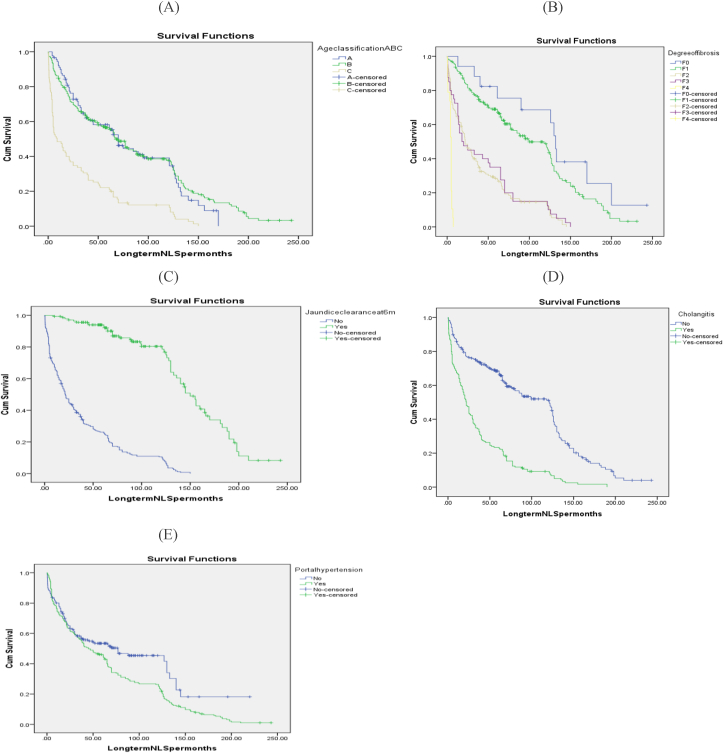
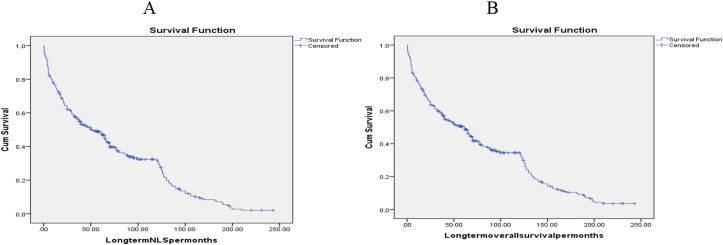
The early (>6months) complications involved 187(45.6%) of our infants with a higher incidence of early cholangitis that affected 108(26.3%) of them. The jaundice clearance at the 6th post-operative month that reached 138(33.7%) of them had an independent correlation with mild portal tracts ductal and/or ductular proliferation, using postoperative steroids therapy, and absence of early postoperative cholangitis. The early infant mortality that affected 70(17.1%) of our patients was mostly from sepsis. On the other hand, late (<6months) patients complications and mortalities affected 256(62.4%) and 240(58.5%) of patients respectively; moreover, liver failure and sepsis were the most frequent causes of late mortalities in non-transplanted and transplanted cases respectively. Lastly, the long-term (20-year) native liver survival (NLS) that reached 91(22.2%) of patients had an independent correlation with age at operation ≤ 90 days, higher preoperative mean serum alb, portal tract fibrosis grades F0 and F1, absence of intraoperative bleeding, absence of post-operative cholangitis, the occurrence of jaundice clearance at the 6th postoperative month and absence of post-operative portal hypertension (PHN).
Sepsis had a direct effect on early and late patient mortalities after Kasai operation for type III BA; moreover, patient age at operation<90 days, higher fibrosis grades, the occurrence of postoperative cholangitis and PHN, and persistence of post-operative jaundice had negative insult on long-term postoperative outcome. So, it is crucial to modulate these factors for a better outcome.
肝门空肠吻合术(KPE)是治疗致命性婴儿III型胆道闭锁(BA)的首选方法。本研究旨在分析在一家三级中心进行该手术后的短期和长期结果及其预测因素。
我们回顾性分析了2000年2月至2019年12月期间接受KPE治疗III型BA的410例婴儿。总体男女比例为186/224。
早期(>6个月)并发症累及187例(45.6%)婴儿,早期胆管炎发生率较高,其中108例(26.3%)受影响。术后第6个月黄疸清除的有138例(33.7%),其与轻度门静脉区导管和/或小导管增生、使用术后类固醇治疗以及术后早期无胆管炎独立相关。早期婴儿死亡影响了70例(17.1%)患者,主要原因是败血症。另一方面,晚期(<6个月)患者并发症和死亡率分别影响了256例(62.4%)和240例(58.5%)患者;此外,肝衰竭和败血症分别是非移植和移植病例中晚期死亡的最常见原因。最后,长期(20年)自体肝存活率达到91例(22.2%)患者,其与手术年龄≤90天、术前平均血清白蛋白较高、门静脉区纤维化分级F0和F1、术中无出血、术后无胆管炎、术后第6个月出现黄疸清除以及术后无门静脉高压(PHN)独立相关。
败血症对III型BA行Kasai手术后的早期和晚期患者死亡率有直接影响;此外,手术年龄<90天、纤维化分级较高、术后胆管炎和PHN的发生以及术后黄疸持续存在对术后长期结果有负面影响。因此,调节这些因素以获得更好的结果至关重要。