
东非和南非采用谷物-豆类间作实现可持续集约化种植
Sustainable Intensification with Cereal-Legume Intercropping in Eastern and Southern Africa.
作者信息
Kiwia Abednego, Kimani David, Harawa Rebbie, Jama Bashir, Sileshi Gudeta W
机构信息
Alliance for Green Revolution in Africa (AGRA), West End Towers, Waiyaki Way, P.O. Box 66773 Westlands, Nairobi 00800, Kenya;
Islamic Development Bank, 8111 King Khalid St., Al Nuzlah Al Yamania Dist., Jeddah 22332-2444, Saudi Arabia;
出版信息
Sustainability. 2019;11(10):2891. doi: 10.3390/su11102891. Epub 2019 May 21.
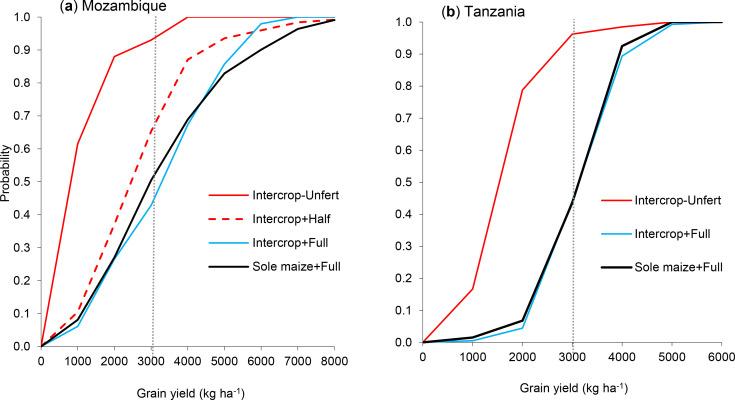
Much research has been conducted on cereal-legume intercropping as a sustainable intensification (SI) practice in Eastern and Southern Africa (ESA). However, the role of inorganic fertilizers in sustainably intensifying intercropping systems has not been systematically analyzed. Therefore, the objective of the present analysis was to assess the role of inorganic fertilizer use in cereal-pigeonpea () intercropping in terms of SI indicators, namely, yield, production risks, input use efficiency, and economic returns. The data used for this analysis were gathered from over 900 on-farm trials across Kenya, Tanzania, and Mozambique. All SI indicators assessed showed that intercropping combined with application of small amounts of inorganic fertilizers is superior to unfertilized intercrops. Fertilizer application in the intercropping system improved cereal yields by 71-282% and pigeon pea yields by 32-449%, increased benefit-cost ratios by 10-40%, and reduced variability in cereal yields by 40-56% and pigeonpea yields by 5-52% compared with unfertilized intercrops. Improved yields and reduced variability imply lowering farmers' risk exposure and improved credit rating, which could enhance access to farm inputs. We conclude that the strategic application of small amounts of inorganic fertilizers is essential for the productivity and economic sustainability of cereal-pigeonpea intercropping under smallholder farming in ESA.
在东非和南部非洲(ESA),人们对谷物-豆类间作作为一种可持续集约化(SI)实践进行了大量研究。然而,无机肥料在可持续强化间作系统中的作用尚未得到系统分析。因此,本分析的目的是从SI指标(即产量、生产风险、投入使用效率和经济回报)方面评估无机肥料在谷物-木豆()间作中的作用。本分析所用数据来自肯尼亚、坦桑尼亚和莫桑比克的900多个田间试验。所有评估的SI指标均表明,间作结合少量无机肥料的施用优于未施肥的间作。与未施肥的间作相比,间作系统中的肥料施用使谷物产量提高了71%-282%,木豆产量提高了32%-449%,效益成本比提高了10%-40%,谷物产量变异性降低了40%-56%,木豆产量变异性降低了5%-52%。产量提高和变异性降低意味着降低了农民面临的风险并提高了信用评级,这可能会增加获得农业投入的机会。我们得出结论,在ESA的小农农业中,少量无机肥料的战略施用对于谷物-木豆间作的生产力和经济可持续性至关重要。



 Zotero 插件