Kermah Michael, Franke Angelinus C, Adjei-Nsiah Samuel, Ahiabor Benjamin D K, Abaidoo Robert C, Giller Ken E
Plant Production Systems, Wageningen University, P.O. Box 430, 6700 AK Wageningen, The Netherlands.
Soil, Crop and Climate Sciences, University of the Free State, P.O. Box 339, Bloemfontein 9300, South Africa.
Field Crops Res. 2017 Nov;213:38-50. doi: 10.1016/j.fcr.2017.07.008.
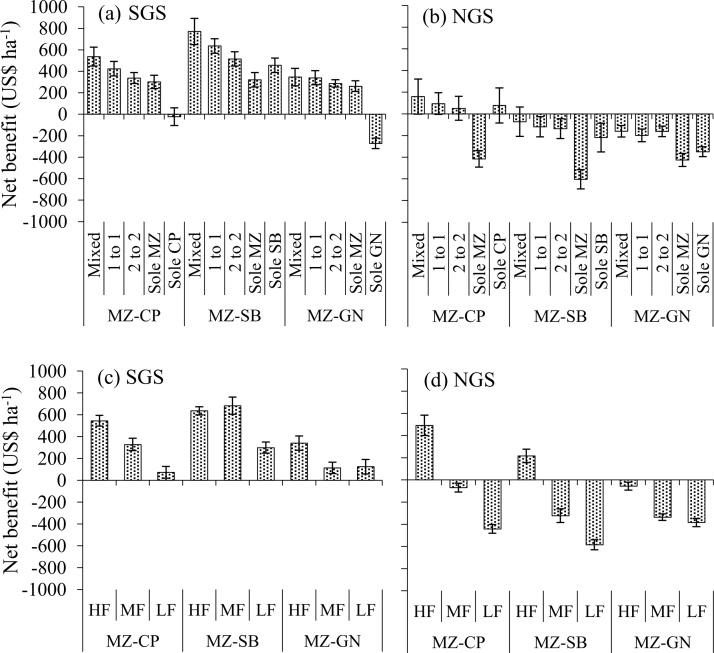
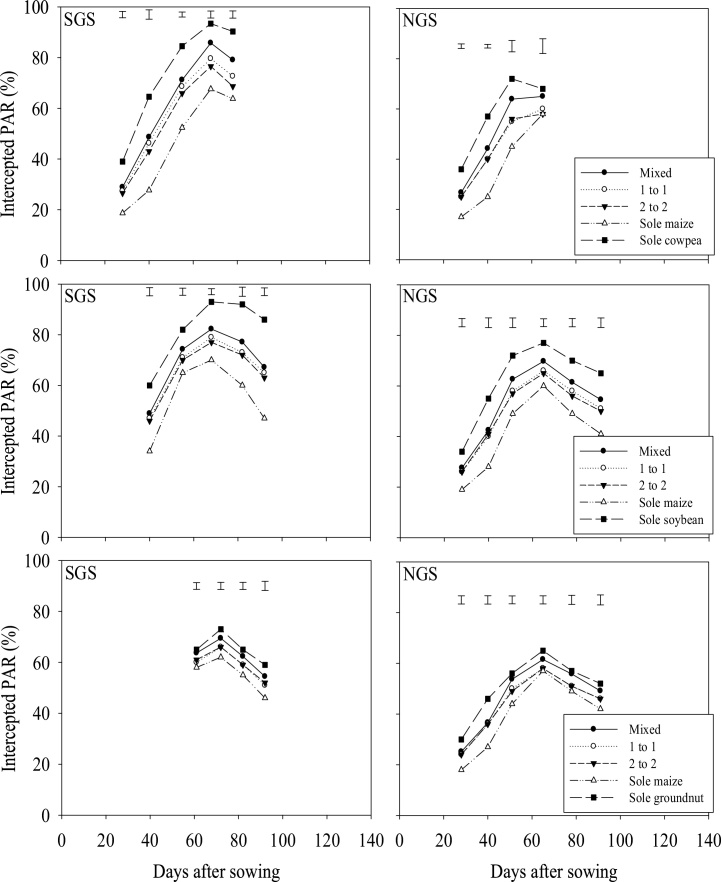
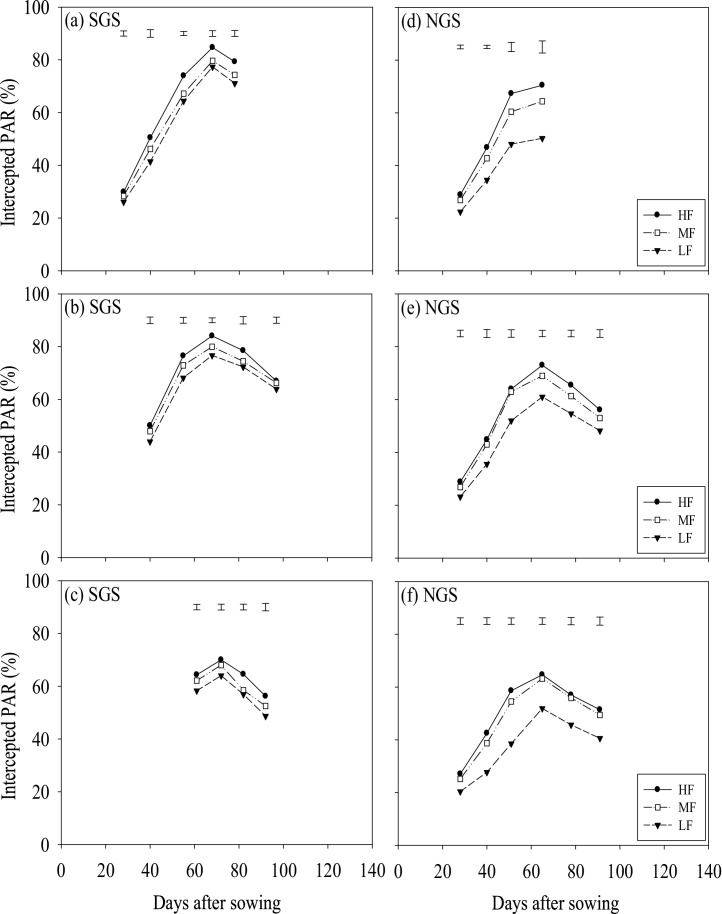
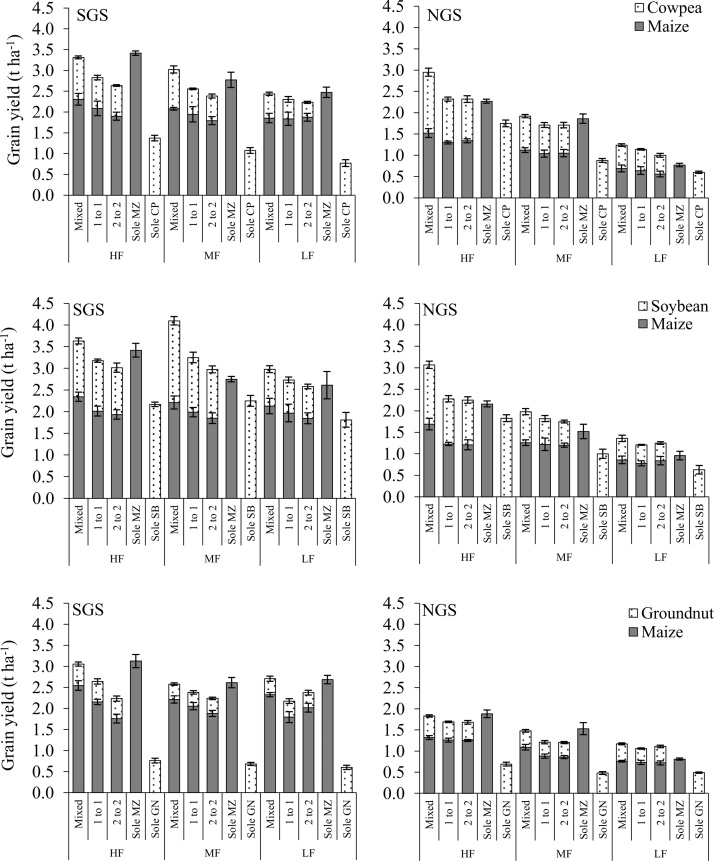
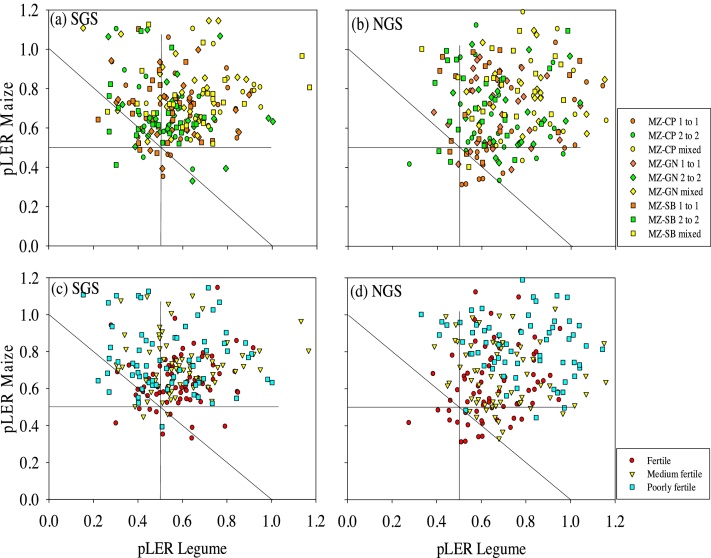
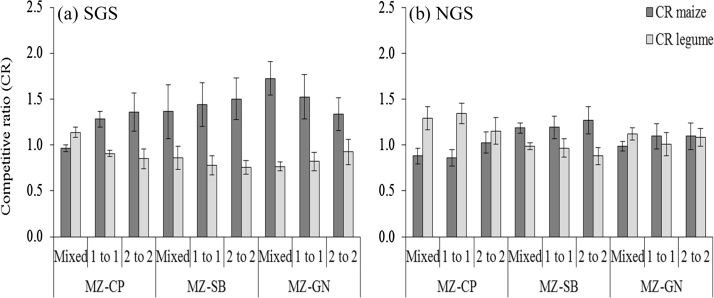
Smallholder farmers in the Guinea savanna practise cereal-legume intercropping to mitigate risks of crop failure in mono-cropping. The productivity of cereal-legume intercrops could be influenced by the spatial arrangement of the intercrops and the soil fertility status. Knowledge on the effect of soil fertility status on intercrop productivity is generally lacking in the Guinea savanna despite the wide variability in soil fertility status in farmers' fields, and the productivity of within-row spatial arrangement of intercrops relative to the distinct-row systems under on-farm conditions has not been studied in the region. We studied effects of maize-legume spatial intercropping patterns and soil fertility status on resource use efficiency, crop productivity and economic profitability under on-farm conditions in the Guinea savanna. Treatments consisted of maize-legume intercropped within-row, 1 row of maize alternated with one row of legume, 2 rows of maize alternated with 2 rows of legume, a sole maize crop and a sole legume crop. These were assessed in the southern Guinea savanna (SGS) and the northern Guinea savanna (NGS) of northern Ghana for two seasons using three fields differing in soil fertility in each agro-ecological zone. Each treatment received 25 kg P and 30 kg K ha at sowing, while maize received 25 kg (intercrop) or 50 kg (sole) N ha at 3 and 6 weeks after sowing. The experiment was conducted in a randomised complete block design with each block of treatments replicated four times per fertility level at each site. Better soil conditions and rainfall in the SGS resulted in 48, 38 and 9% more maize, soybean and groundnut grain yield, respectively produced than in the NGS, while 11% more cowpea grain yield was produced in the NGS. Sole crops of maize and legumes produced significantly more grain yield per unit area than the respective intercrops of maize and legumes. Land equivalent ratios (LERs) of all intercrop patterns were greater than unity indicating more efficient and productive use of environmental resources by intercrops. Sole legumes intercepted more radiation than sole maize, while the interception by intercrops was in between that of sole legumes and sole maize. The intercrop however converted the intercepted radiation more efficiently into grain yield than the sole crops. Economic returns were greater for intercrops than for either sole crop. The within-row intercrop pattern was the most productive and lucrative system. Larger grain yields in the SGS and in fertile fields led to greater economic returns. However, intercropping systems in poorly fertile fields and in the NGS recorded greater LERs (1.16-1.81) compared with fertile fields (1.07-1.54) and with the SGS. This suggests that intercropping is more beneficial in less fertile fields and in more marginal environments such as the NGS. Cowpea and groundnut performed better than soybean when intercropped with maize, though the larger absolute grain yields of soybean resulted in larger net benefits.
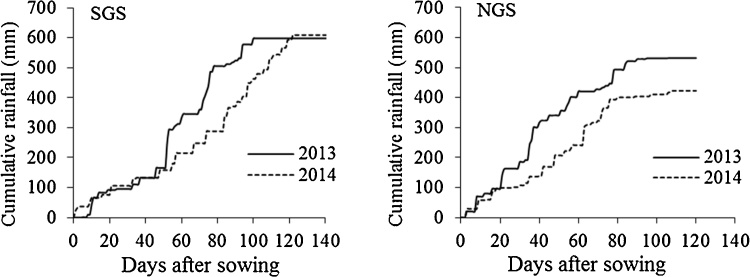
几内亚稀树草原的小农户采用谷物 - 豆类间作来降低单作时作物歉收的风险。谷物 - 豆类间作的生产力可能会受到间作作物的空间布局以及土壤肥力状况的影响。尽管农民田块的土壤肥力状况差异很大,但几内亚稀树草原普遍缺乏关于土壤肥力状况对间作生产力影响的知识,而且该地区尚未研究过农作条件下间作作物行内空间布局相对于分行系统的生产力情况。我们研究了几内亚稀树草原农作条件下玉米 - 豆类空间间作模式和土壤肥力状况对资源利用效率、作物生产力和经济收益的影响。处理方式包括玉米 - 豆类行内间作、1行玉米与1行豆类交替、2行玉米与2行豆类交替、单作玉米和单作豆类。在加纳北部的几内亚稀树草原南部(SGS)和北部(NGS),利用每个农业生态区土壤肥力不同的三块田地,对这些处理方式进行了两个季节的评估。每个处理在播种时施25千克磷和30千克钾/公顷,而玉米在播种后3周和6周分别施25千克(间作)或50千克(单作)氮/公顷。试验采用随机完全区组设计,每个区组的处理在每个地点的每个肥力水平下重复四次。SGS更好的土壤条件和降雨分别使玉米、大豆和花生的谷物产量比NGS高出48%、38%和9%,而NGS的豇豆谷物产量高出11%。玉米和豆类的单作单位面积谷物产量显著高于各自的玉米 - 豆类间作。所有间作模式的土地当量比(LERs)均大于1,表明间作作物对环境资源的利用更高效、更有生产力。单作豆类比单作玉米截获的辐射更多,而间作作物的辐射截获量介于单作豆类和单作玉米之间。然而,间作作物比单作作物能更有效地将截获的辐射转化为谷物产量。间作的经济回报高于任何一种单作作物。行内间作模式是最具生产力和利润最高的系统。SGS和肥沃田地中更高的谷物产量带来了更高的经济回报。然而,与肥沃田地(LERs为1.07 - 1.54)和SGS相比,贫瘠田地和NGS中的间作系统记录的LERs更高(1.16 - 1.81)。这表明间作在肥力较低的田地和像NGS这样更边缘的环境中更有益。与玉米间作时,豇豆和花生的表现优于大豆,尽管大豆更高的绝对谷物产量带来了更大的净收益。