Department of Clinical Analysis, School of Pharmaceutical Sciences, São Paulo State University-UNESP, Araraquara, Brazil.
Unidad de Micología, Departamento de Microbiología y Parasitología, Facultad de Medicina, UNAM-Universidad Nacional Autónoma de México, Mexico City, Mexico.
Front Cell Infect Microbiol. 2021 Jan 22;10:591950. doi: 10.3389/fcimb.2020.591950. eCollection 2020.
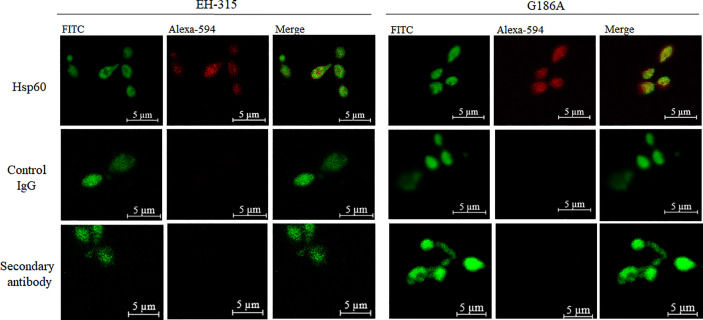
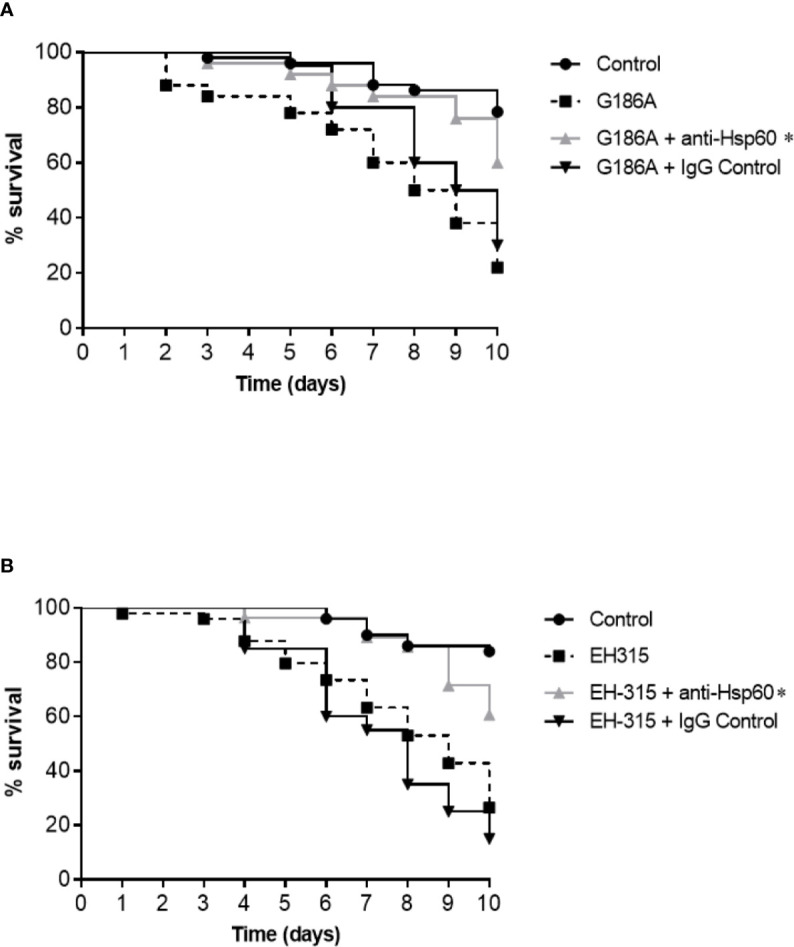
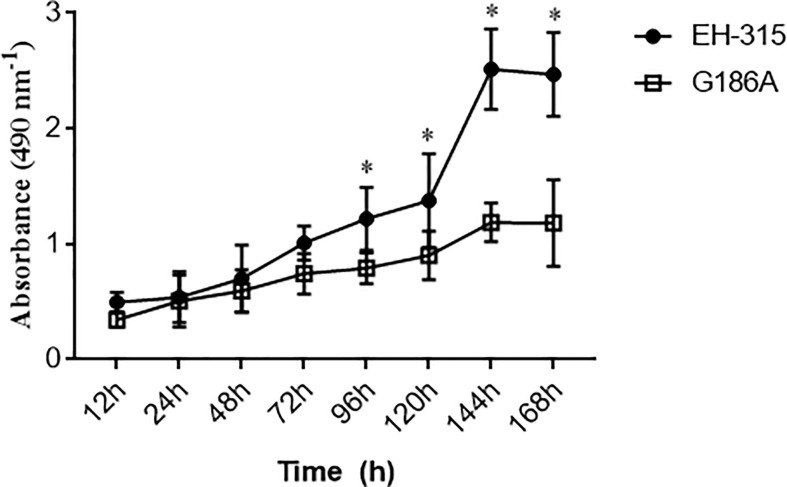
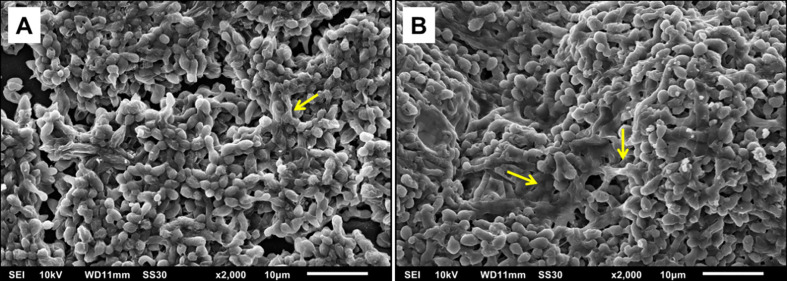
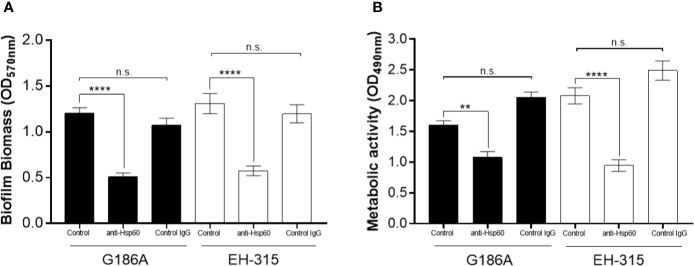
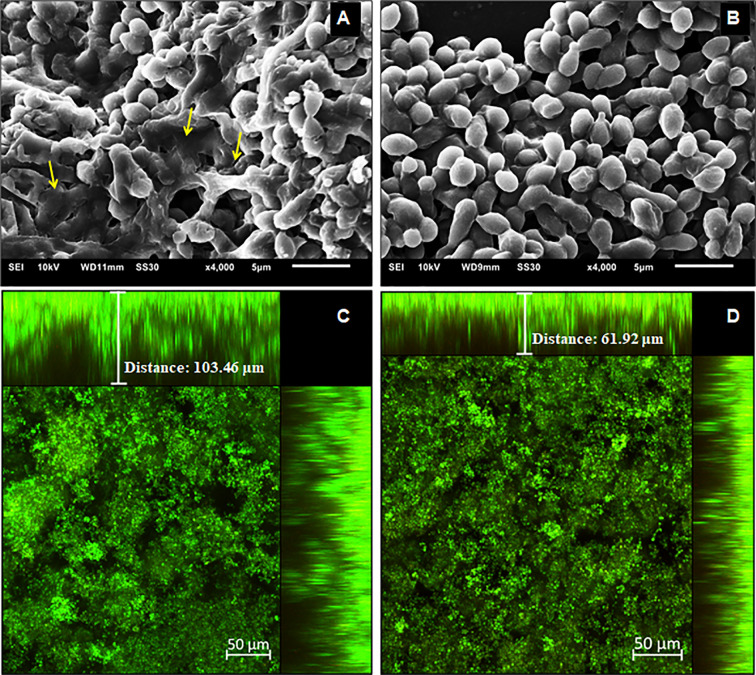
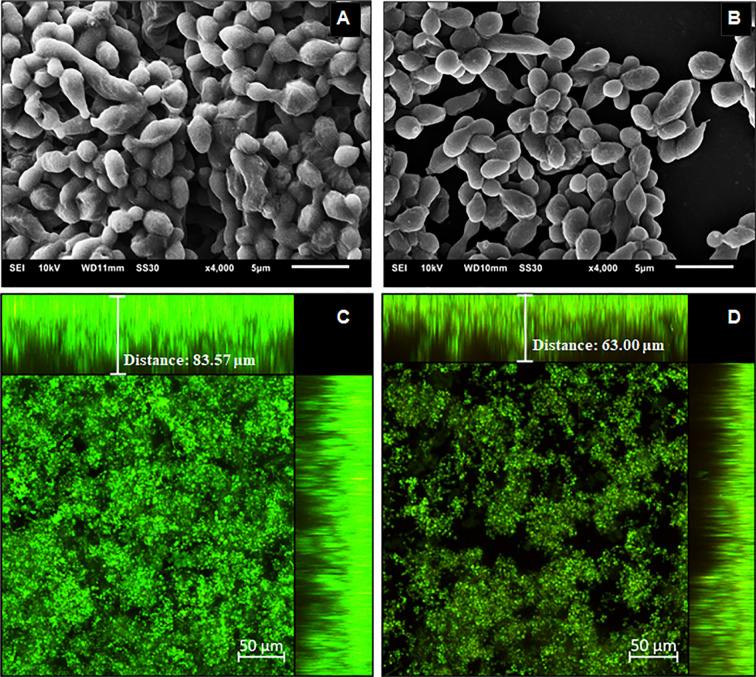
Heat shock proteins (Hsps) are among the most widely distributed and evolutionary conserved proteins, acting as essential regulators of diverse constitutive metabolic processes. The Hsp60 of the dimorphic fungal is the major surface adhesin to mammalian macrophages and studies of antibody-mediated protection against have provided insight into the complexity involving Hsp60. However, nothing is known about the role of Hsp60 regarding biofilms, a mechanism of virulence exhibited by . Considering this, the present study aimed to investigate the influence of the Hsp60 on biofilm features of . Also, the non-conventional model was used to verify the effect of this protein during interaction. The use of invertebrate models such as is highly proposed for the evaluation of pathogenesis, immune response, virulence mechanisms, and antimicrobial compounds. For that purpose, we used a monoclonal antibody (7B6) against Hsp60 and characterized the biofilm of two strains by metabolic activity, biomass content, and images from scanning electron microscopy (SEM) and confocal laser scanning microscopy (CLSM). We also evaluated the survival rate of infected with both strains under blockage of Hsp60. The results showed that mAb 7B6 was effective to reduce the metabolic activity and biomass of both strains. Furthermore, the biofilms of cells treated with the antibody were thinner as well as presented a lower amount of cells and extracellular polymeric matrix compared to its non-treated controls. The blockage of Hsp60 before fungal infection of larvae also resulted in a significant increase of the larvae survival compared to controls. Our results highlight for the first time the importance of the Hsp60 protein to the establishment of the biofilms and the larvae infection. Interestingly, the results with Hsp60 mAb 7B6 in this invertebrate model suggest a pattern of fungus-host interaction different from those previously found in a murine model, which can be due to the different features between insect and mammalian immune cells such as the absence of Fc receptors in hemocytes. However further studies are needed to support this hypothesis.
热休克蛋白(Hsps)是分布最广泛且进化上最保守的蛋白质之一,作为各种组成代谢过程的基本调节剂发挥作用。二态真菌的 Hsp60 是哺乳动物巨噬细胞的主要表面黏附素,对抗体介导的针对保护的研究提供了对涉及 Hsp60 的复杂性的深入了解。然而,对于生物膜,即 表现出的一种毒力机制,尚不清楚 Hsp60 的作用。考虑到这一点,本研究旨在研究 Hsp60 对 的生物膜特征的影响。此外,还使用了非常规模型 来验证该蛋白在 相互作用过程中的作用。使用无脊椎动物模型(如 )高度适用于评估发病机制,免疫反应,毒力机制和抗微生物化合物。为此,我们使用了针对 Hsp60 的单克隆抗体(7B6),并通过代谢活性,生物量含量以及扫描电子显微镜(SEM)和共聚焦激光扫描显微镜(CLSM)的图像来表征两种 菌株的生物膜。我们还评估了在阻止 Hsp60 后感染两种菌株的 的存活率。结果表明,mAb 7B6 可有效降低两种 菌株的代谢活性和生物量。此外,与未经处理的对照相比,用抗体处理的细胞的生物膜较薄,并且细胞和细胞外聚合物基质的含量也较低。在 幼虫感染真菌之前阻断 Hsp60 也导致幼虫的存活率与对照相比显著增加。我们的结果首次强调了 Hsp60 蛋白对 生物膜的建立和 幼虫感染的重要性。有趣的是,在这种无脊椎动物模型中,Hsp60 mAb 7B6 的结果表明了真菌-宿主相互作用的模式与先前在鼠模型中发现的模式不同,这可能是由于昆虫和哺乳动物免疫细胞之间的不同特征,例如在血细胞中缺乏 Fc 受体。但是,需要进一步的研究来支持这一假设。