Barbosa Jacqueline L, Perin Giovanni B, Felisberti Maria Isabel
Institute of Chemistry, University of Campinas, P.O. Box 6154, 13083-970 Campinas, São Paulo, Brazil.
ACS Omega. 2021 Jan 21;6(4):3278-3290. doi: 10.1021/acsomega.0c05765. eCollection 2021 Feb 2.
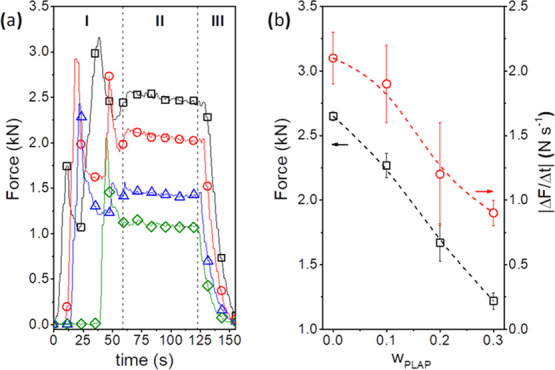
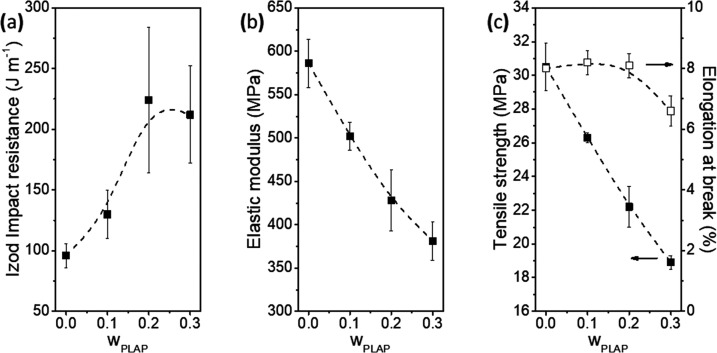
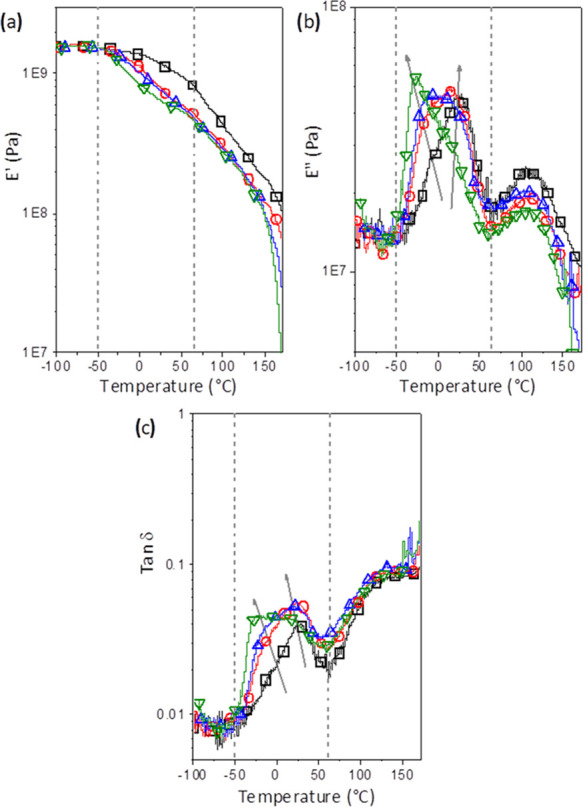
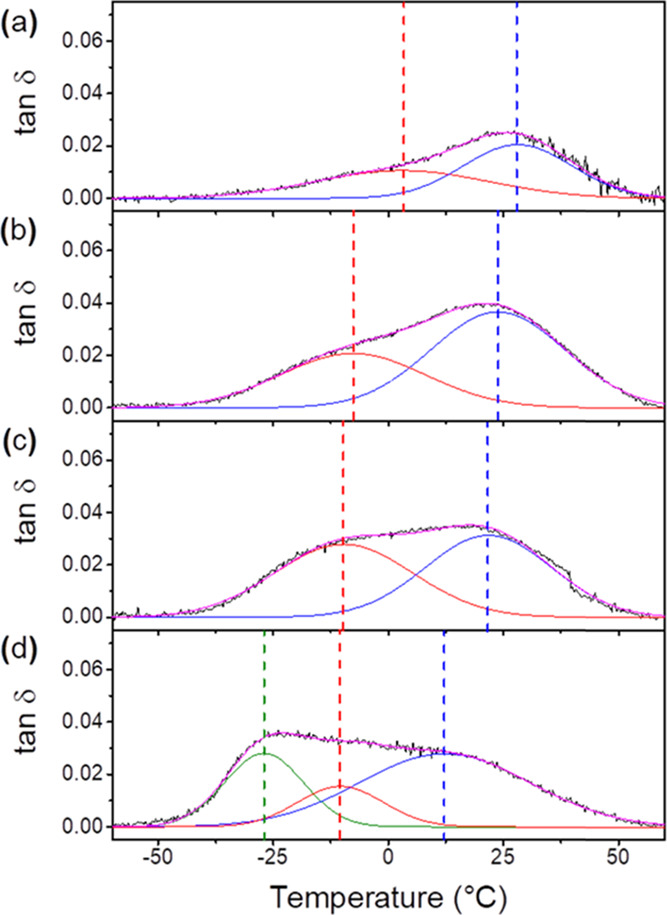
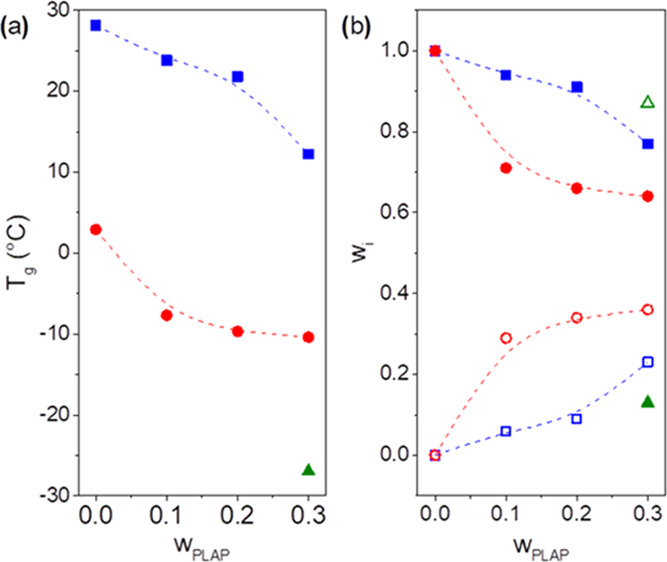
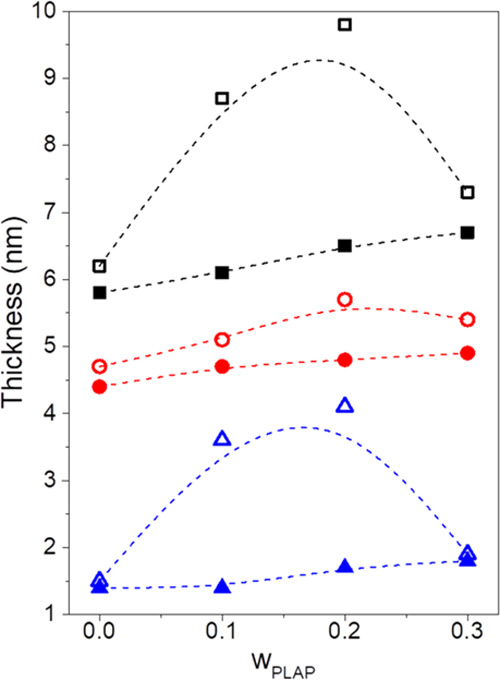
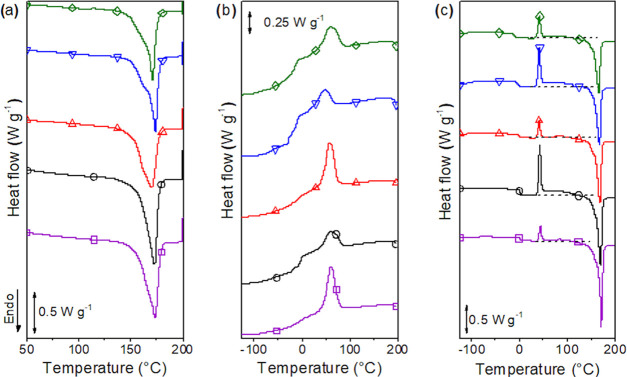
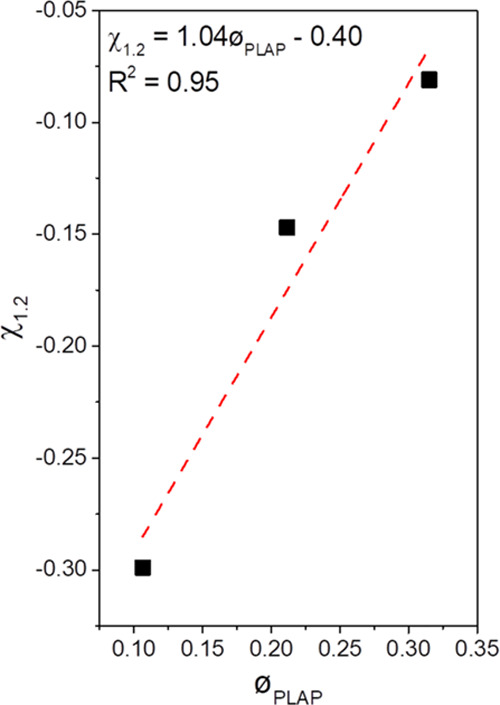
In the last few decades, many efforts have been made to make poly(3-hydroxybutyrate) (PHB) and its copolymers more suitable for industrial production and large-scale use. Plasticization, especially using biodegradable oligomeric plasticizers, has been one of the strategies for this purpose. However, PHB and its copolymers generally present low miscibility with plasticizers. An understanding of the plasticizer distribution between the mobile and rigid amorphous phases and how this influences thermal, mechanical, and morphological properties remains a challenge. Herein, formulations of poly(hydroxybutyrate--valerate) (PHBV) plasticized with an oligomeric polyester based on lactic acid, adipic acid, and 1,2-propanediol (PLAP) were prepared by melt extrusion. The effects of the PLAP content on the processability, miscibility, and microstructure of the semicrystalline PHBV and on the thermal, morphological, and mechanical properties of the formulations were investigated. The compositions of the mobile and rigid amorphous phases of the PHBV/PLAP formulations were easily estimated by combining dynamic mechanical data and the Fox equation, which showed a heterogeneous distribution of PLAP in these two phases. An increase in the PLAP mass fraction in the formulations led to progressive changes in the composition of the amorphous phases, an increase of both crystalline lamellae and interlamellar layer thickness, and a decrease in the melting and glass transition temperatures as well as the PHBV stiffness. The Flory-Huggins interaction parameter varied with the formulation composition in the range of -0.299 to -0.081. The critical PLAP mass fraction of 0.37 obtained from thermodynamic data is close to the value estimated from dynamic mechanical analysis (DMA) data and the Fox equation. The mechanical properties showed a close relationship with the distribution of PLAP in the rigid and mobile amorphous phases as well as with the microstructure of the crystalline phase of PHBV in the formulations.
在过去几十年里,人们做出了许多努力,以使聚(3 - 羟基丁酸酯)(PHB)及其共聚物更适合工业生产和大规模使用。增塑,特别是使用可生物降解的低聚增塑剂,一直是实现这一目标的策略之一。然而,PHB及其共聚物通常与增塑剂的混溶性较低。了解增塑剂在流动和刚性非晶相之间的分布以及这如何影响热性能、机械性能和形态性能仍然是一个挑战。在此,通过熔融挤出制备了用基于乳酸、己二酸和1,2 - 丙二醇的低聚聚酯(PLAP)增塑的聚(3 - 羟基丁酸酯 - 戊酸酯)(PHBV)配方。研究了PLAP含量对半结晶PHBV的加工性能、混溶性和微观结构以及配方的热性能、形态性能和机械性能的影响。通过结合动态力学数据和福克斯方程,可以轻松估算PHBV/PLAP配方中流动和刚性非晶相的组成,这表明PLAP在这两个相中呈非均相分布。配方中PLAP质量分数的增加导致非晶相组成的逐渐变化、结晶薄片和片层间层厚度的增加,以及熔点和玻璃化转变温度以及PHBV刚度的降低。弗洛里 - 哈金斯相互作用参数随配方组成在 - 0.299至 - 0.081范围内变化。从热力学数据获得的PLAP临界质量分数0.37接近从动态力学分析(DMA)数据和福克斯方程估算的值。机械性能与PLAP在刚性和流动非晶相中的分布以及配方中PHBV结晶相的微观结构密切相关。