Nayak Rashmi Ashwathama, Veerabhadraswamy Bhyranalyar Nagarajappa, Shankar Rao Doddamane S, Sudhakar Achalkumar Ammathnadu, Yelamaggad Channabasaveshwar V
Centre for Nano and Soft Matter Sciences, P.B. No. 1329, Jalahalli, Bangalore 560013, India.
Department of Chemistry, Indian Institute of Technology Guwahati, Guwahati 781039, India.
ACS Omega. 2021 Jan 22;6(4):3291-3306. doi: 10.1021/acsomega.0c05779. eCollection 2021 Feb 2.
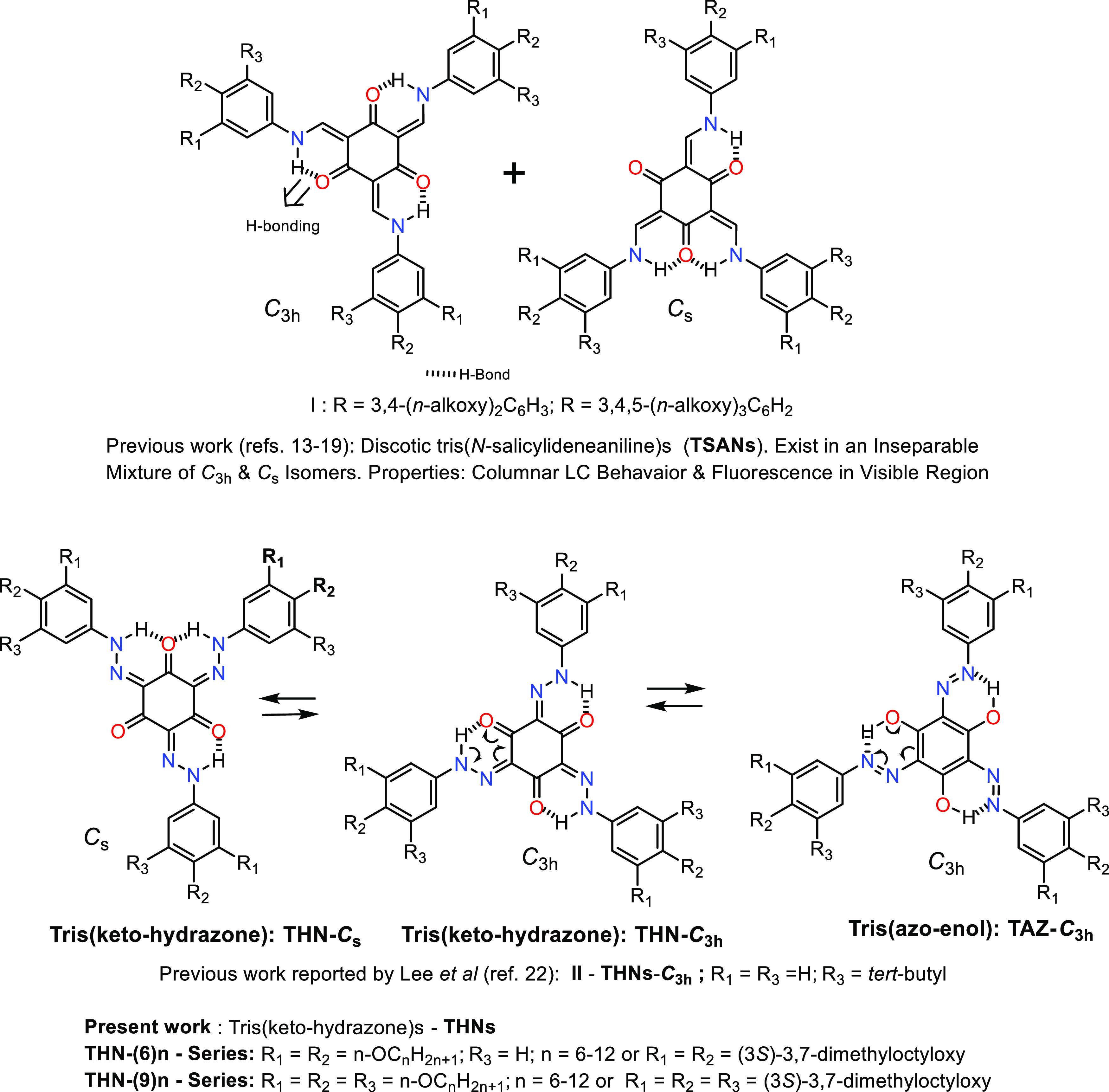
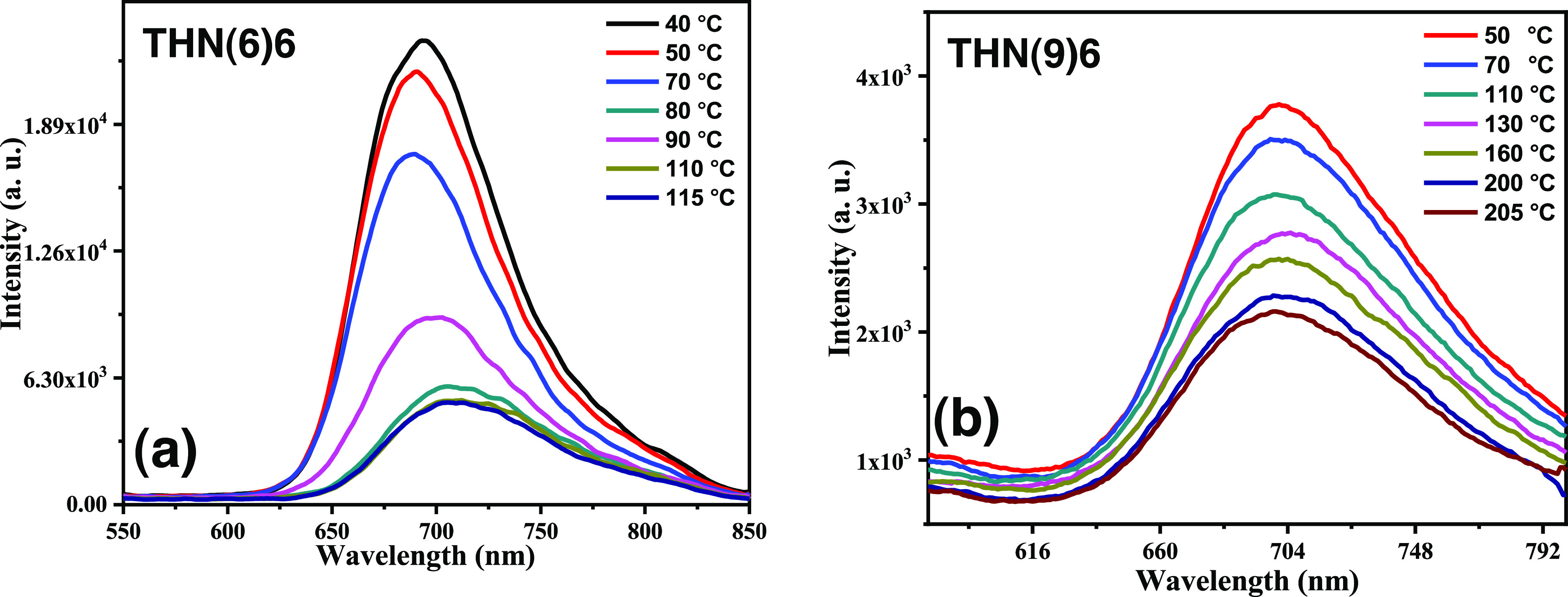
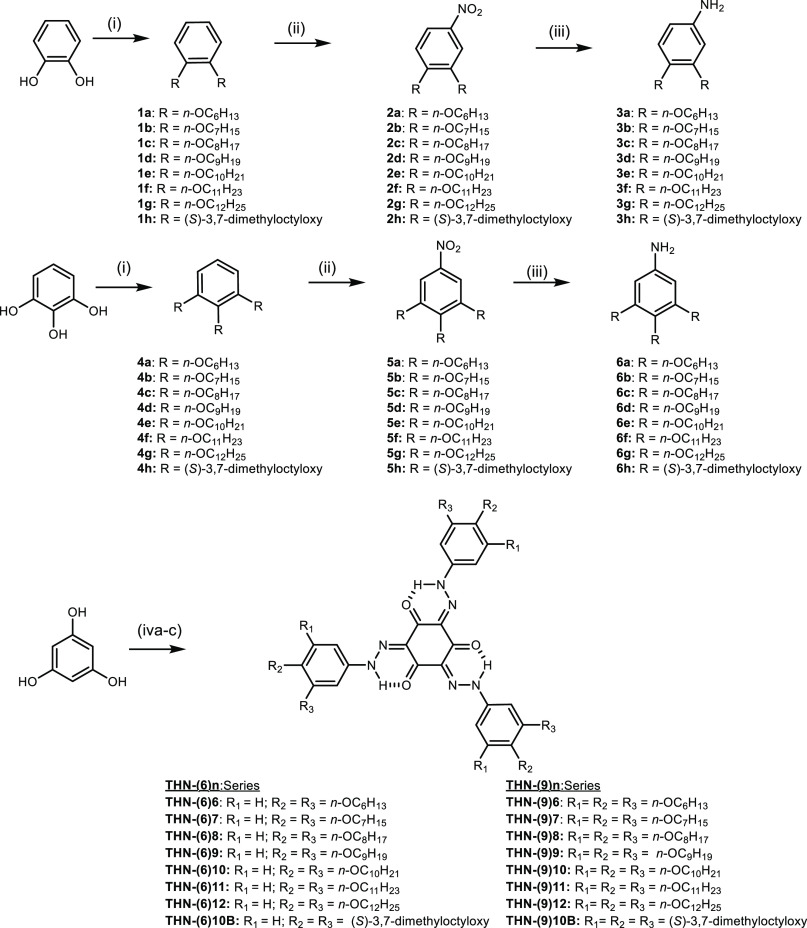
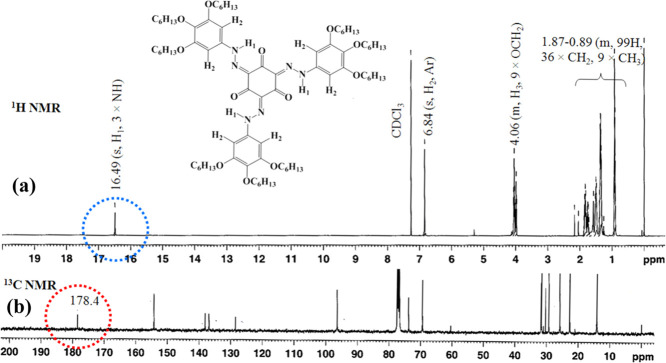
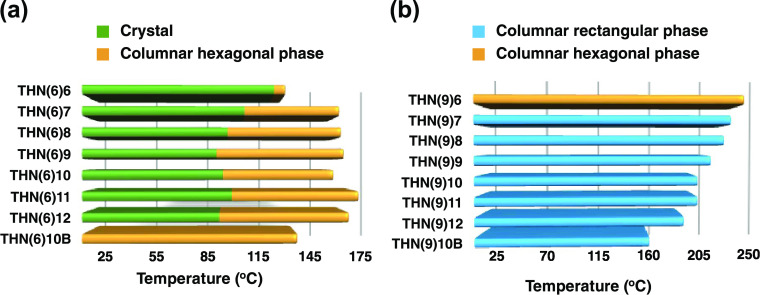
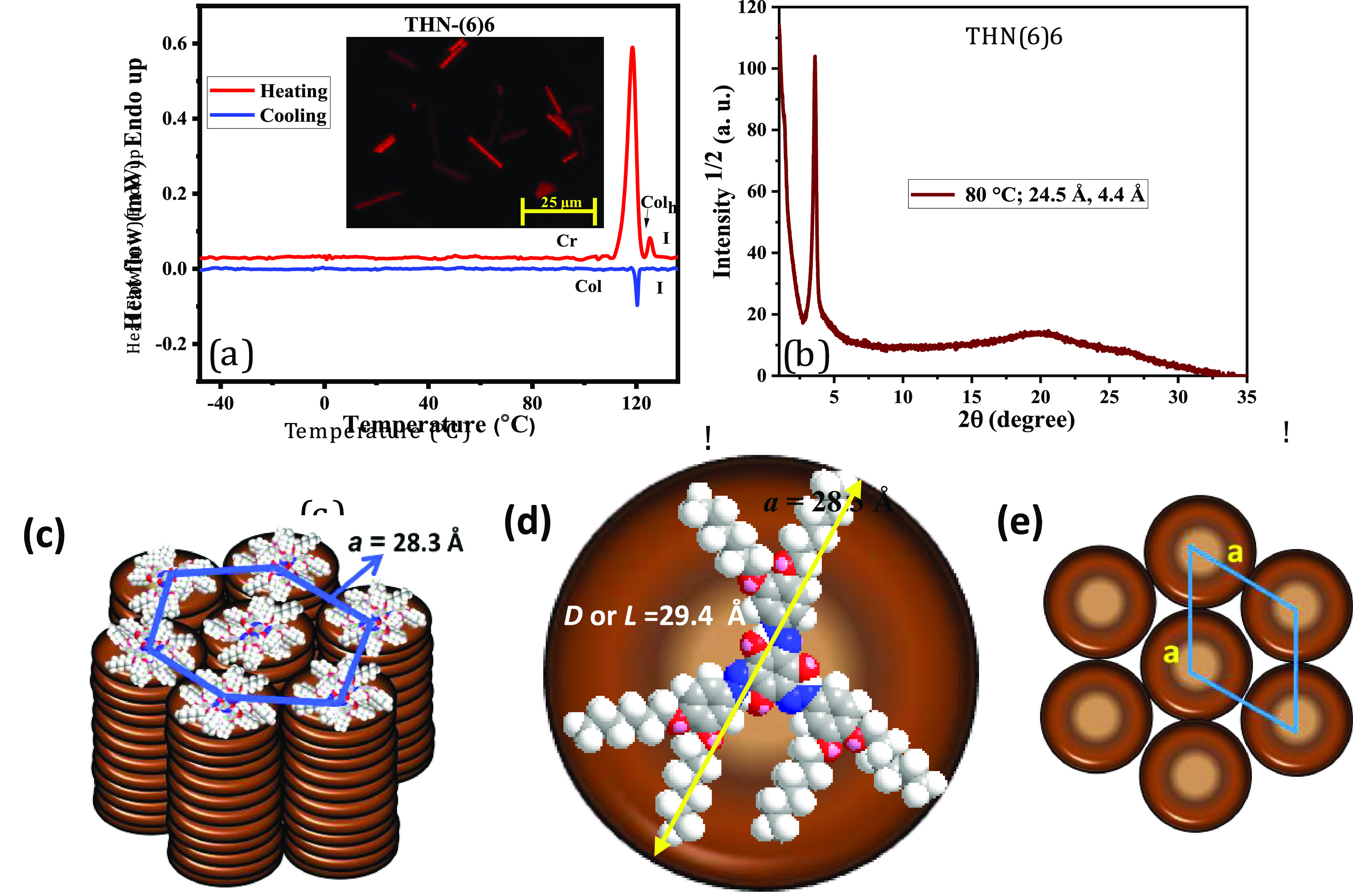
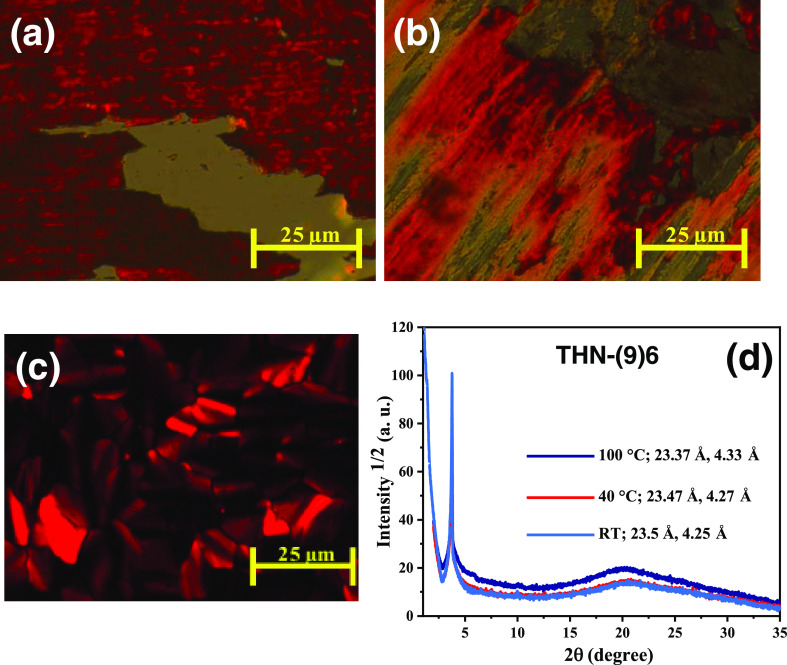
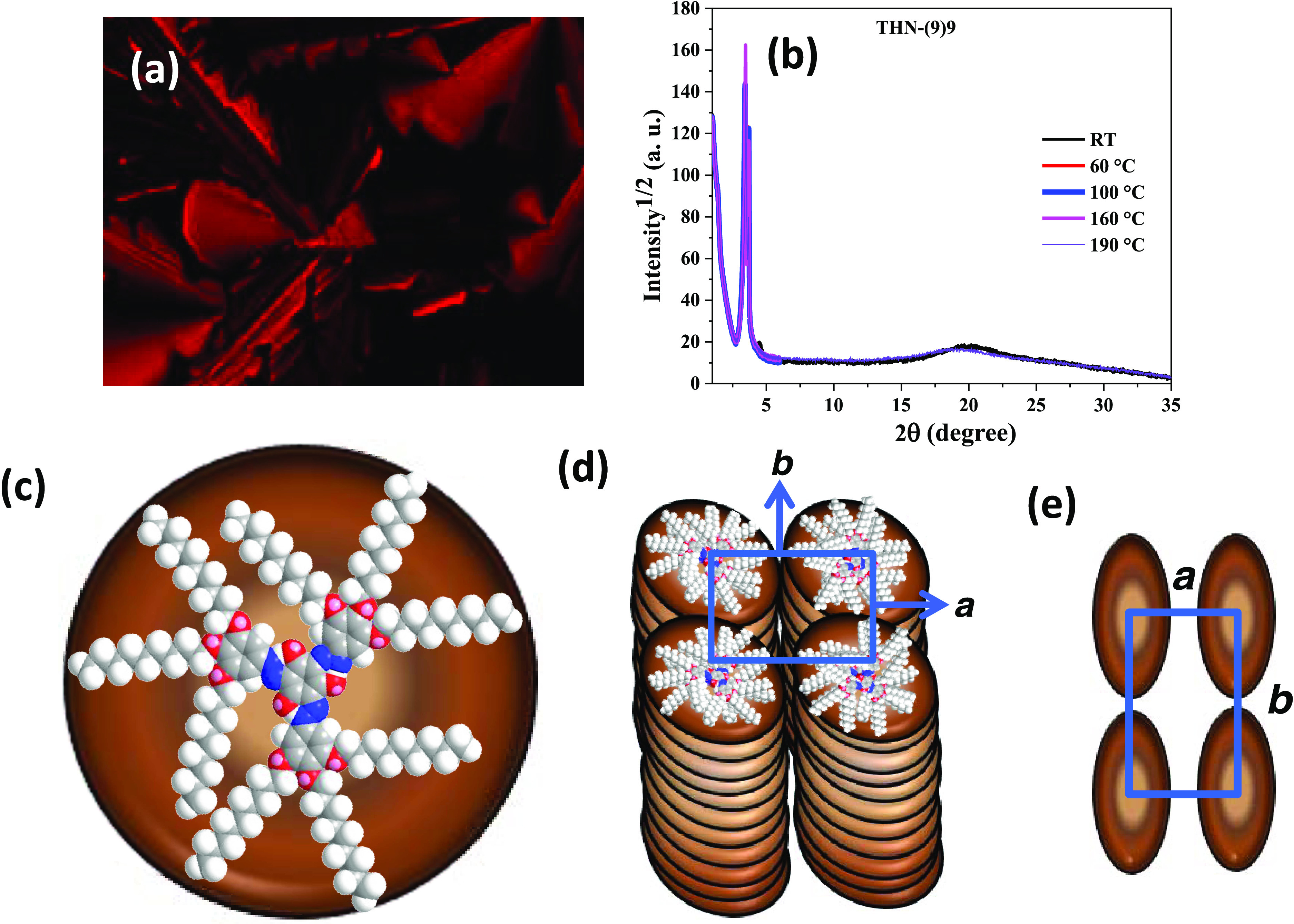
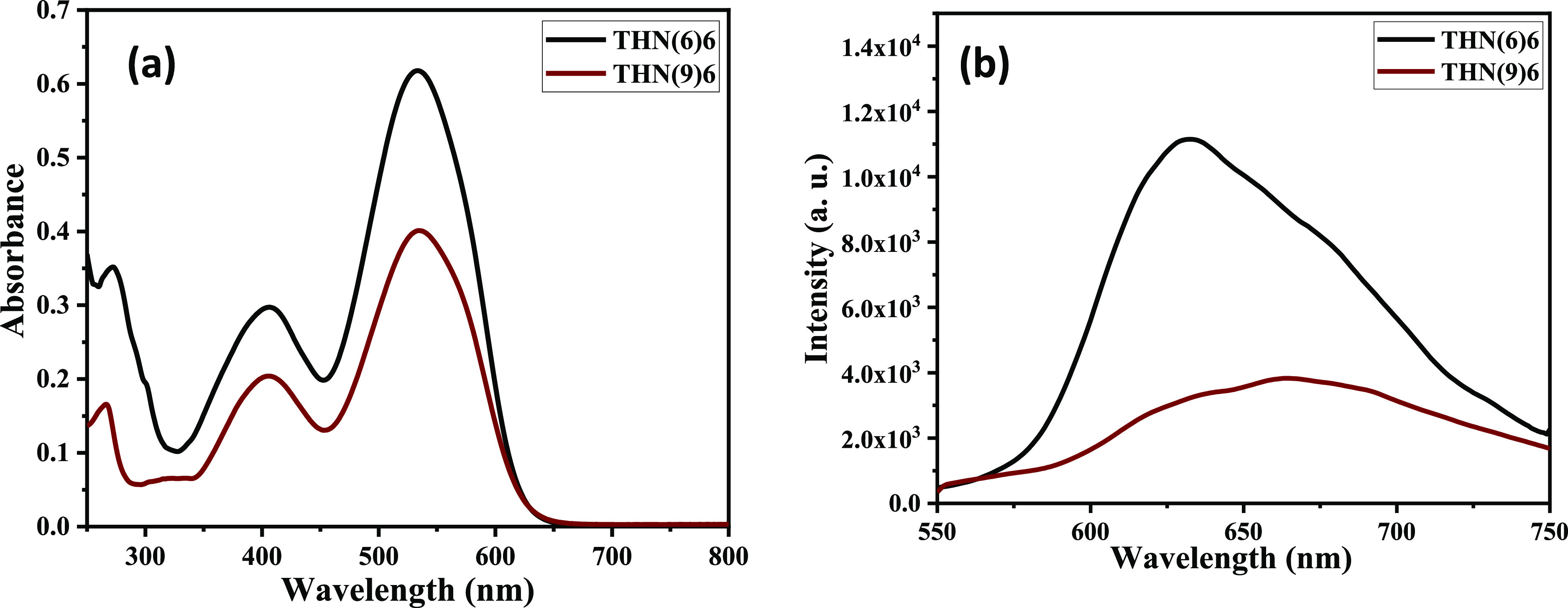
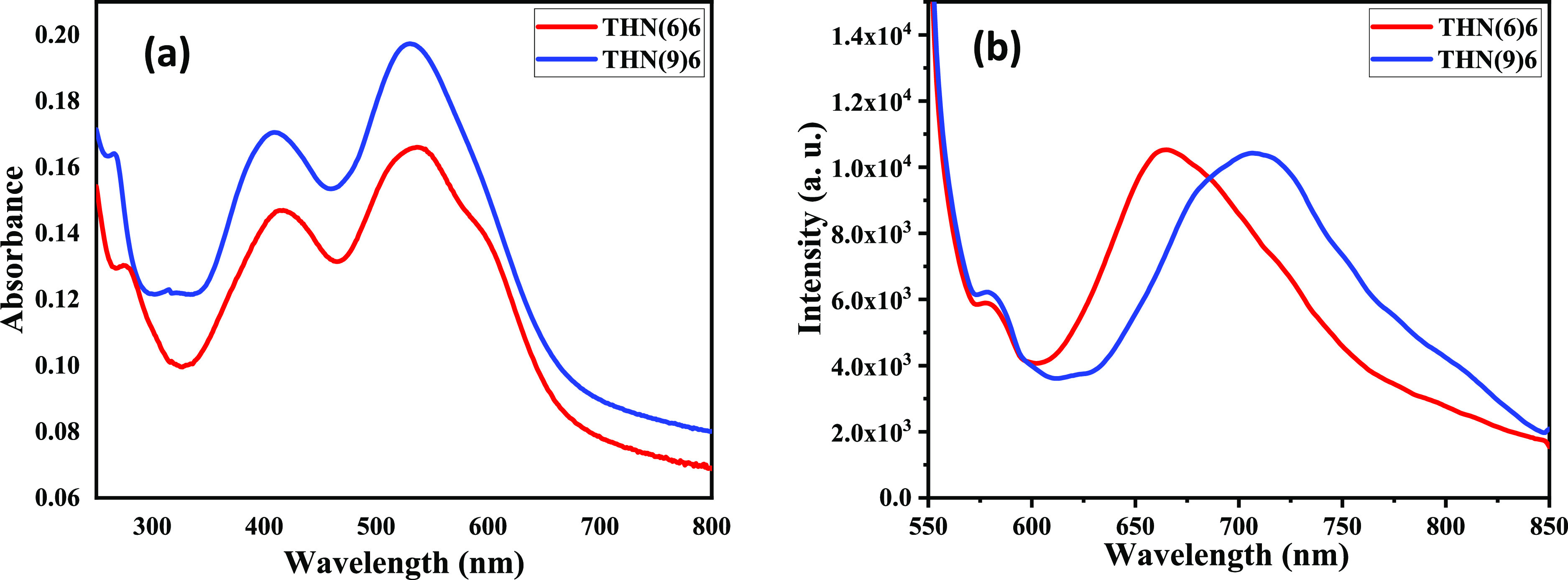
The first examples of deep-red/near-infrared (NIR) photoluminescent, (n,π-conjugated) discotics, namely, -tris(keto-hydrazone)s, which are the tautomers of tris(azo-enol)s, have been synthesized via a facile one-step triple azo-coupling and characterized. The n,π-resonance-assisted intramolecular H-bonding, rendering planarity and shape persistence to the central core, facilitates their self-assembly into either a hexagonal columnar (Col) phase (6 lattice) or a columnar rectangular (Col) phase (2 lattice), over an extended thermal range including room temperature, fluorescing in the deep-red/NIR-I region. The low band gap with deep-red/NIR emission makes them ideal candidates for NIR-organic light-emitting diodes (OLEDs) and bioimaging.
首例深红色/近红外(NIR)光致发光的(n,π共轭)盘状化合物,即作为三(偶氮烯醇)互变异构体的三(酮腙)已通过简便的一步三重偶氮偶合反应合成并得到表征。n,π共振辅助的分子内氢键作用使中心核具有平面性和形状持久性,有助于它们在包括室温在内的较宽温度范围内自组装成六方柱状(Col)相(6晶格)或柱状矩形(Col)相(2晶格),并在深红色/NIR-I区域发光。具有深红色/NIR发射的低带隙使其成为近红外有机发光二极管(OLED)和生物成像的理想候选材料。