Spanish HIV/AIDS Research Network, National Centre of Epidemiology, Health Institute Carlos III, Madrid, Spain.
National AIDS Programme, Ministry of Health, Madrid, Spain.
PLoS One. 2021 Feb 8;16(2):e0246129. doi: 10.1371/journal.pone.0246129. eCollection 2021.
Pre-exposure prophylaxis (PrEP) is an effective and cost-effective strategy for HIV prevention. Spain carried out an implementation study in order to assess the feasibility of implementing PrEP programmes within its heterogeneous health system.
Observational longitudinal study conducted on four different types of health-care setting: a community centre (CC), a sexually transmitted infections clinic (STIC), a hospital-based HIV unit (HBHIVU) and a hospital-based STI unit (HBSTIU). We recruited gay, bisexual and other men who have sex with men (GBSM) and transgender women at risk of HIV infections, gave them PrEP and monitored clinical, behavioural PrEP-related and satisfaction information for 52 weeks. We collected perceptions on PrEP implementation feasibility from health-care professionals participating in the study.
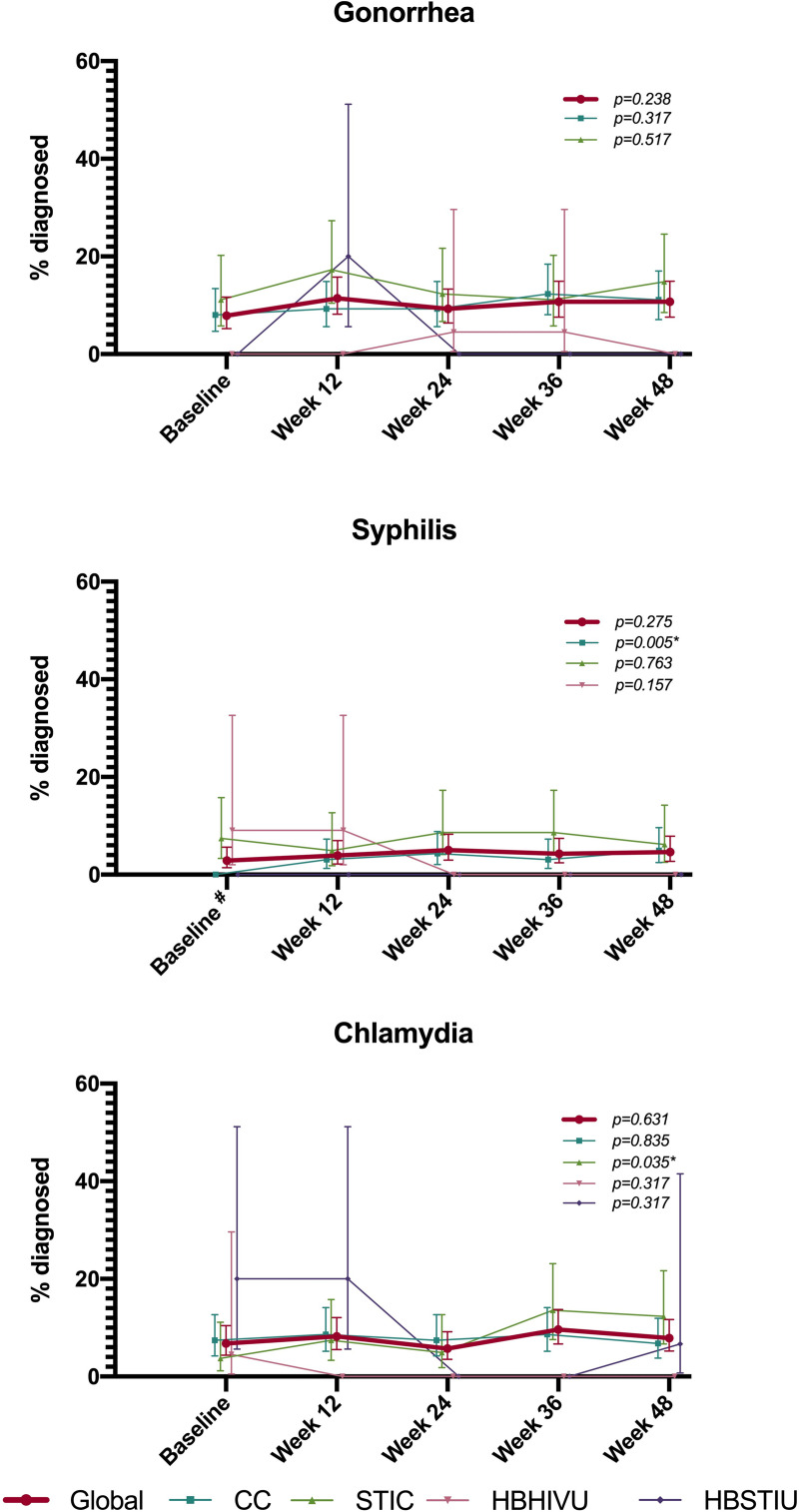
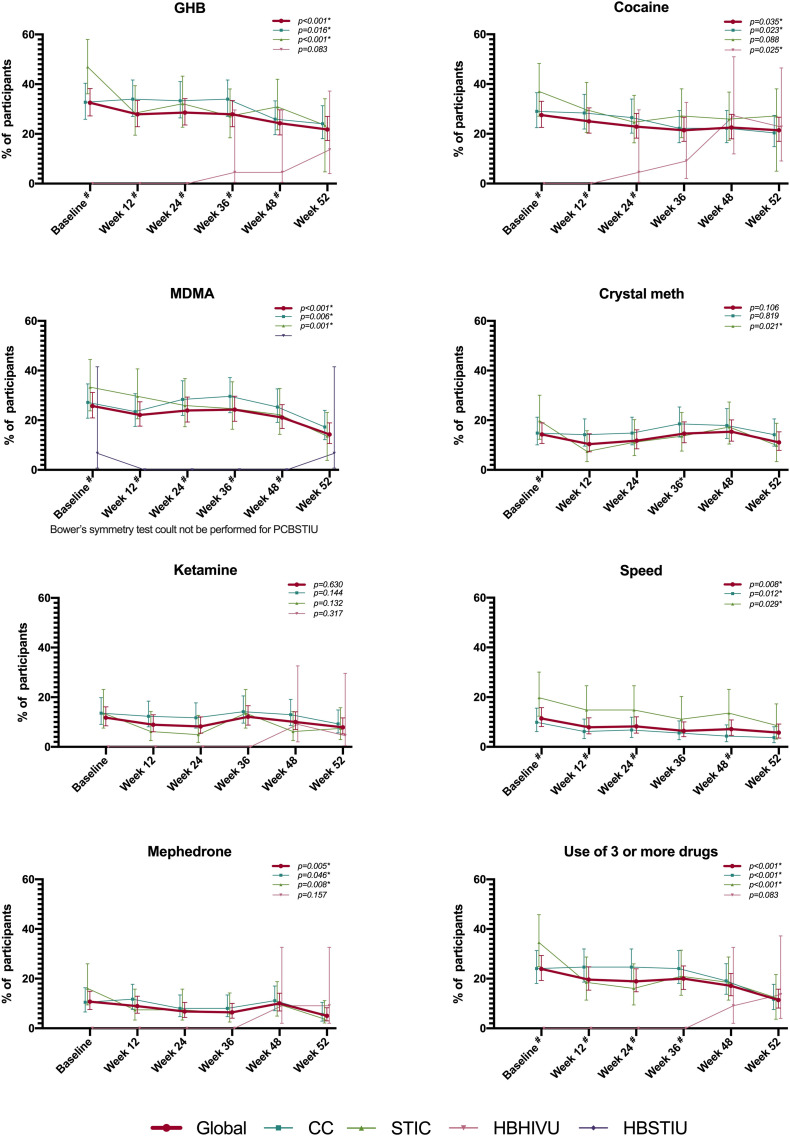
A total of 321 participants were recruited, with 99.1% being GBMSM. Overall retention was 87.2% and it was highest at the CC (92.6%). Condom use decreased during the study period, while STIs did not increase consistently. The percentage of people who did not miss any doses of PrEP during the previous week remained at over 93%. No HIV seroconversions occurred. We observed overall decreases in GHB (32.5% to 21.8%), cocaine (27.5% to 21.4%), MDMA (25.7% to 14.3%), speed (11.4% to 5.7%) and mephedrone use (10.7% to 5.0%). The overall participant satisfaction with PrEP was 98.6%. Health-care professionals' perceptions of PrEP feasibility were positive, except for the lack of personnel.
PrEP implementation is feasible in four types of health-care settings. Local specificities have to be taken into consideration while implementing PrEP.
暴露前预防(PrEP)是预防艾滋病毒的一种有效且具有成本效益的策略。西班牙开展了一项实施研究,以评估在其多样化的卫生系统中实施 PrEP 计划的可行性。
在四种不同类型的医疗保健环境中进行观察性纵向研究:社区中心(CC)、性传播感染诊所(STIC)、基于医院的 HIV 单位(HBHIVU)和基于医院的 STI 单位(HBSTIU)。我们招募了有感染艾滋病毒风险的男同性恋、双性恋和其他男男性行为者(GBSM)以及跨性别女性,并为他们提供 PrEP,并在 52 周内监测临床、行为相关 PrEP 和满意度信息。我们收集了参与研究的卫生保健专业人员对 PrEP 实施可行性的看法。
共招募了 321 名参与者,其中 99.1%为 GBSMM。总体保留率为 87.2%,CC 最高(92.6%)。研究期间,避孕套使用率下降,而性传播感染并未持续增加。在过去一周内没有错过任何 PrEP 剂量的人数百分比保持在 93%以上。未发生 HIV 血清转换。我们观察到 GHB(32.5%降至 21.8%)、可卡因(27.5%降至 21.4%)、MDMA(25.7%降至 14.3%)、摇头丸(11.4%降至 5.7%)和甲卡西酮(10.7%降至 5.0%)的使用总体减少。参与者对 PrEP 的总体满意度为 98.6%。卫生保健专业人员对 PrEP 可行性的看法是积极的,但缺乏人员除外。
在四种医疗保健环境中实施 PrEP 是可行的。在实施 PrEP 时,必须考虑到当地的具体情况。