Zhao Jun, Mohan Nishant, Nussinov Ruth, Ma Buyong, Wu Wen Jin
Division of Biotechnology Review and Research 1, Office of Biotechnology Products, Office of Pharmaceutical Quality, Center for Drug Evaluation and Research, U.S. Food and Drug Administration, 10903 New Hampshire Avenue, Silver Spring, MD 20993, USA.
Interagency Oncology Task Force (IOTF) Fellowship: Oncology Product Research/Review Fellow, National Cancer Institute, Bethesda, MD 20892, USA.
Antibodies (Basel). 2021 Feb 4;10(1):7. doi: 10.3390/antib10010007.
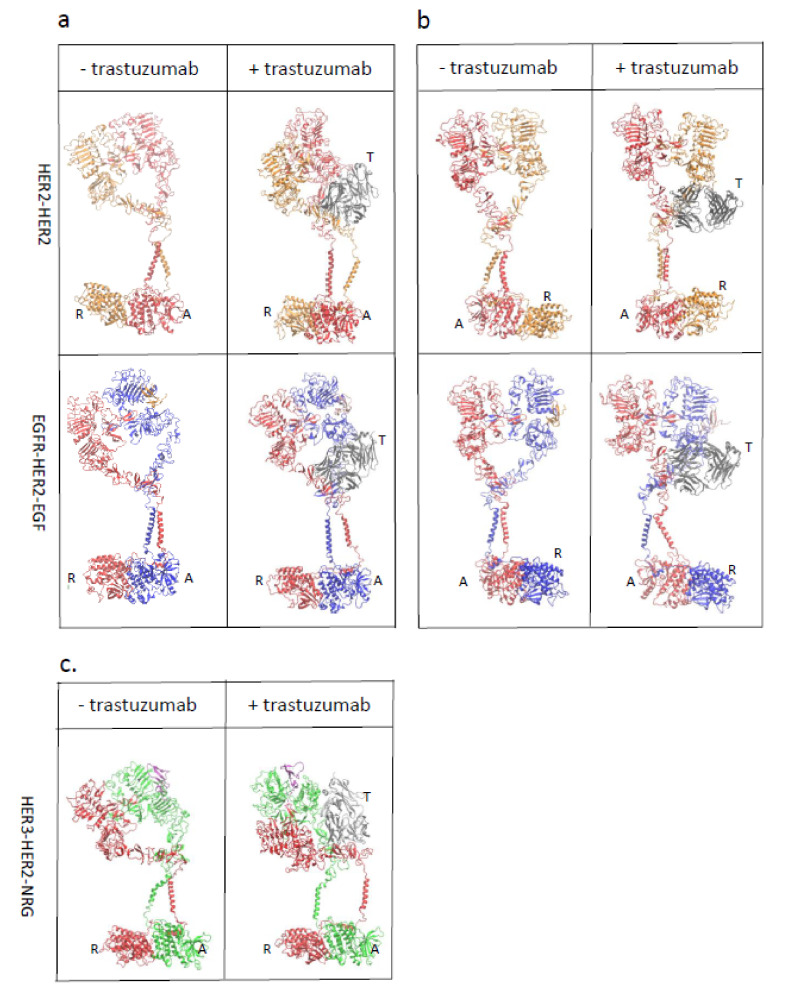
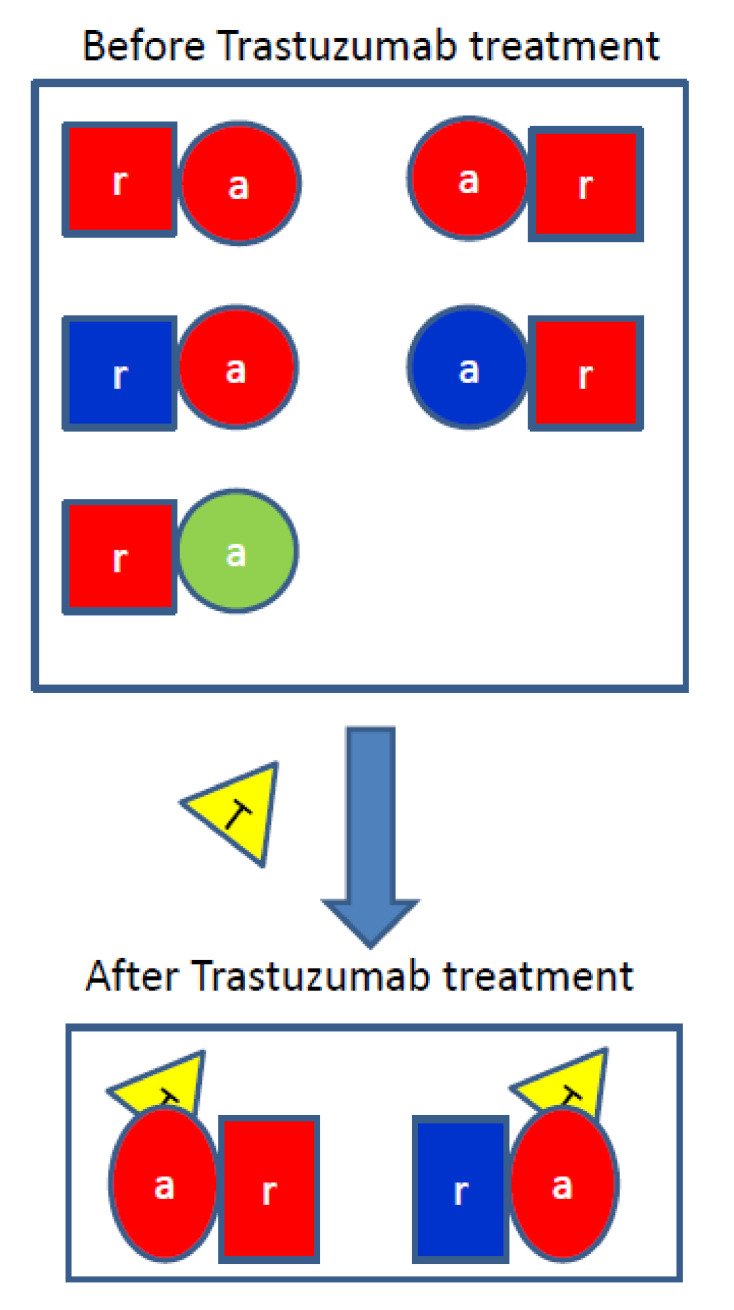
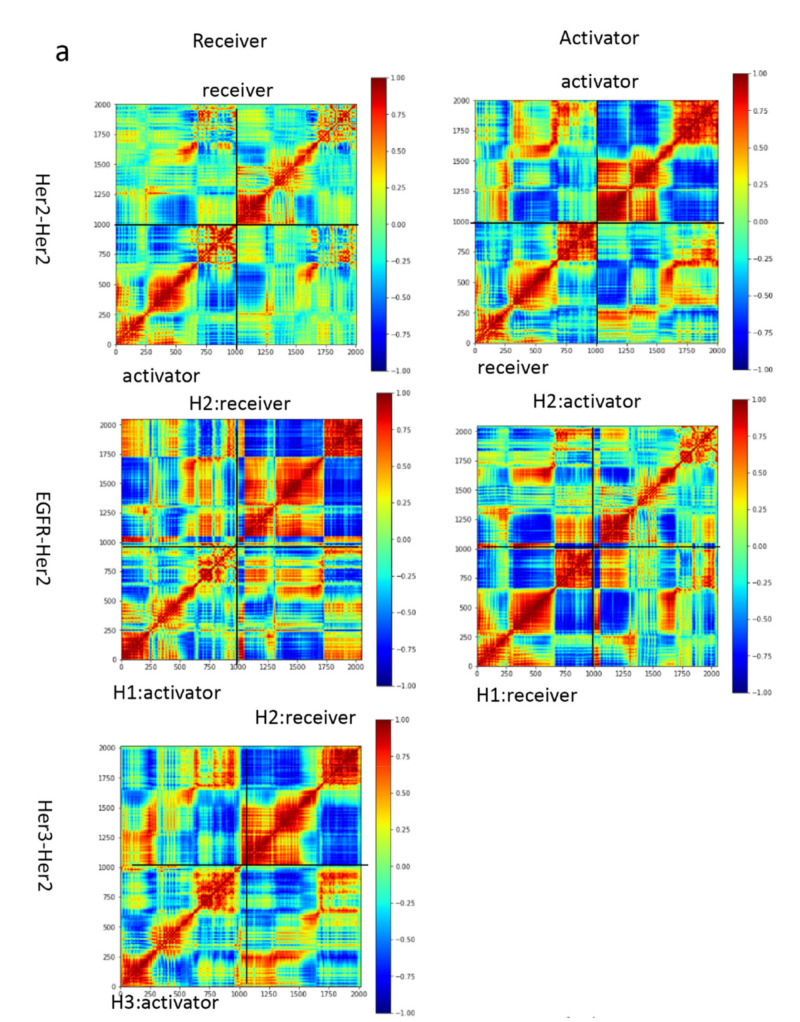
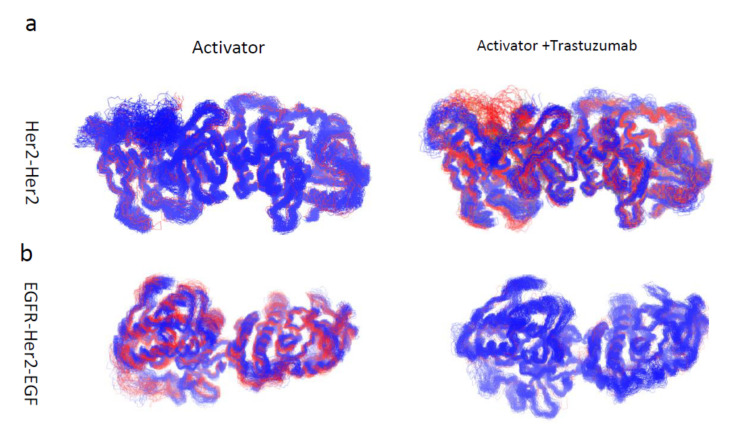
HER2, a member of the Erythroblastosis Protein B/Human Epidermal Growth Factor Receptor (ErbB/HER) family of receptor tyrosine kinase, is overexpressed in 20~30% of human breast cancers. Trastuzumab, a HER2-targeted therapeutic monoclonal antibody, was developed to interfere with the homodimerization of HER2 in HER2-overexpressing breast cancer cells, which attenuates HER2-mediated signaling. Trastuzumab binds to the domain IV of the HER2 extracellular domain and does not directly block the dimerization interface of HER2-HER2 molecules. The three-dimensional structures of the tyrosine kinase domains of ErbB/HER family receptors show asymmetrical packing of the two monomers with distinct conformations. One monomer functions as an activator, whereas the other acts as a receiver. Once activated, the receiver monomer phosphorylates the activator or other proteins. Interestingly, in our previous work, we found that the binding of trastuzumab induced phosphorylation of HER2 with the phosphorylation pattern of HER2 that is different from that mediated by epidermal growth factor (EGF) in human epidermal growth factor receptor 2 (HER2)-positive breast cancer. Binding of trastuzumab to HER2 promoted an allosteric effect of HER2, in both tyrosine kinase domain and ectodomain of HER2 although details of allosteric regulation were missing. In this study, we utilized molecular dynamics (MD) simulations to model the allosteric consequences of trastuzumab binding to HER2 homodimers and heterodimers, along with the apo forms as controls. We focused on the conformational changes of HER2 in its monomeric and dimeric forms. The data indicated the apparent dual role of trastuzumab as an antagonist and an agonist. The molecular details of the simulation provide an atomic level description and molecular insight into the action of HER2-targeted antibody therapeutics.
人表皮生长因子受体2(HER2)是红细胞生成素B/人表皮生长因子受体(ErbB/HER)家族受体酪氨酸激酶的成员之一,在20%至30%的人类乳腺癌中过表达。曲妥珠单抗是一种靶向HER2的治疗性单克隆抗体,旨在干扰HER2过表达乳腺癌细胞中HER2的同源二聚化,从而减弱HER2介导的信号传导。曲妥珠单抗与HER2细胞外结构域的IV结构域结合,并不直接阻断HER2-HER2分子的二聚化界面。ErbB/HER家族受体酪氨酸激酶结构域的三维结构显示,两个具有不同构象的单体呈不对称堆积。一个单体起激活剂作用,而另一个起受体作用。一旦激活,受体单体就会使激活剂或其他蛋白质磷酸化。有趣的是,在我们之前的研究中,我们发现曲妥珠单抗的结合会诱导HER2磷酸化,其磷酸化模式与人类表皮生长因子受体2(HER2)阳性乳腺癌中表皮生长因子(EGF)介导的HER2磷酸化模式不同。曲妥珠单抗与HER2的结合促进了HER2在酪氨酸激酶结构域和胞外结构域的变构效应,尽管变构调节的细节尚不清楚。在本研究中,我们利用分子动力学(MD)模拟来模拟曲妥珠单抗与HER2同源二聚体和异源二聚体结合的变构后果,同时以无配体形式作为对照。我们关注HER2单体和二聚体形式的构象变化。数据表明曲妥珠单抗具有明显的拮抗剂和激动剂双重作用。模拟的分子细节提供了原子水平的描述,并深入了解了HER2靶向抗体治疗的作用机制。