Section of Human Anatomy and Histology, Department of Experimental and Clinical Medicine, University of Florence, 50134 Florence, Italy.
Andrology, Women's Endocrinology and Gender Incongruence Unit, Department of Experimental Clinical and Biomedical Sciences "Mario Serio", University of Florence, 50134 Florence, Italy.
Int J Mol Sci. 2021 Feb 4;22(4):1589. doi: 10.3390/ijms22041589.
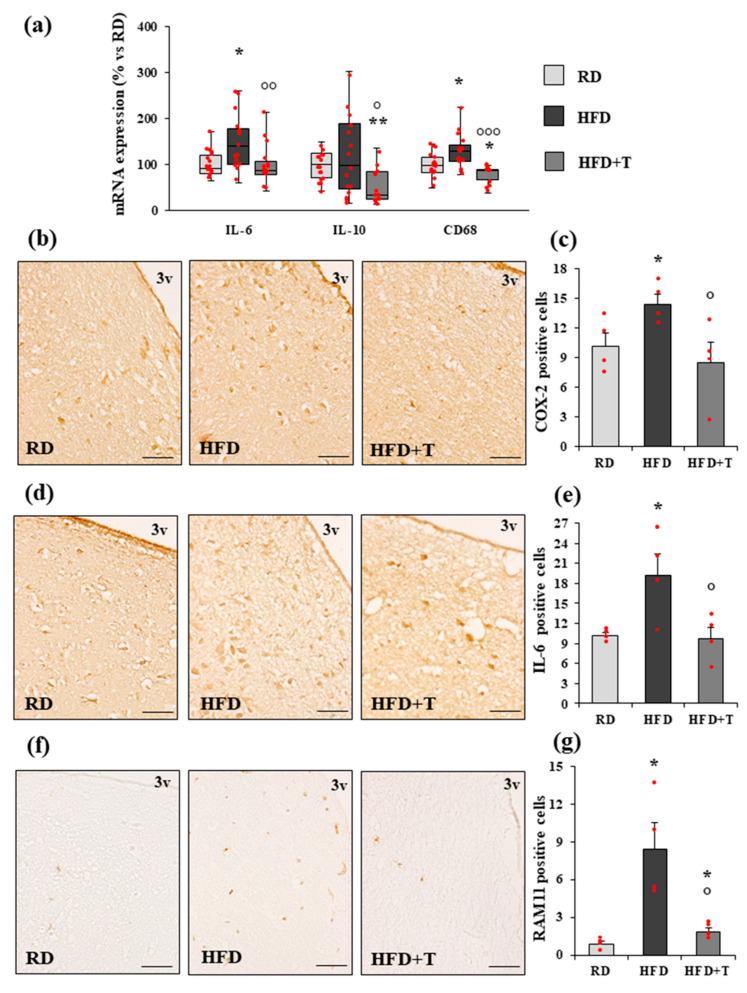
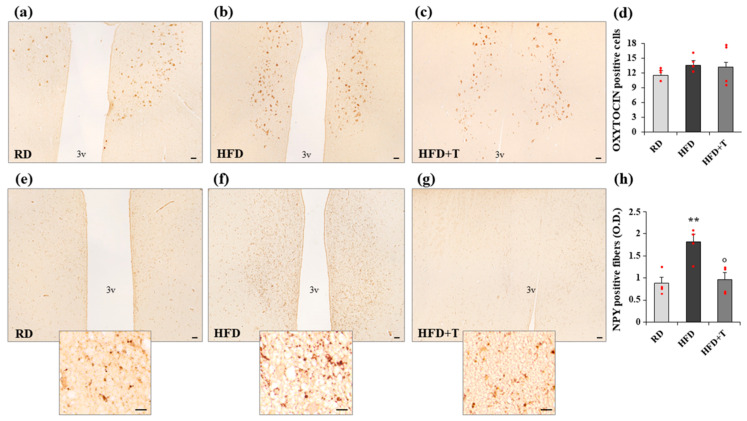
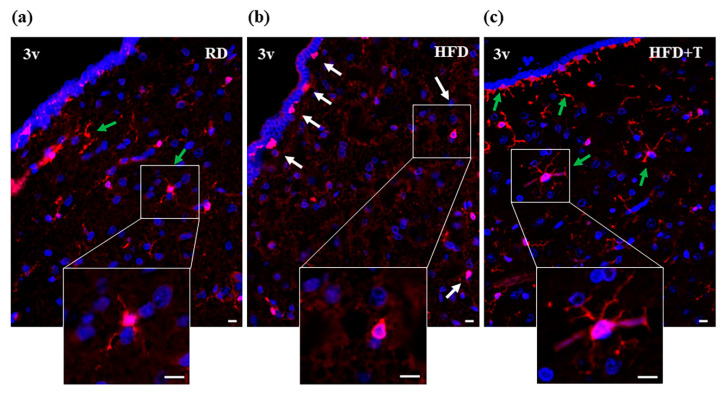
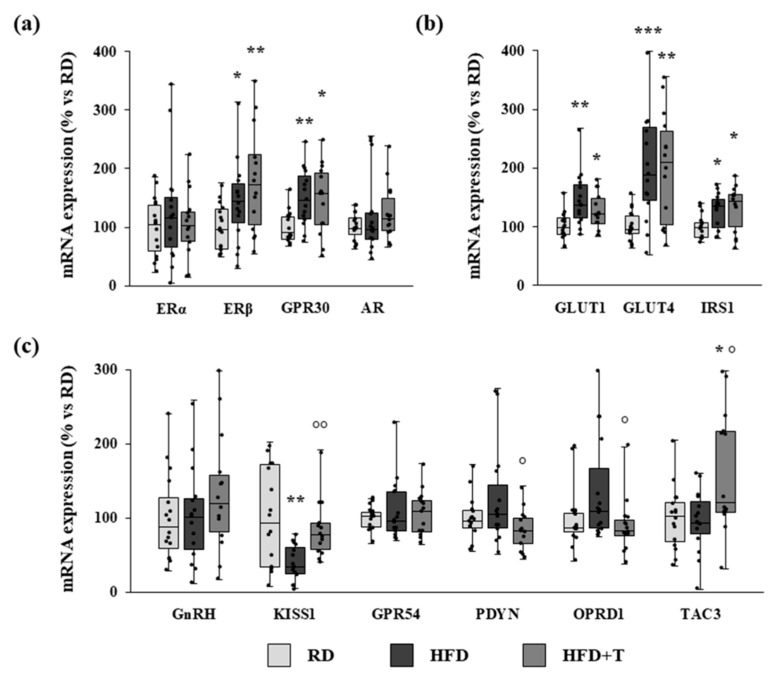
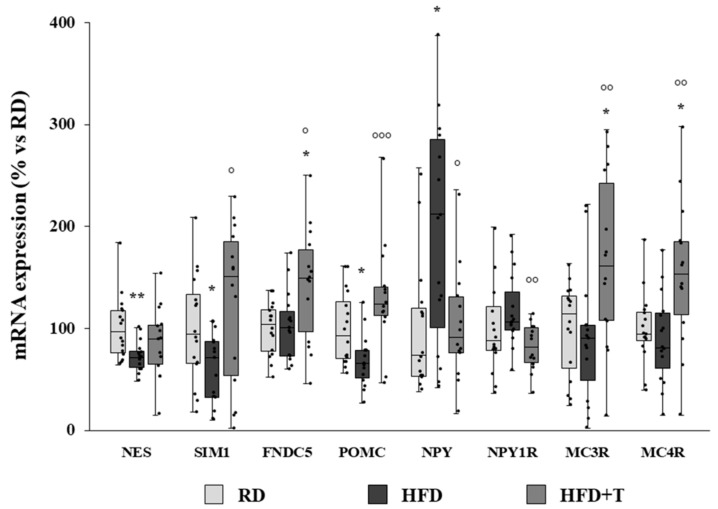
Metabolic syndrome (MetS) is known to be associated to inflammation and alteration in the hypothalamus, a brain region implicated in the control of several physiological functions, including energy homeostasis and reproduction. Previous studies demonstrated the beneficial effects of testosterone treatment (TTh) in counteracting some MetS symptoms in both animal models and clinical studies. This study investigated the effect of TTh (30 mg/kg/week for 12 weeks) on the hypothalamus in a high-fat diet (HFD)-induced animal model of MetS, utilizing quantitative RT-PCR and immunohistochemical analyses. The animal model recapitulates the human MetS features, including low testosterone/gonadotropin plasma levels. TTh significantly improved MetS-induced hypertension, visceral adipose tissue accumulation, and glucose homeostasis derangements. Within hypothalamus, TTh significantly counteracted HFD-induced inflammation, as detected in terms of expression of inflammatory markers and microglial activation. Moreover, TTh remarkably reverted the HFD-associated alterations in the expression of important regulators of energy status and reproduction, such as the melanocortin and the GnRH-controlling network. Our results suggest that TTh may exert neuroprotective effects on the HFD-related hypothalamic alterations, with positive outcomes on the circuits implicated in the control of energy metabolism and reproductive tasks, thus supporting a possible role of TTh in the clinical management of MetS.
代谢综合征(MetS)与炎症和下丘脑改变有关,下丘脑是一个参与控制多种生理功能的脑区,包括能量平衡和生殖。先前的研究表明,睾丸素治疗(TTh)在动物模型和临床研究中对抗一些 MetS 症状具有有益的效果。本研究利用定量 RT-PCR 和免疫组织化学分析,研究了 TTh(30mg/kg/周,持续 12 周)对高脂肪饮食(HFD)诱导的 MetS 动物模型下丘脑的影响。该动物模型重现了人类 MetS 的特征,包括低睾酮/促性腺激素的血浆水平。TTh 显著改善了 MetS 诱导的高血压、内脏脂肪组织积累和葡萄糖稳态紊乱。在下丘脑内,TTh 显著对抗了 HFD 诱导的炎症,这表现在炎症标志物的表达和小胶质细胞的激活方面。此外,TTh 显著逆转了与 HFD 相关的能量状态和生殖重要调节因子的表达改变,如黑皮质素和 GnRH 调控网络。我们的结果表明,TTh 可能对 HFD 相关的下丘脑改变具有神经保护作用,对参与能量代谢和生殖任务控制的回路产生积极影响,从而支持 TTh 在 MetS 临床管理中的可能作用。