Coll M, Ortega-Cerdà M, Mascarell-Rocher Y
Institute of Marine Science (ICM-CSIC), passeig marítim de la Barceloneta, n° 37-49, & Ecopath International Initiative (EII), 08003, Barcelona, Spain.
Fundació ENT, C/Josep Llanza, 1-7, 2n 3a, Vilanova i la Geltrú. Spain.
Biol Conserv. 2021 Mar;255:108997. doi: 10.1016/j.biocon.2021.108997. Epub 2021 Feb 4.
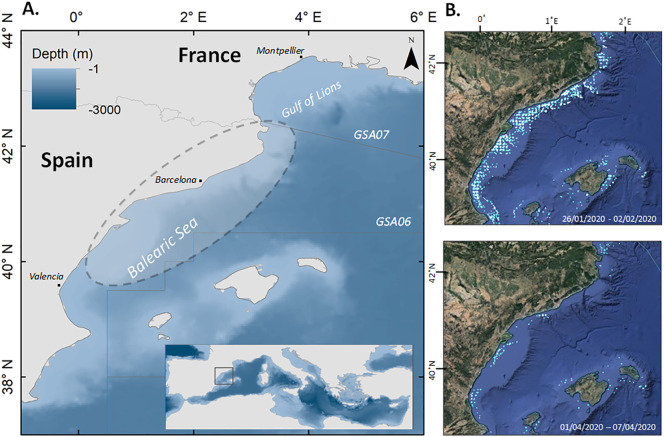
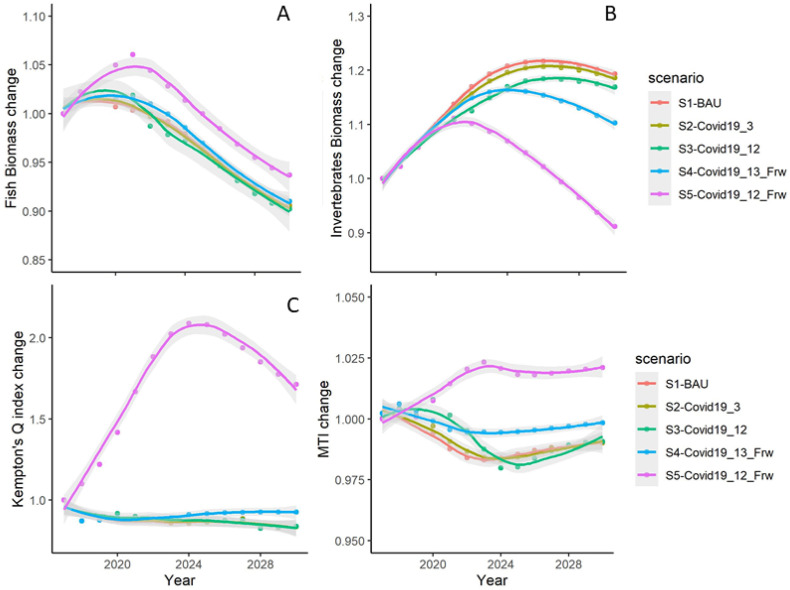
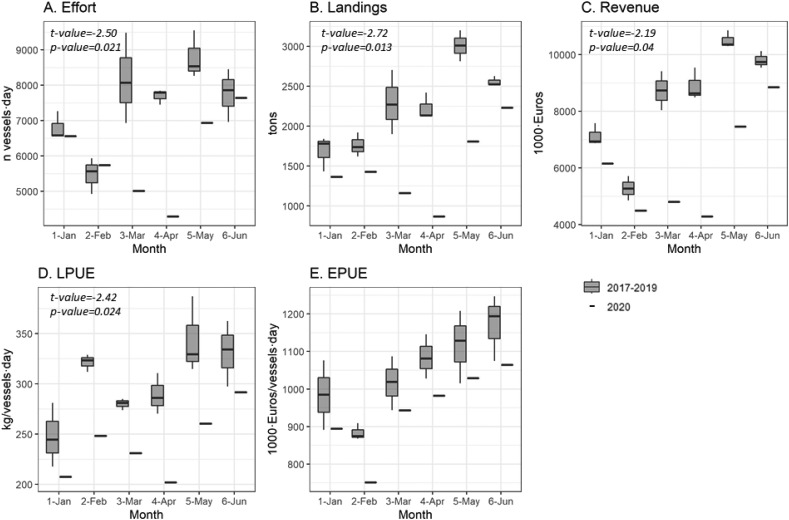
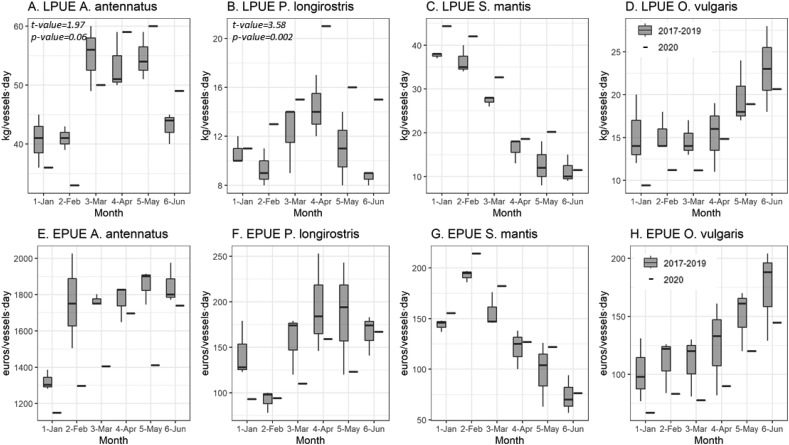
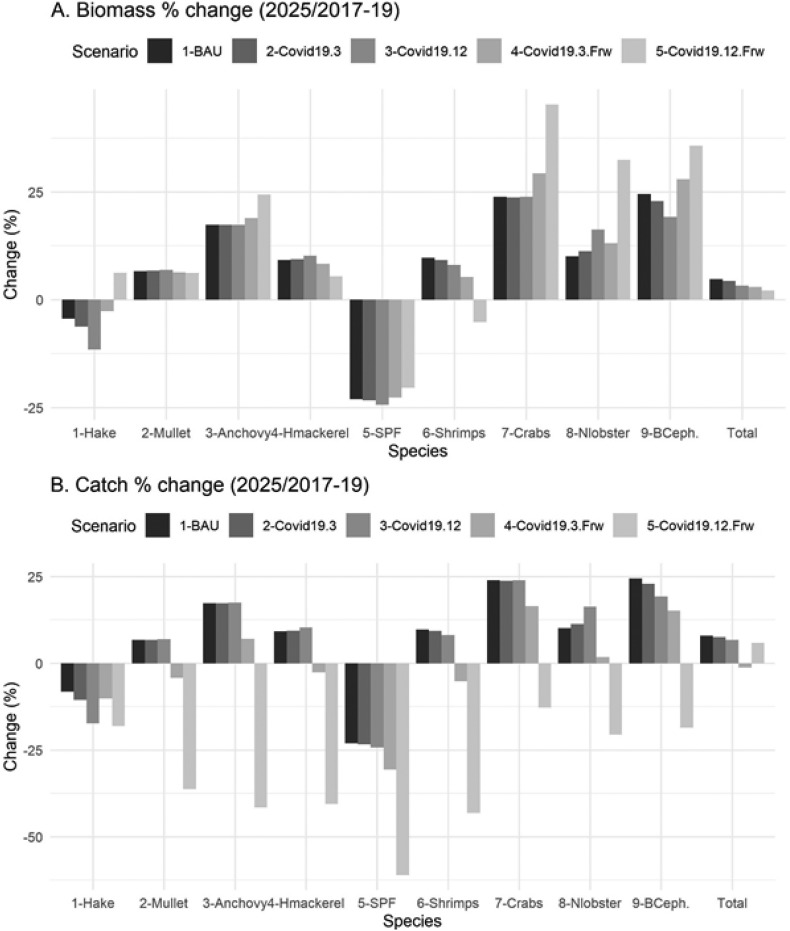
The SARS-CoV-2 coronavirus pandemic starting at the end of 2019 impacted many human activities. We analysed the abrupt reduction in fishing pressure of the mixed small-scale and industrial fisheries in the Catalan Sea, Spanish Mediterranean, and resulting ecological and economic impacts during the first half of 2020. We used detailed fisheries data on fishing effort, landings, revenues, landings per unit of effort (LPUE) and revenues per unit of effort from January to June 2020, and complemented it with the outcomes of a marine ecosystem model. We analysed data from 2017 to 2019 and compared these to 2020 to characterise changes in the fishing activity from before (January-February) to during (March-May) the lockdown. Fishing effort during the lockdown dropped by 34%, landings were down by 49% and revenues declined by 39% in comparison with the same period in 2017-2019. LPUEs did not show significant changes during the lockdown, with the exception of shrimp species, especially the deep-water rose shrimp, which significantly increased in LPUE during March-May. These increases may reflect positive effects of reduced fishing on fast-growing species. Positive effects mostly disappeared in June 2020 with the relaxation of the lockdown. In agreement, the ecological simulations projected slight short-term increases of biomass for fast-growing, small-sized organisms during 2020, which quickly vanished when fishing resumed, and which had no detectable ecosystem effects. Three additional alternative ecological simulations illustrated that to substantially recover commercial species and ensure ecosystem sustainability in the study area, a sustained and notable reduction of fishing activity would be needed.
始于2019年末的新冠疫情对许多人类活动产生了影响。我们分析了西班牙地中海加泰罗尼亚海域小型与工业混合渔业捕捞压力的突然下降,以及2020年上半年由此产生的生态和经济影响。我们使用了2020年1月至6月关于捕捞努力量、上岸量、收入、单位努力量上岸量(LPUE)和单位努力量收入的详细渔业数据,并辅之以海洋生态系统模型的结果。我们分析了2017年至2019年的数据,并将其与2020年的数据进行比较,以描述从封锁前(1月至2月)到封锁期间(3月至5月)捕捞活动的变化。与2017 - 2019年同期相比,封锁期间捕捞努力量下降了34%,上岸量下降了49%,收入下降了39%。封锁期间,除虾类物种外,LPUE没有显著变化,特别是深水玫瑰虾,其在3月至5月期间的LPUE显著增加。这些增加可能反映了捕捞减少对快速生长物种的积极影响。随着2020年6月封锁的放松,这些积极影响大多消失了。与此一致的是,生态模拟预测2020年期间快速生长的小型生物量将有轻微的短期增加,但捕捞恢复后这些增加很快消失,且对生态系统没有可检测到的影响。另外三个替代生态模拟表明,要在研究区域大幅恢复商业物种并确保生态系统可持续性,需要持续且显著地减少捕捞活动。