University West, School of Business, Economics and IT, SE-461 86, Trollhättan, Sweden.
School of Computer Science, Reykjavik University, Reykjavik, Iceland.
J Med Internet Res. 2021 Feb 9;23(2):e19910. doi: 10.2196/19910.
The use of online resources has changed how people manage health care processes. Patients seek information about health conditions, guidance in treatment, and support from peers online, complementary to traditional health care trajectories. Online communities have the potential to contribute to the quality of care by increasing patient empowerment; however, there is a gap in research regarding in what way online communities contribute to patient empowerment.
We synthesized research regarding how online communities contribute to patient empowerment to address the research question "In what ways can participation in online communities support patient empowerment?" by studying how patient empowerment is operationalized in different studies. The definition of patient empowerment used in this paper is enablement for people to develop mastery over actions and control over decisions that influence their lives. The mastery is both through processes and outcomes of the development.
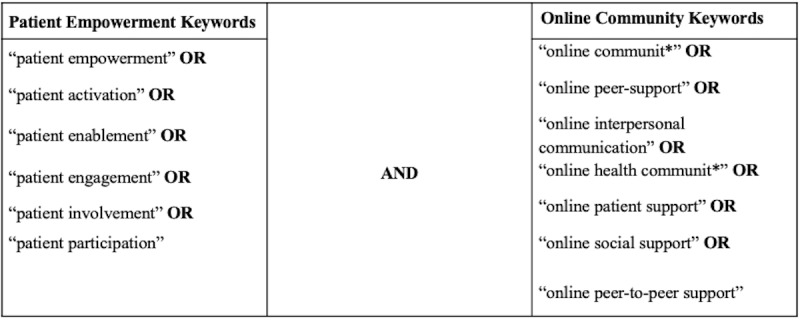
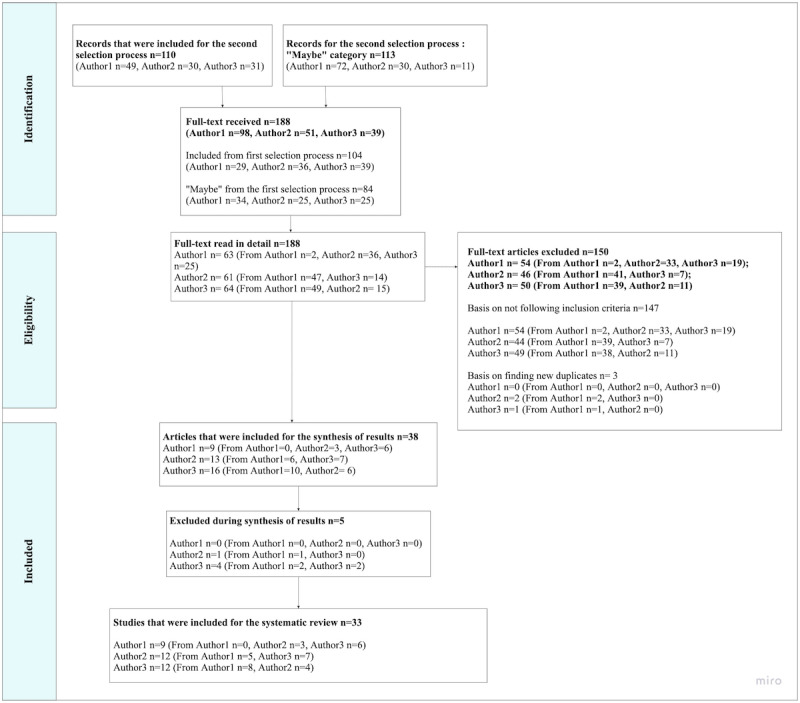
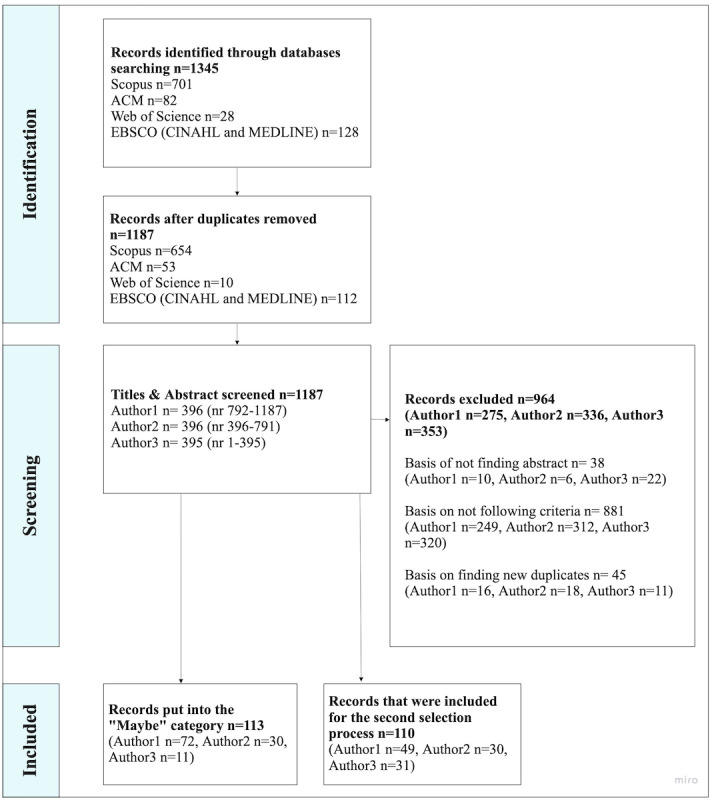
A systematic review was conducted by searching in the following databases: Scopus, ACM Digital Library, EBSCO (CINAHL and MEDLINE), PubMed, and Web of Science. In total, there were 1187 papers after excluding duplicates, and through selection processes using an analytical framework with definitions of patient empowerment and related concepts, 33 peer-reviewed papers were included.
Findings indicated that online communities support patient empowerment both as a process and as outcomes of these processes. Additionally, it was seen as a complement to traditional health care and encouragement for health care professionals to have a more positive attitude toward patients' usage. There was a mix between deductive (19/33, 58%), inductive (11/33, 33%), and a mixed approach (3/33, 9%) of studying patient empowerment in various forms. The online communities in most papers (21/33, 64%) were well-established and represented patients' initiatives.
There is a need to include professionals' perspectives regarding how health care can embrace patient empowerment through online communities. This systematic review's main contribution is the proposal of a new framework and conceptualization of how patient empowerment in online communities can be understood from different hierarchical levels.
在线资源的使用改变了人们管理医疗流程的方式。患者在线寻找健康状况信息、治疗指导和同伴支持,以此作为传统医疗轨迹的补充。在线社区有可能通过增强患者权能来提高医疗质量;然而,关于在线社区如何增强患者权能,研究仍存在空白。
本研究通过研究不同研究中如何操作化患者权能,综合有关在线社区如何增强患者权能的研究,以回答“参与在线社区如何支持患者权能?”这一研究问题。本文使用的患者权能定义是使人们能够对影响其生活的行动和决策发展掌控。这种掌控既是通过发展过程,也是通过发展结果来实现的。
通过在 Scopus、ACM 数字图书馆、EBSCO(CINAHL 和 MEDLINE)、PubMed 和 Web of Science 等数据库中进行系统检索,开展了一项系统综述。在排除重复项后,共得到 1187 篇论文,然后通过使用带有患者权能和相关概念定义的分析框架进行选择过程,最终纳入 33 篇同行评议论文。
研究结果表明,在线社区既支持患者权能作为一个过程,也支持这些过程的结果。此外,它被视为对传统医疗的补充,并鼓励医疗保健专业人员对患者的使用持更积极的态度。研究中采用了多种形式来研究患者权能,包括演绎法(19/33,58%)、归纳法(11/33,33%)和混合方法(3/33,9%)。大多数论文(21/33,64%)中的在线社区都是成熟的,代表了患者的倡议。
需要纳入专业人士的观点,探讨医疗保健如何通过在线社区接受患者权能。本系统综述的主要贡献是提出了一个新的框架和概念化方法,用于从不同层次理解在线社区中的患者权能。