Javadi Joman, Heidari-Hamedani Ghazal, Schmalzl Angelika, Szatmári Tünde, Metintas Muzaffer, Aspenström Pontus, Hjerpe Anders, Dobra Katalin
Department of Laboratory Medicine, Division of Pathology, Karolinska Institutet, SE-14157 Stockholm, Sweden.
Department of Chest, Eskisehir Osmangazi University Medical Faculty, 26040 Eskisehir, Turkey.
Cancers (Basel). 2021 Feb 6;13(4):655. doi: 10.3390/cancers13040655.
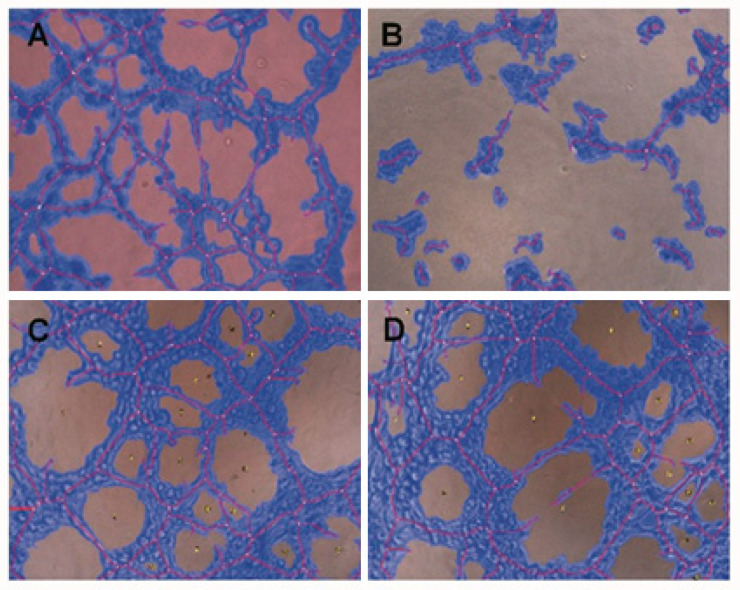
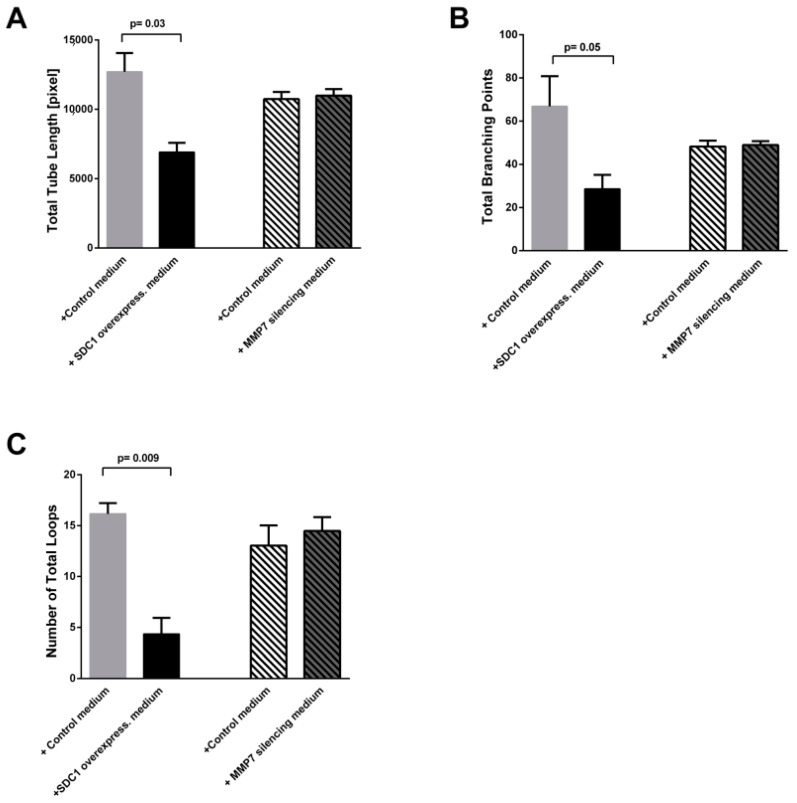
Malignant mesothelioma (MM) is an aggressive tumor of the serosal cavities. Angiogenesis is important for mesothelioma progression, but so far, anti-angiogenic agents have not improved patient survival. Our hypothesis is that better understanding of the regulation of angiogenesis in this tumor would largely improve the success of such a therapy. Syndecan-1 (SDC-1) is a transmembrane heparan sulfate proteoglycan that acts as a co-receptor in various cellular processes including angiogenesis. In MM, the expression of SDC-1 is generally low but when present, SDC-1 associates to epithelioid differentiation, inhibition of tumor cell migration and favorable prognosis, meanwhile SDC-1 decrease deteriorates the prognosis. In the present study, we studied the effect of SDC-1 overexpression and silencing on MM cells ability to secrete angiogenic factors and monitored the downstream effect of SDC-1 modulation on endothelial cells proliferation, wound healing, and tube formation. This was done by adding conditioned medium from SDC-1 transfected and SDC-1 silenced mesothelioma cells to endothelial cells. Moreover, we investigated the interplay and molecular functional changes in angiogenesis in a co-culture system and characterized the soluble angiogenesis-related factors secreted to the conditioned media. We demonstrated that SDC-1 over-expression inhibited the proliferation, wound healing, and tube formation of endothelial cells. This effect was mediated by a multitude of angiogenic factors comprising angiopoietin-1 (Fold change ± SD: 0.65 ± 0.07), FGF-4 (1.45 ± 0.04), HGF (1.33 ± 0.07), NRG1-β1 (1.35 ± 0.08), TSP-1 (0.8 ± 0.02), TIMP-1 (0.89 ± 0.01) and TGF-β1 (1.35 ± 0.01). SDC-1 silencing increased IL8 (1.33 ± 0.06), promoted wound closure, but did not influence the tube formation of endothelial cells. Pleural effusions from mesothelioma patients showed that Vascular Endothelial Growth Factor (VEGF) levels correlate to soluble SDC-1 levels and have prognostic value. In conclusion, SDC-1 over-expression affects the angiogenic factor secretion of mesothelioma cells and thereby inhibits endothelial cells proliferation, tube formation, and wound healing. VEGF could be used in prognostic evaluation of mesothelioma patients together with SDC-1.
恶性间皮瘤(MM)是一种发生于浆膜腔的侵袭性肿瘤。血管生成对间皮瘤的进展至关重要,但迄今为止,抗血管生成药物尚未改善患者的生存率。我们的假设是,更好地了解这种肿瘤中血管生成的调控机制将极大地提高此类治疗的成功率。Syndecan-1(SDC-1)是一种跨膜硫酸乙酰肝素蛋白聚糖,在包括血管生成在内的各种细胞过程中作为共受体发挥作用。在MM中,SDC-1的表达通常较低,但当存在时,SDC-1与上皮样分化、肿瘤细胞迁移的抑制及良好预后相关,同时SDC-1表达降低则预后恶化。在本研究中,我们研究了SDC-1过表达和沉默对MM细胞分泌血管生成因子能力的影响,并监测了SDC-1调节对内皮细胞增殖、伤口愈合和管腔形成的下游效应。这是通过将来自SDC-1转染和SDC-1沉默的间皮瘤细胞的条件培养基添加到内皮细胞中来实现的。此外,我们研究了共培养系统中血管生成的相互作用和分子功能变化,并对分泌到条件培养基中的可溶性血管生成相关因子进行了表征。我们证明,SDC-1过表达抑制了内皮细胞的增殖、伤口愈合和管腔形成。这种效应是由多种血管生成因子介导的,包括血管生成素-1(倍数变化±标准差:0.65±0.07)、FGF-4(1.45±0.04)、HGF(1.33±0.07)、NRG1-β1(1.35±0.08)、TSP-1(0.8±0.02)、TIMP-1(0.89±0.01)和TGF-β1(1.35±0.01)。SDC-1沉默增加了IL8(1.33±0.06),促进了伤口闭合,但不影响内皮细胞的管腔形成。间皮瘤患者的胸腔积液显示,血管内皮生长因子(VEGF)水平与可溶性SDC-1水平相关且具有预后价值。总之,SDC-1过表达影响间皮瘤细胞的血管生成因子分泌,从而抑制内皮细胞增殖、管腔形成和伤口愈合。VEGF可与SDC-1一起用于间皮瘤患者的预后评估。