Università degli Studi di Milano, Milan, Italy.
Fondazione IRCCS Ca' Granda Ospedale Maggiore Policlinico, Milan, Italy.
Ital J Pediatr. 2021 Feb 9;47(1):26. doi: 10.1186/s13052-021-00981-1.
Hookworm infections (Necator americanus, Ancylostoma duodenale) are common in rural areas of tropical and subtropical countries. Human acquisition results from direct percutaneous invasion of infective larvae from contaminated soil. Overall, almost 472 million people in developing rural countries are infected. According to simulation models, hookworm disease has a global financial impact of over US$100 billion a year. Hookworm infection in newborn or infancy is rare, and most of the cases reported in literature are from endemic countries. Here, we describe the case of an infant with an Ancylostoma duodenale infection and review the literature currently available on this topic.
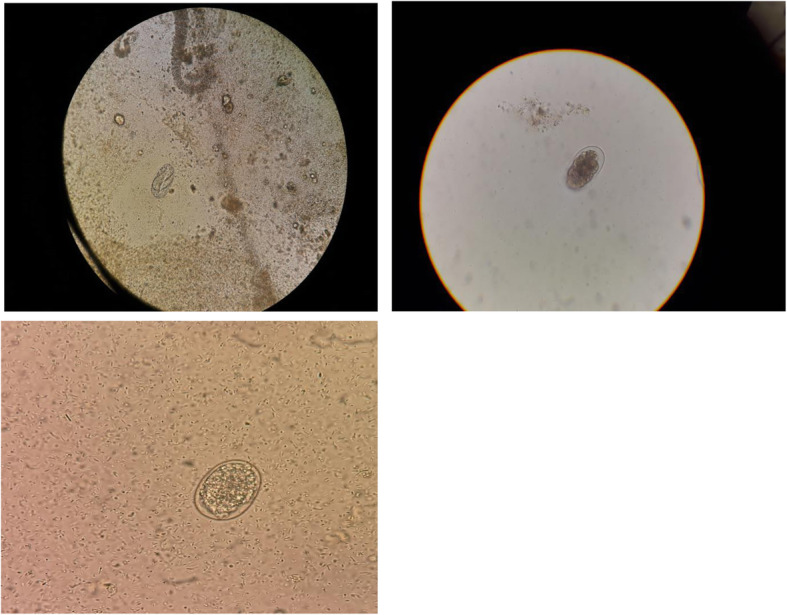
An Italian 2-month-old infant presented with vomit and weight loss. Her blood exams showed anemia and eosinophilia and stool analysis resulted positive for hookworms' eggs, identified as Ancylostoma duodenale with real time-PCR. Parasite research on parents' stools resulted negative, and since the mother travelled to Vietnam and Thailand during pregnancy, we assumed a transplacental transmission of the infection. The patient was treated successfully with oral Mebendazole and discharged in good conditions.
Hookworm helminthiasis is a major cause of morbidity in children in the tropics and subtropics, but rare in developed countries. Despite most of the patients is usually asymptomatic, children are highly exposed to negative sequelae such as malnutrition, retarded growth and impaired cognitive development. In infants and newborns, the mechanism of infection remains unclear. Although infrequent, vertical transmission of larvae can occur through breastfeeding and transplacentally. Hookworm infection should be taken into account in children with abdominal symptoms and unexplained persistent eosinophilia. The treatment of infants infected by hookworm has potential benefit, but further studies are needed to define the best clinical management of these cases.
钩虫感染(美洲板口线虫、十二指肠钩口线虫)在热带和亚热带国家的农村地区很常见。人类感染是由于受污染土壤中的感染性幼虫直接经皮侵入所致。总体而言,发展中国家农村地区有近 4.72 亿人感染。根据模拟模型,钩虫病每年造成的全球经济损失超过 1000 亿美元。新生儿或婴儿期感染钩虫的情况很少见,文献中报告的大多数病例来自流行地区。在这里,我们描述了一例十二指肠钩虫感染婴儿病例,并回顾了目前关于该主题的文献。
一名意大利 2 个月大的婴儿出现呕吐和体重减轻。她的血液检查显示贫血和嗜酸性粒细胞增多,粪便分析显示钩虫卵阳性,实时 PCR 鉴定为十二指肠钩虫。父母粪便中的寄生虫研究结果为阴性,由于母亲在怀孕期间前往越南和泰国旅行,我们假设感染是经胎盘传播的。患儿成功接受了口服甲苯达唑治疗,情况良好后出院。
钩虫病是热带和亚热带地区儿童发病率的主要原因,但在发达国家很少见。尽管大多数患者通常无症状,但儿童极易受到营养不良、生长迟缓和认知发育受损等负面后果的影响。在婴儿和新生儿中,感染机制尚不清楚。尽管罕见,但幼虫可能通过母乳喂养和经胎盘垂直传播。对于有腹部症状和不明原因持续性嗜酸性粒细胞增多的儿童,应考虑钩虫感染。对感染钩虫的婴儿进行治疗可能有益,但需要进一步研究来确定这些病例的最佳临床管理方法。