1st Department of Medicine, University of Pecs, Medical School, Hungary.
Szentágothai Research Centre, University of Pecs, Hungary.
Oxid Med Cell Longev. 2021 Jan 30;2021:1250858. doi: 10.1155/2021/1250858. eCollection 2021.
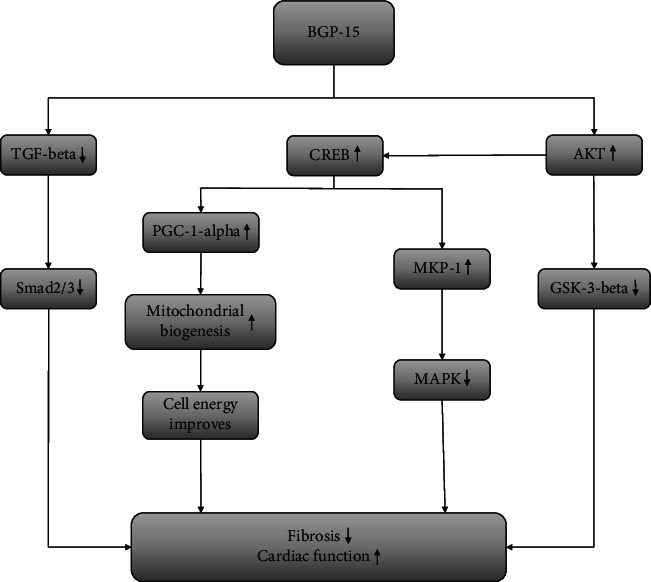
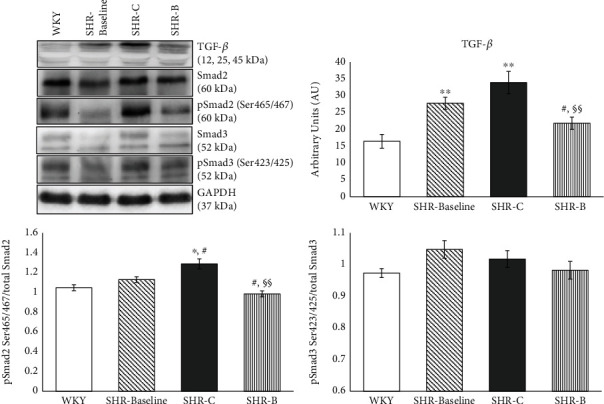
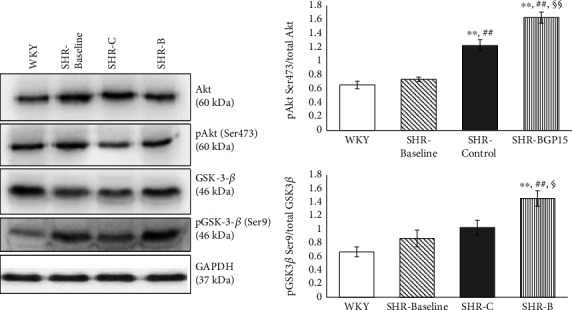
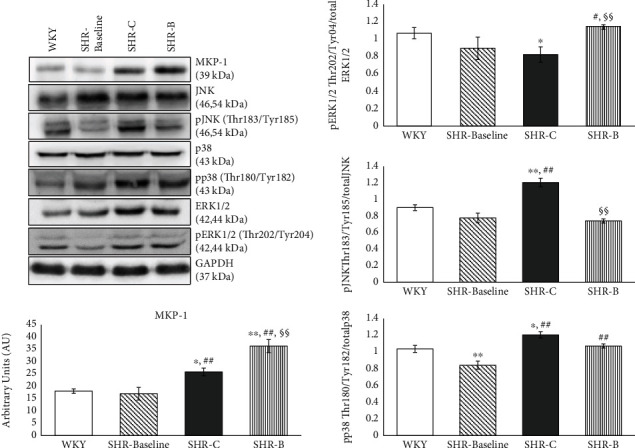
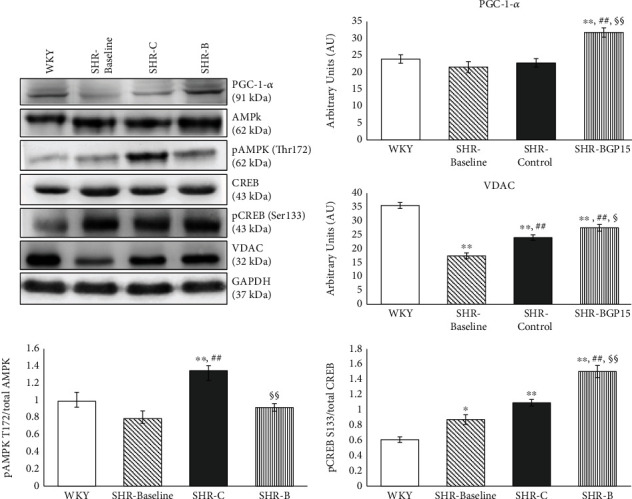
Heart failure (HF) is a complex clinical syndrome with poor clinical outcomes despite the growing number of therapeutic approaches. It is characterized by interstitial fibrosis, cardiomyocyte hypertrophy, activation of various intracellular signalling pathways, and damage of the mitochondrial network. Mitochondria are responsible for supplying the energy demand of cardiomyocytes; therefore, the damage of the mitochondrial network causes cellular dysfunction and finally leads to cell death. BGP-15, a hydroxylamine derivative, is an insulin-sensitizer molecule and has a wide range of cytoprotective effects in animal as well as in human studies. Our recent work was aimed at examining the effects of BGP-15 in a chronic hypertension-induced heart failure model. 15-month-old male SHRs were used in our experiment. The SHR-Baseline group represented the starting point ( = 7). Animals received BGP-15 (SHR-B, = 7) or placebo (SHR-C, = 7) for 18 weeks. WKY rats were used as age-matched normotensive controls ( = 7). The heart function was monitored by echocardiography. Histological preparations were made from cardiac tissue. The levels of signalling proteins were determined by Western blot. At the end of the study, systolic and diastolic cardiac function was preserved in the BGP-treated animals. BGP-15 decreased the interstitial collagen deposition via decreasing the activity of TGF/Smad signalling factors and prevented the cardiomyocyte hypertrophy in hypertensive animals. BGP-15 enhanced the prosurvival signalling pathways (Akt/Gsk3). The treatment increased the activity of MKP1 and decreased the activity of p38 and JNK signalling routes. The mitochondrial mass of cardiomyocytes was also increased in BGP-15-treated SHR animals due to the activation of mitochondrial biogenesis. The mitigation of remodelling processes and the preserved systolic cardiac function in hypertension-induced heart failure can be a result-at least partly-of the enhanced mitochondrial biogenesis caused by BGP-15.
心力衰竭(HF)是一种复杂的临床综合征,尽管治疗方法不断增多,但临床预后仍较差。其特征为间质纤维化、心肌细胞肥大、各种细胞内信号通路的激活以及线粒体网络的损伤。线粒体负责为心肌细胞提供能量需求;因此,线粒体网络的损伤导致细胞功能障碍,最终导致细胞死亡。BGP-15 是一种羟胺衍生物,是一种胰岛素增敏剂分子,在动物和人类研究中具有广泛的细胞保护作用。我们最近的工作旨在研究 BGP-15 在慢性高血压诱导的心力衰竭模型中的作用。我们的实验使用了 15 个月大的雄性 SHR 。SHR-Baseline 组代表起点(n=7)。动物接受 BGP-15(SHR-B,n=7)或安慰剂(SHR-C,n=7)治疗 18 周。WKY 大鼠用作年龄匹配的正常血压对照(n=7)。通过超声心动图监测心脏功能。从心脏组织中制备组织学制剂。通过 Western blot 测定信号蛋白的水平。在研究结束时,BGP 治疗的动物保留了收缩期和舒张期心脏功能。BGP-15 通过降低 TGF/Smad 信号因子的活性减少间质胶原沉积,并防止高血压动物的心肌细胞肥大。BGP-15 增强了促生存信号通路(Akt/Gsk3)。该治疗增加了 MKP1 的活性,降低了 p38 和 JNK 信号通路的活性。由于线粒体生物发生的激活,BGP-15 治疗的 SHR 动物的心肌细胞线粒体质量也增加了。高血压诱导的心力衰竭中重塑过程的缓解和收缩期心脏功能的保留可能至少部分是由于 BGP-15 引起的线粒体生物发生增强所致。