Reardon Leigh C, Lin Jeannette P, VanArsdell Glen S, Kaldas Fady M, Lluri Gentian, Tan Weiyi, Whalen Katrina M, Cruz Daniel, Nsair Ali, Deng Mario C, Moore Melissa A, Laks Hillel, Biniwale Reshma M, Saab Sammy, Baird Andrew, Wilson James M, Lubin Lorraine N, Marijic Jure, Williams Tiffany M, Wray Christopher L, Meltzer Joseph S, Gudzenko Vadim, Kratzert Wolf B, Neelankavil Jacques, Venick Robert S, Aboulhosn Jamil A
Ahmanson/UCLA Adult Congenital Heart Disease Center, Division of Adult Cardiology, 100 UCLA Medical Plaza Suite 630E, Los Angeles, CA 90095 USA.
UCLA Children's Heart Center, Division of Pediatric Cardiology, 200 UCLA Medical Plaza Suite 330, Los Angeles, CA 90095 USA.
Curr Transplant Rep. 2021;8(1):9-20. doi: 10.1007/s40472-021-00315-4. Epub 2021 Feb 4.
This is a comprehensive update on failing Fontan physiology and the role of heart and combined heart and liver transplantation in the current era.
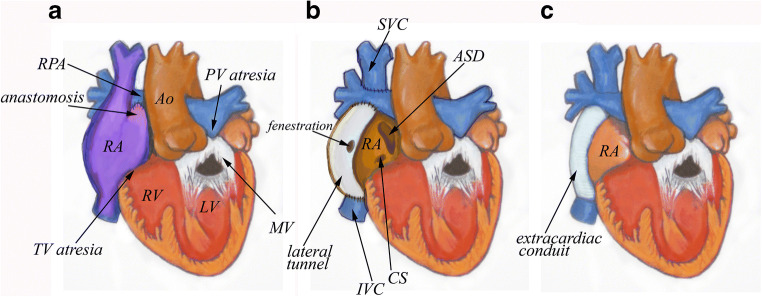
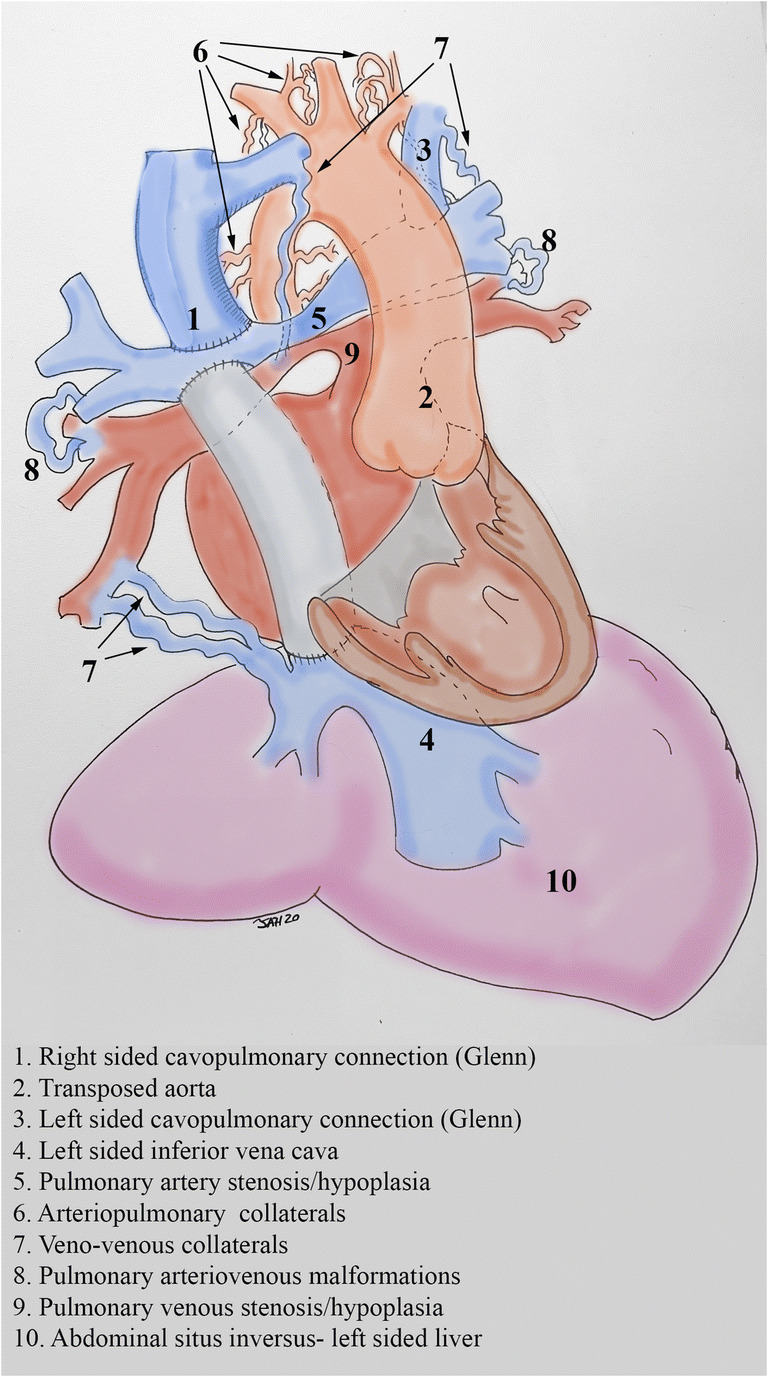
Single ventricle physiology encompasses a series of rare congenital cardiac abnormalities that are characterized by absence of or hypoplasia of one ventricle. This effectively results in a single ventricular pumping chamber. These abnormalities are rarely compatible with long-term survival if left without surgical palliation in the first few years of life. Surgical treatment of single ventricle physiology has evolved over the past 60 years and is characterized by numerous creative innovations. These include the development of arteriopulmonary shunts, the evolution of partial cavopulmonary connections, and the eventual development of the "Fontan" operation. Regardless of the type of Fontan modification, the long-term consequences of the Fontan operation are predominantly related to chronic central venous hypertension and the multi-organ consequences thereof. Atrial arrhythmias can further compromise this circulation.Patients with single ventricle physiology represent a special sub-segment of congenital cardiac transplants and are arguably the most challenging patients considered for transplantation.
This review describes in detail the challenges and opportunities of heart and liver transplantation in Fontan patients, as viewed and managed by the experienced team at the Ahmanson/UCLA Adult Congenital Heart Center.
本文是关于功能性单心室生理状态以及当今时代心脏移植和心-肝联合移植作用的全面更新。
单心室生理状态涵盖一系列罕见的先天性心脏异常,其特征为一个心室缺如或发育不全。这实际上导致只有一个心室作为泵血腔。如果在生命的最初几年不进行手术姑息治疗,这些异常情况很少能与长期生存相容。在过去60年里,单心室生理状态的外科治疗不断发展,其特点是有众多创新性举措。这些举措包括动脉-肺动脉分流术的发展、部分腔肺连接的演变以及最终“Fontan”手术的出现。无论Fontan术式如何改良,Fontan手术的长期后果主要与慢性中心静脉高压及其多器官影响有关。房性心律失常会进一步损害这种循环。单心室生理状态的患者是先天性心脏移植中的一个特殊亚组,可说是接受移植评估的最具挑战性的患者。
本文综述详细描述了由艾哈迈森/加州大学洛杉矶分校成人先天性心脏病中心经验丰富的团队所观察和处理的Fontan患者心脏和肝脏移植的挑战与机遇。