Rosenzweig Margaret Quinn, Althouse Andrew D, Sabik Lindsay, Arnold Robert, Chu Edward, Smith Thomas J, Smith Kenneth, White Douglas, Schenker Yael
Department of Acute and Tertiary Care, School of Nursing, University of Pittsburgh, Pittsburgh, Pennsylvania, USA.
Center for Research on Health Care Data Center, School of Medicine, University of Pittsburgh, Pittsburgh, Pennsylvania, USA.
Health Equity. 2021 Jan 19;5(1):8-16. doi: 10.1089/heq.2020.0037. eCollection 2021.
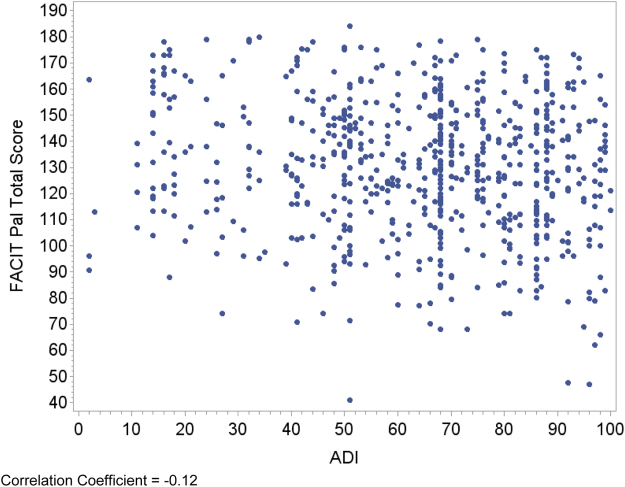
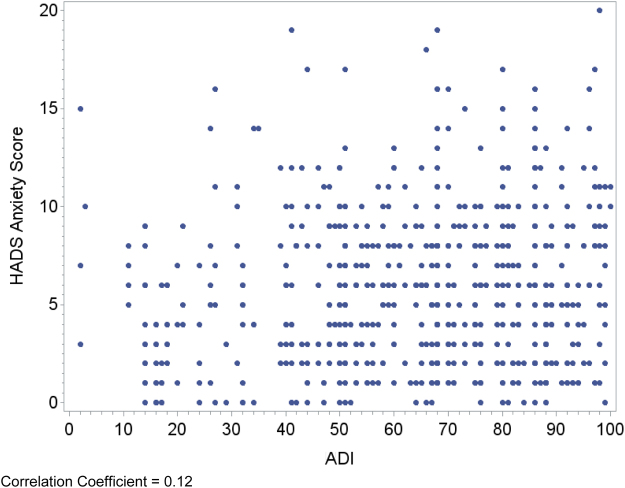
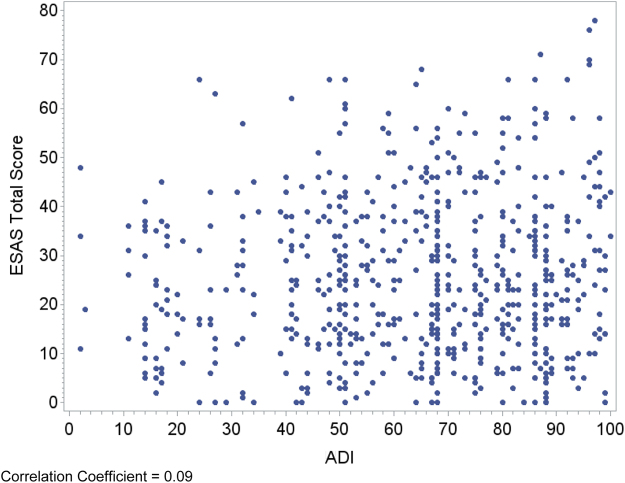
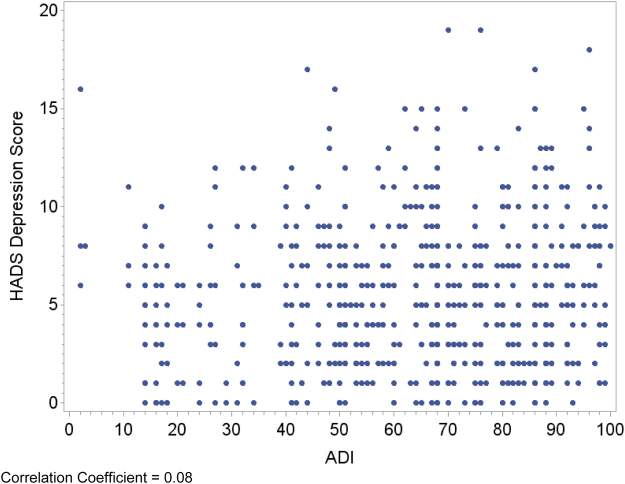
This analysis describes associations between area deprivation and patient-reported outcomes among patients with advanced cancer. This is a cross-sectional analysis of baseline data from a multisite primary palliative care intervention trial. Participants were adult patients with advanced cancer. Patient-level area deprivation scores were calculated using the Area Deprivation Index (ADI). Quality of life and symptom burden were measured. Uni- and multivariate regressions estimated associations between area deprivation and outcomes of interest. Among 672 patients, ∼0.5 (54%) were women and most (94%) were Caucasian. Mean age was 69.3±10.2 years. Lung (36%), breast (13%), and colon (10%) were the most common malignancies. Mean ADI was 64.0, scale of 1 (low)-100 (high). In unadjusted univariate analysis, Functional Assessment of Cancer Therapy-Palliative (=0.002), Edmonton Symptom Assessment Scale (=0.025) and the Hospital Anxiety and Depression Scale anxiety (=0.003) and depression (=0.029) scores were significantly associated with residence in more deprived areas (=0.003). In multivariate analysis, controlling for patient-level factors, living in more deprived areas was associated with more anxiety (=0.019). Higher ADI was associated with higher levels of anxiety among patients with advanced cancer. Geographic information could assist clinicians with providing geographically influenced social support strategies.
本分析描述了晚期癌症患者的地区贫困状况与患者报告结局之间的关联。这是一项对多中心初级姑息治疗干预试验基线数据的横断面分析。参与者为成年晚期癌症患者。使用地区贫困指数(ADI)计算患者层面的地区贫困得分。对生活质量和症状负担进行了测量。单因素和多因素回归分析估计了地区贫困与感兴趣结局之间的关联。在672名患者中,约0.5(54%)为女性,大多数(94%)为白种人。平均年龄为69.3±10.2岁。肺癌(36%)、乳腺癌(13%)和结肠癌(10%)是最常见的恶性肿瘤。平均ADI为64.0,范围为1(低)-100(高)。在未调整的单因素分析中,癌症治疗-姑息功能评估(=0.002)、埃德蒙顿症状评估量表(=0.025)以及医院焦虑抑郁量表的焦虑(=0.003)和抑郁(=0.029)得分与居住在更贫困地区显著相关(=0.003)。在多因素分析中,在控制患者层面因素后,居住在更贫困地区与更多焦虑相关(=0.019)。较高的ADI与晚期癌症患者较高的焦虑水平相关。地理信息可帮助临床医生制定受地理因素影响的社会支持策略。