Santos Neto Francisco, Pisani Cristiano F, Darrieux Francisco Carlos da Costa, Cirino Celia M F, Hachul Denise Tessariol, Santos Astrid M, Pérez-Riera Andrés Ricardo, Barbosa-Barros Raimundo, Scanavacca Mauricio
Messejana - Dr. Carlos Alberto Studart Gomes (HM) Hospital , Fortaleza , CE - Brasil.
Universidade de São Paulo Faculdade de Medicina Hospital das Clínicas Instituto do Coração, São Paulo , SP - Brasil.
Arq Bras Cardiol. 2021 Mar;116(3):454-463. doi: 10.36660/abc.20190501.
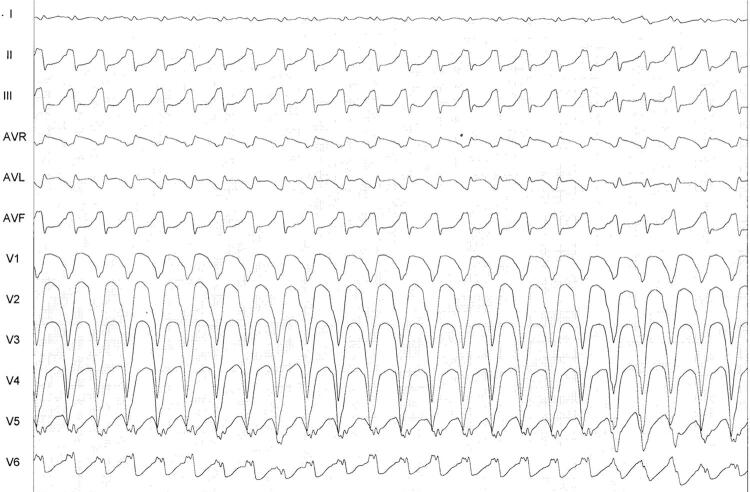
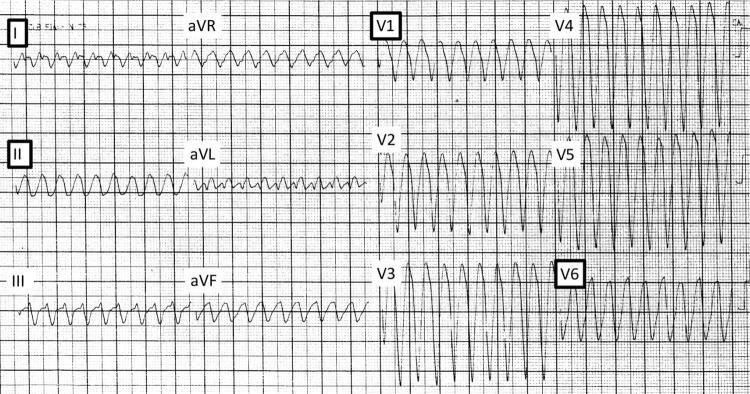
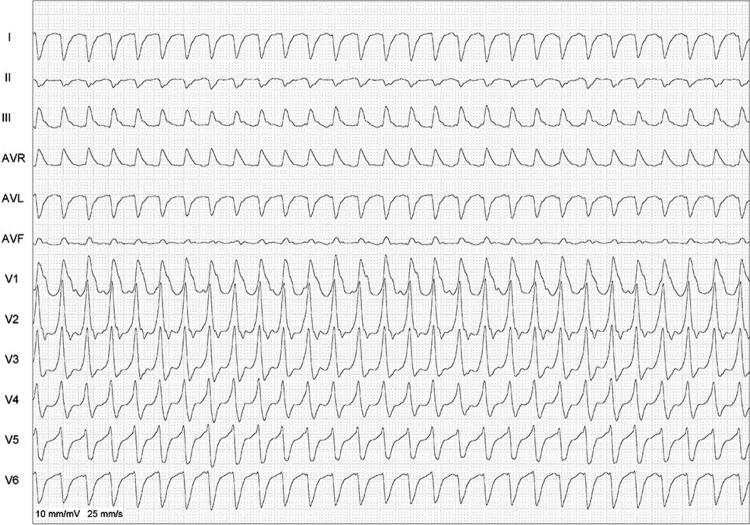
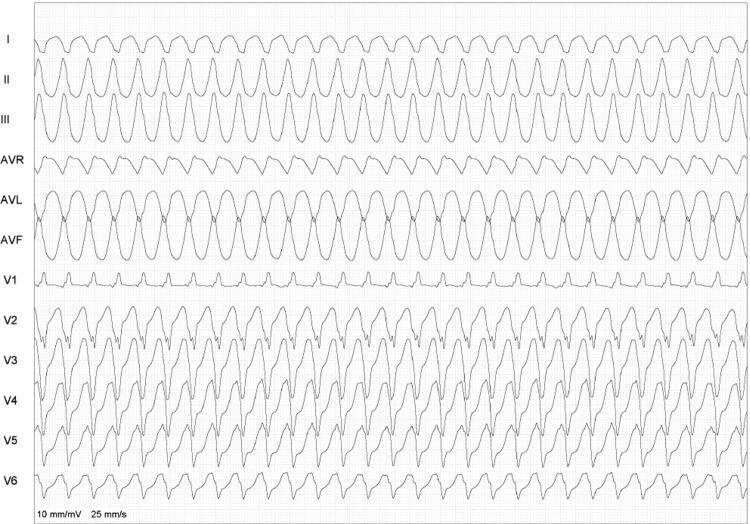
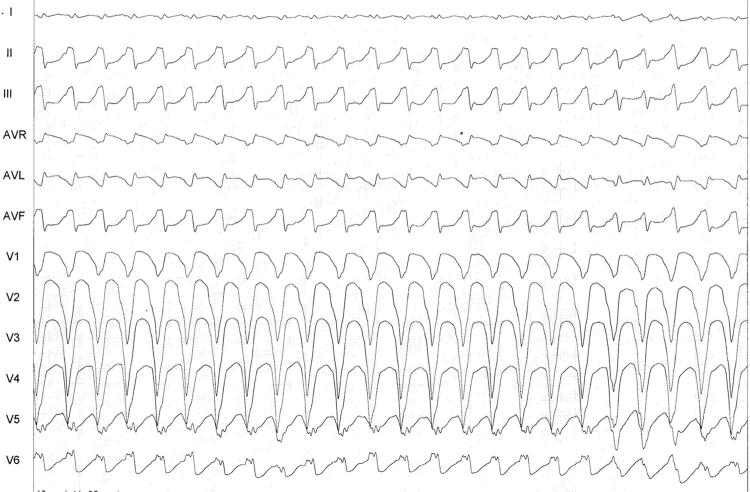
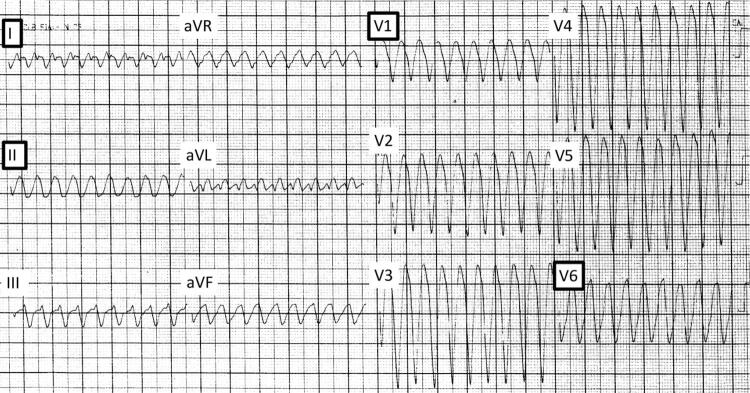
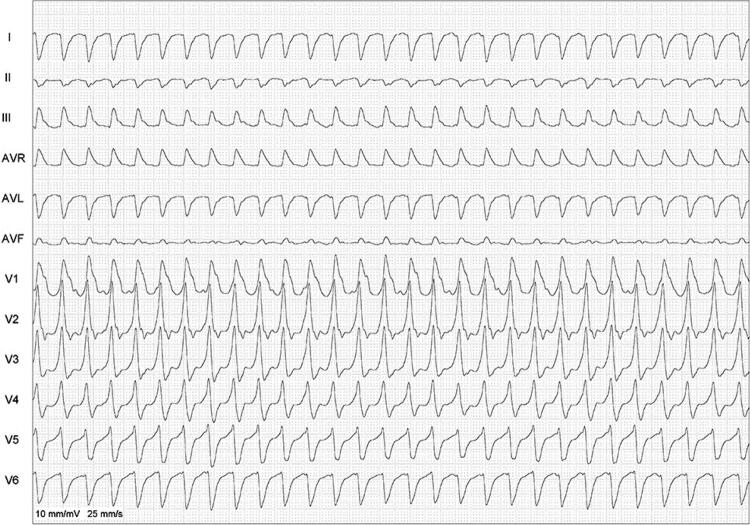
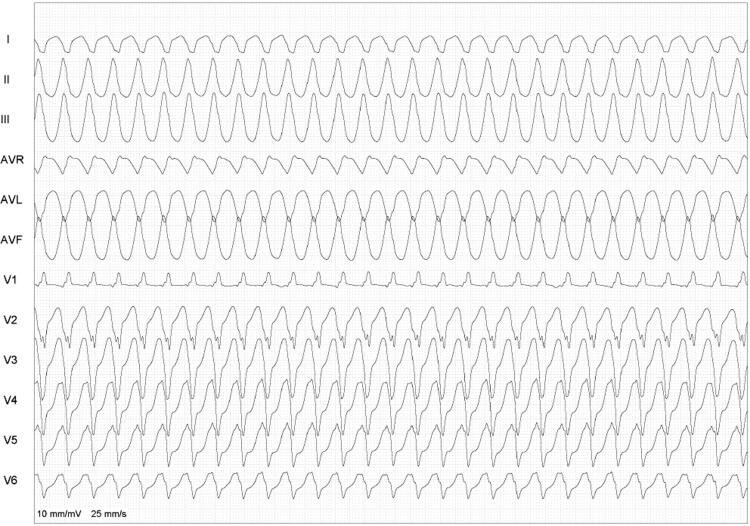
The differential diagnosis of wide QRS complex tachycardia (WCT) between ventricular tachycardia (VT) or supraventricular tachycardia with aberrant conduction (SVT-A) is sometimes difficult in the emergency room.
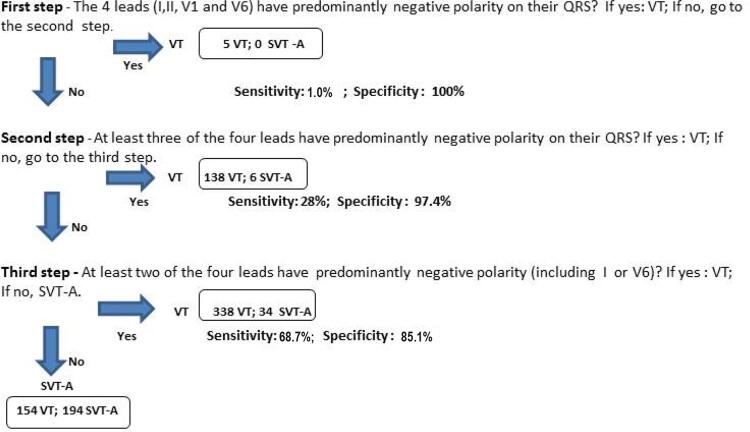
The aim of this study was to evaluate the accuracy of a new simple electrocardiographic algorithm to recognize VT in patients with wide complex tachycardia.
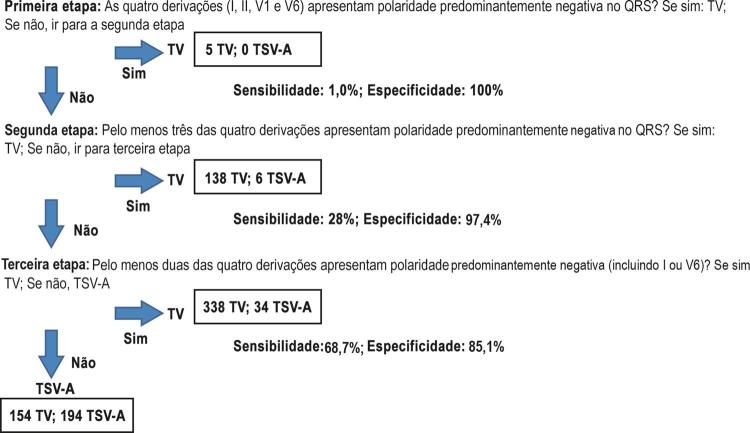
The 12-lead electrocardiograms (ECG) for WCT were prospectively obtained from 120 patients during electrophysiological study. Six physicians with different expertise analyzed the electrocardiographic recordings, and made the diagnosis based on the D12V16 algorithm, that involves the analysis of the predominant polarity of QRS in leads I, II, V1 and V6. The diagnosis was compared with that made using the traditional Brugada algorithm and the "gold-standard" electrophysiological study. Statistical analyses were performed with a significance level of 5% (p<0.05).
According to the EPS study, 82 ECG recordings were VT and 38 SVT-A. Structural heart diseases were present in 71 (86.6%) patients with VT and in 8 (21.1%) with SVT-A. The Brugada algorithm had higher global sensitivity (87.2%), and the D12V16 algorithm had higher global specificity (85.1%) for VT. Both D12V16 and Brugada's algorithms presented a high positive predictive value (90.9% vs 85.8%, respectively) and similar accuracy (73.8% vs 81.4%, respectively) for the diagnosis of VT. Experienced evaluators were more accurate using Brugada algorithm than the D12V16 algorithm, but the accuracy of both algorithms was similar according to less experienced examiners.
The simplified algorithm may be a useful method to recognize VT in the ECG, especially for less experienced doctors. (Arq Bras Cardiol. 2021; [online].ahead print, PP.0-0).
在急诊室,宽QRS波群心动过速(WCT)是室性心动过速(VT)还是伴有差异性传导的室上性心动过速(SVT-A)的鉴别诊断有时很困难。
本研究旨在评估一种新的简单心电图算法识别宽QRS波群心动过速患者室性心动过速的准确性。
在电生理研究期间,前瞻性地获取了120例患者宽QRS波群心动过速的12导联心电图(ECG)。6名不同专业水平的医生分析心电图记录,并根据D12V16算法进行诊断,该算法涉及分析I、II、V1和V6导联QRS波的主要极性。将该诊断结果与使用传统Brugada算法和“金标准”电生理研究得出的诊断结果进行比较。进行统计学分析,显著性水平为5%(p<0.05)。
根据电生理研究,82份心电图记录为室性心动过速,38份为室上性心动过速伴差异性传导。71例(86.6%)室性心动过速患者和8例(21.1%)室上性心动过速伴差异性传导患者存在结构性心脏病。Brugada算法对室性心动过速的总体敏感性较高(87.2%),而D12V16算法对室性心动过速的总体特异性较高(85.1%)。D12V16算法和Brugada算法对室性心动过速的诊断均具有较高的阳性预测值(分别为90.9%和85.8%)和相似的准确性(分别为73.8%和81.4%)。经验丰富的评估者使用Brugada算法比D12V16算法更准确,但根据经验较少的检查者,两种算法的准确性相似。
简化算法可能是一种识别心电图中室性心动过速的有用方法,尤其是对于经验较少的医生。(《巴西心脏病学杂志》。2021年;[在线]。预印本,第0-0页)