St. George's Medical School, University of London, London, UK.
School of Medicine, Faculty of Health and Life Science, University of Liverpool, Liverpool, UK.
J Card Surg. 2021 May;36(5):1729-1733. doi: 10.1111/jocs.15417. Epub 2021 Feb 10.
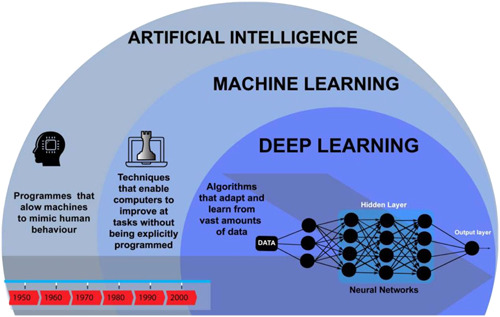
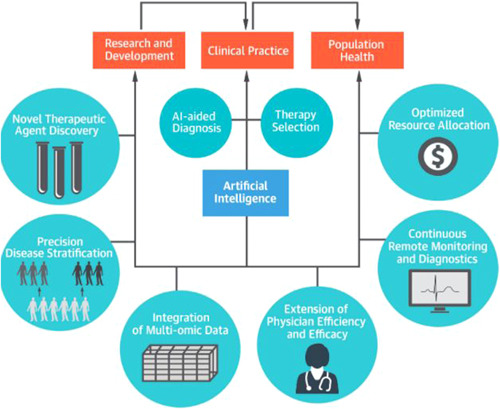
The coronavirus disease 2019 (COVID-19) pandemic has increased the burden on hospital staff world-wide. Through the redistribution of scarce resources to these high-priority cases, the cardiac sector has fallen behind. In efforts to reduce transmission, reduction in direct patient-physician contact has led to a backlog of cardiac cases. However, this accumulation of postponed or cancelled nonurgent cardiac care seems to be resolvable with the assistance of technology. From telemedicine to artificial intelligence (AI), technology has transformed healthcare systems nationwide. Telemedicine enables patient monitoring from a distance, while AI unveils a whole new realm of possibilities in clinical practice, examples include: traditional systems replacement with more efficient and accurate processing machines; automation of clerical process; and triage assistance through risk predictions. These possibilities are driven by deep and machine learning. The two subsets of AI are explored and limitations regarding "big data" are discussed. The aims of this review are to explore AI: the advancements in methodology; current integration in cardiac surgery or other clinical scenarios; and potential future roles, which are innately nearing as the COVID-19 era urges alternative approaches for care.
2019 年冠状病毒病(COVID-19)大流行增加了全球医院工作人员的负担。通过将稀缺资源重新分配给这些高优先级病例,心脏科已经落后。为了减少传播,减少直接医患接触导致心脏病例积压。然而,这种积压的非紧急心脏护理似乎可以通过技术的帮助来解决。从远程医疗到人工智能(AI),技术已经改变了全国的医疗保健系统。远程医疗使患者能够远距离监测,而人工智能则在临床实践中开辟了一个全新的可能性领域,包括:用更高效、更准确的处理机器替代传统系统;文书工作流程的自动化;通过风险预测进行分诊协助。这些可能性是由深度学习和机器学习驱动的。本文探讨了人工智能的两个子集及其关于“大数据”的局限性。本综述的目的是探讨人工智能:方法学的进展;当前在心脏外科或其他临床场景中的整合;以及潜在的未来角色,随着 COVID-19 时代迫切需要替代护理方法,这些角色自然会越来越接近。