Division of Cardiothoracic Intensive Care, Cardiothoracic Department, ASST Spedali Civili, 25123, Brescia, Italy.
Department of Cardiac Surgery and Transplantation, Azienda Ospedaliera dei Colli Monaldi-Cotugno-CTO, Naples, Italy.
J Cardiothorac Surg. 2022 Oct 29;17(1):277. doi: 10.1186/s13019-022-02025-z.
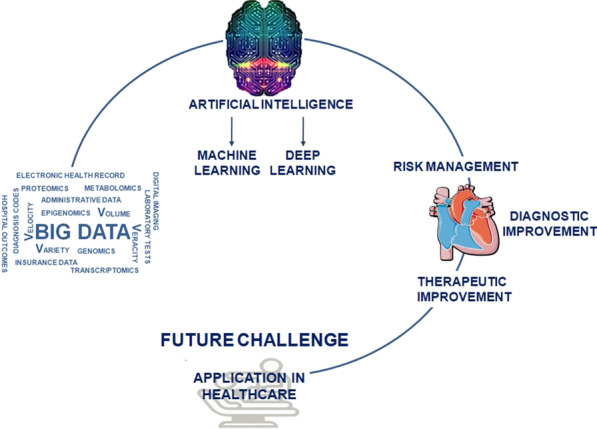
Big Data, and the derived analysis techniques, such as artificial intelligence and machine learning, have been considered a revolution in the modern practice of medicine. Big Data comes from multiple sources, encompassing electronic health records, clinical studies, imaging data, registries, administrative databases, patient-reported outcomes and OMICS profiles. The main objective of such analyses is to unveil hidden associations and patterns. In cardiac surgery, the main targets for the use of Big Data are the construction of predictive models to recognize patterns or associations better representing the individual risk or prognosis compared to classical surgical risk scores. The results of these studies contributed to kindle the interest for personalized medicine and contributed to recognize the limitations of randomized controlled trials in representing the real world. However, the main sources of evidence for guidelines and recommendations remain RCTs and meta-analysis. The extent of the revolution of Big Data and new analytical models in cardiac surgery is yet to be determined.
大数据以及由此衍生的分析技术,如人工智能和机器学习,被认为是现代医学实践的一场革命。大数据来自多个来源,包括电子健康记录、临床研究、成像数据、登记处、行政数据库、患者报告的结果和 OMICS 图谱。此类分析的主要目的是揭示隐藏的关联和模式。在心脏外科手术中,使用大数据的主要目标是构建预测模型,以识别与传统手术风险评分相比更好地代表个体风险或预后的模式或关联。这些研究的结果促使人们对个性化医学产生了兴趣,并认识到随机对照试验在代表真实世界方面的局限性。然而,指南和建议的主要证据来源仍然是 RCT 和荟萃分析。大数据和新的分析模型在心脏外科中的革命程度还有待确定。