Chakraborty Payel, Ghatak Souvik, Chenkual Saia, Pachuau Lalawmpuii, Zohmingthanga John, Bawihtlung Zothankima, Khenglawt Lalfakzuala, Pautu Jeremy L, Maitra Arindam, Chhakchhuak Lalchhandama, Kumar Nachimuthu Senthil
Department of Biotechnology, Mizoram University, Aizawl, Mizoram, 796004, India.
Department of Surgery, Civil Hospital Aizawl, Aizawl, Mizoram, 796001, India.
Genes Environ. 2021 Feb 10;43(1):3. doi: 10.1186/s41021-021-00174-6.
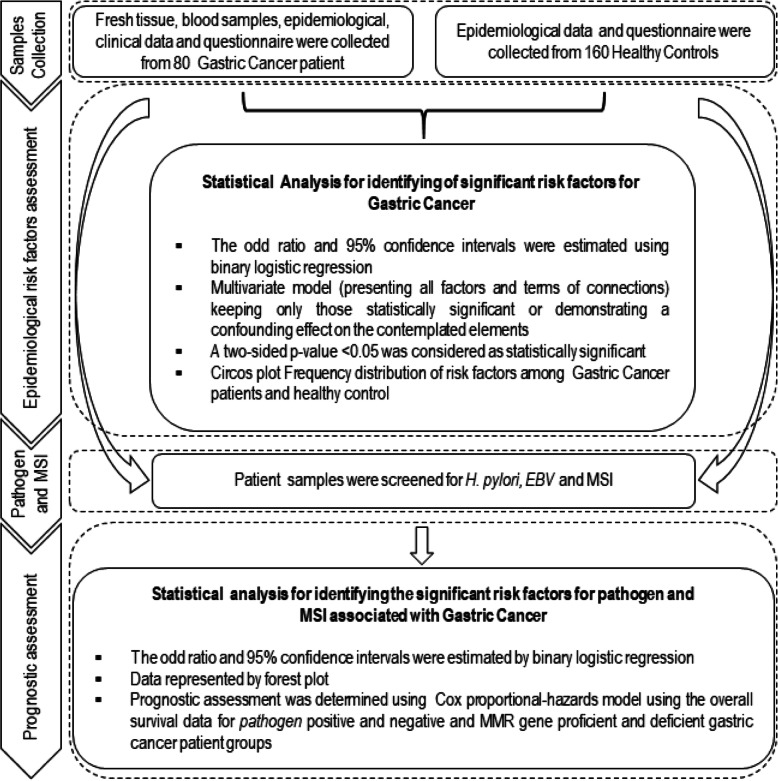
There are very few studies covering the epidemiological risk factors associated with Epstein Barr Virus (EBV) and Microsatellite stability for Gastric Cancer (GC) cases. Early diagnosis of GC through epidemiological risk factors is very necessary for the clinical assessment of GC. The aim of this study was to find out the major risk factors to predict GC in early stage and the impact of pathogen infection and MSI on survival rate of patients. GC samples were screened for Helicobacter pylori, Epstein Barr Virus, and Mismatch repair (MMR) gene status (microsatellite stable or instable). Chi-square and logistic regression analysis of Odd ratio and 95% confidence interval (OR, 95% CI) were performed to find out the association between epidemiological factors and the risk of gastric cancer. The pathogen and MMR gene status were analysed to predict their effect on overall survival and the risk score and hazard ratio was calculated for prognostic assessment.
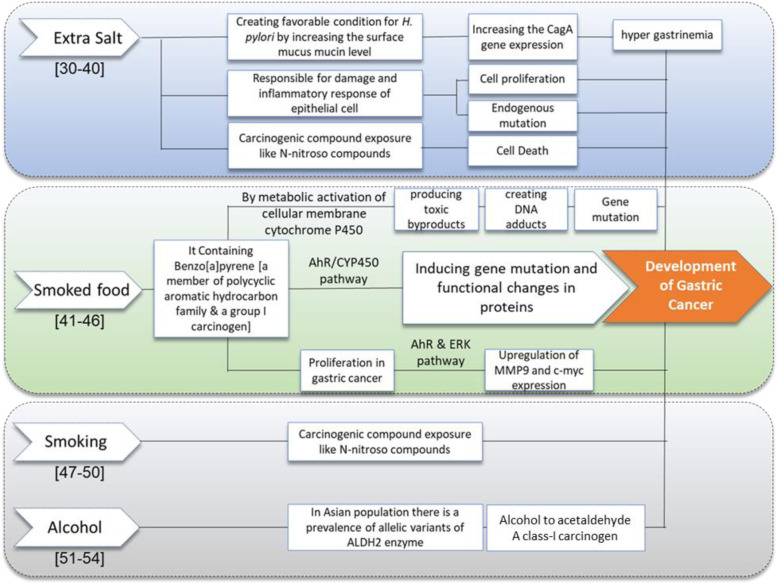
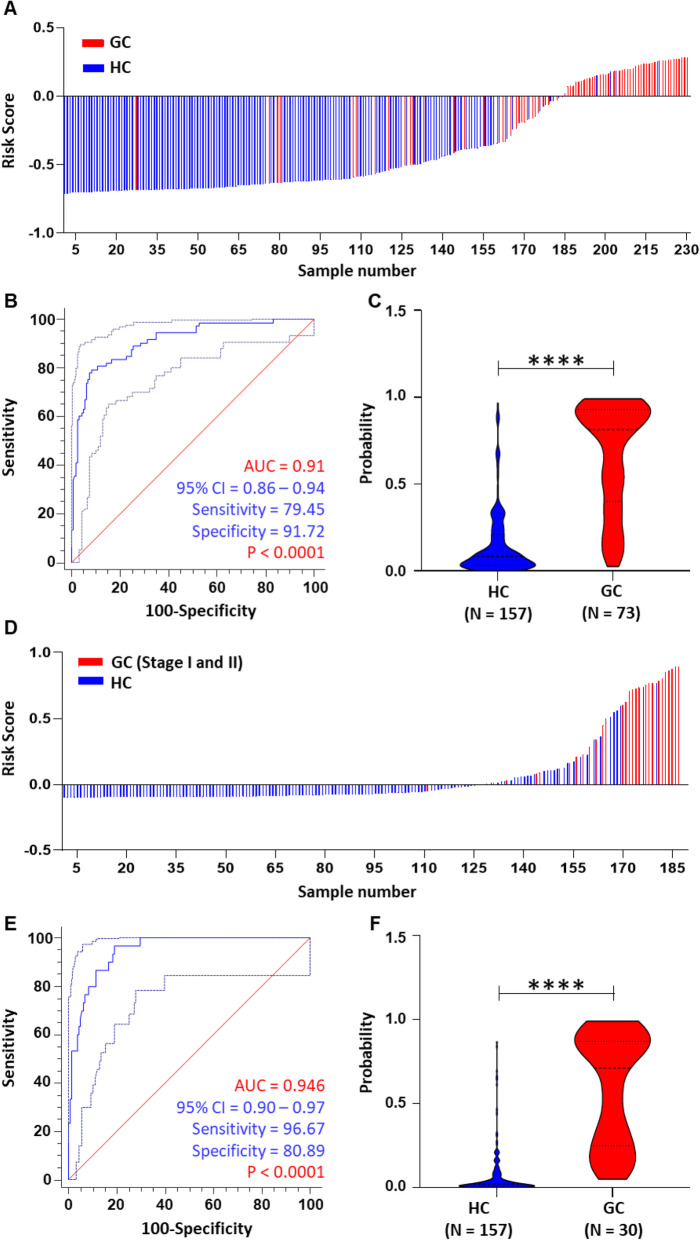
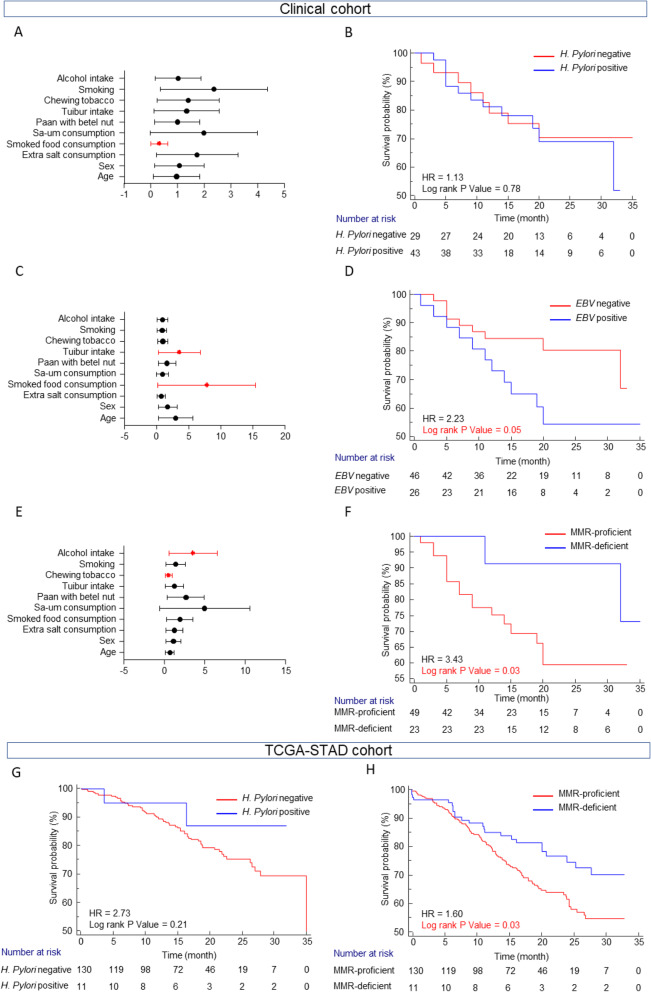
Excess body weight, consumption of extra salt, smoked food, alcohol, and smoking were the major risk factors for GC development. This study achieved a high area under the curve (AUC 0.94) for the probable GC patients in early-stage using the five-panel epidemiological risk factors. H. pylori infected cases were significant with smoked food, while EBV was found to be associated with tuibur intake and smoked food. In overall survival analysis EBV infected and microsatellite stable (HR: 1.32 and 1.34 respectively) GC cases were showing poor prognosis.
This study might provide new opportunities for personalized treatment options using this epidemiological factor risk score and clinicopathological factors assessment for early detection and prognosis in high-risk GC populations.
很少有研究涉及与胃癌(GC)病例相关的爱泼斯坦-巴尔病毒(EBV)和微卫星稳定性的流行病学危险因素。通过流行病学危险因素对GC进行早期诊断对于GC的临床评估非常必要。本研究的目的是找出预测早期GC的主要危险因素以及病原体感染和微卫星不稳定性(MSI)对患者生存率的影响。对GC样本进行幽门螺杆菌、爱泼斯坦-巴尔病毒和错配修复(MMR)基因状态(微卫星稳定或不稳定)的筛查。进行卡方检验以及比值比和95%置信区间(OR,95%CI)的逻辑回归分析,以找出流行病学因素与胃癌风险之间的关联。分析病原体和MMR基因状态以预测它们对总生存的影响,并计算风险评分和风险比用于预后评估。
超重、额外盐摄入、食用烟熏食品、饮酒和吸烟是GC发生的主要危险因素。本研究使用五项流行病学危险因素对可能的早期GC患者实现了较高的曲线下面积(AUC 0.94)。幽门螺杆菌感染病例与食用烟熏食品显著相关,而EBV与tuibur摄入和食用烟熏食品有关。在总生存分析中,EBV感染和微卫星稳定的GC病例(HR分别为1.32和1.34)预后较差。
本研究可能为利用这种流行病学因素风险评分和临床病理因素评估为高危GC人群进行早期检测和预后提供个性化治疗选择的新机会。