Department of Surgery, University of Texas Medical Branch, Galveston, TX, USA; Department of Surgery, Allegheny Health Network, Pittsburgh, PA, USA.
Department of Surgery, University of Texas Medical Branch, Galveston, TX, USA.
Burns. 2021 Jun;47(4):756-764. doi: 10.1016/j.burns.2021.01.009. Epub 2021 Feb 2.
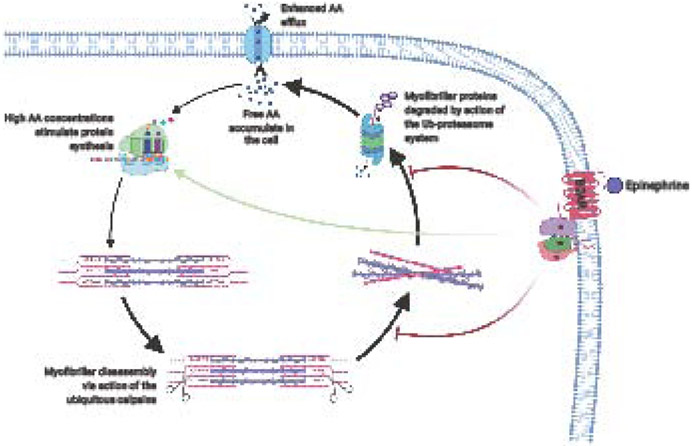
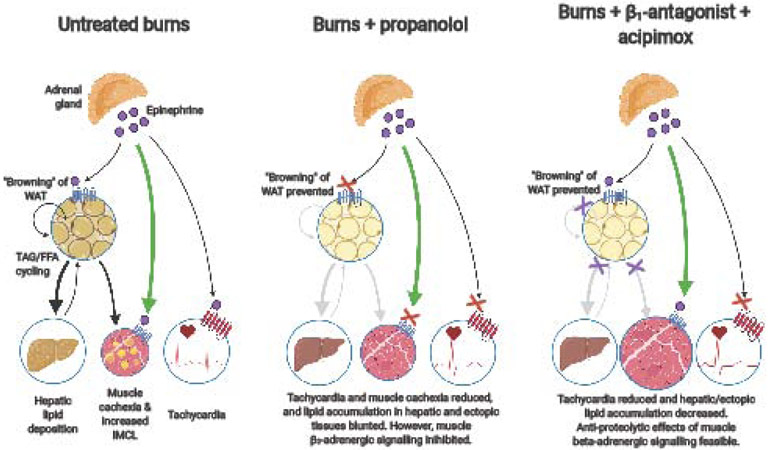
Profound skeletal muscle wasting in the setting of total body hypermetabolism is a defining characteristic of massive burns, compromising the patient's recovery and necessitating a protracted period of rehabilitation. In recent years, the prolonged use of the non-selective beta-blocker, propranolol, has gained prominence as an effective tool to assist with suppressing epinephrine-dependent burn-induced hypermetabolism and by extension, blunting muscle catabolism. However, synthetic β-adrenergic agonists, such as clenbuterol, are widely associated with the promotion of muscle growth in both animals and humans. Moreover, experimental adrenodemedullation is known to result in muscle catabolism. Therefore, the blunting of muscle β-adrenergic signaling via the use of propranolol would be expected to negatively impair muscle protein homeostasis. This review explores these paradoxical observations and identifies the manner by which propranolol is thought to exert its anti-catabolic effects in burn patients. Moreover, we identify potential avenues by which the use of beta-blocker therapy in the treatment of massive burns could potentially be further refined to promote the recovery of muscle mass in these critically ill patients while continuing to ameliorate total body hypermetabolism.
在全身性高代谢的情况下,严重的骨骼肌消耗是大面积烧伤的一个显著特征,这会影响患者的康复,并需要长期的康复治疗。近年来,非选择性β受体阻滞剂普萘洛尔的长期应用因其能有效抑制肾上腺素依赖性烧伤引起的高代谢,从而减轻肌肉分解代谢而备受关注。然而,合成的β-肾上腺素能激动剂,如克仑特罗,在动物和人类中广泛被认为能促进肌肉生长。此外,实验性肾上腺髓质切除术已知会导致肌肉分解代谢。因此,通过使用普萘洛尔来阻断肌肉β肾上腺素能信号,预计会对肌肉蛋白稳态产生负面影响。本综述探讨了这些矛盾的观察结果,并确定了普萘洛尔在烧伤患者中发挥抗分解代谢作用的方式。此外,我们还确定了通过使用β受体阻滞剂治疗大面积烧伤的潜在途径,这可能进一步完善这些严重烧伤患者的治疗方法,在继续改善全身高代谢的同时促进肌肉量的恢复。