School of Life Sciences, and Key Laboratory of Pathogenic Fungi and Mycotoxins of Fujian Province, Fujian Agriculture and Forestry University, Fuzhou, China; State Key Laboratory of Freshwater Ecology and Biotechnology, Institute of Hydrobiology, Chinese Academy of Sciences, Wuhan, China.
School of Life Sciences, and Key Laboratory of Pathogenic Fungi and Mycotoxins of Fujian Province, Fujian Agriculture and Forestry University, Fuzhou, China.
Mol Cell Proteomics. 2021;20:100013. doi: 10.1074/mcp.RA120.002144. Epub 2020 Dec 13.
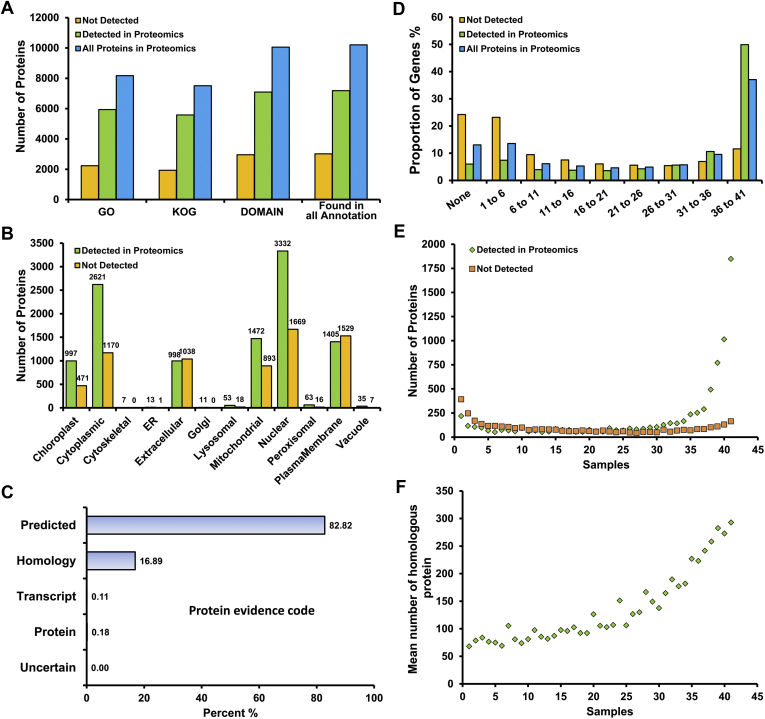
Aspergillus flavus (A. flavus), a pathogenic fungus, can produce carcinogenic and toxic aflatoxins that are a serious agricultural and medical threat worldwide. Attempts to decipher the aflatoxin biosynthetic pathway have been hampered by the lack of a high-quality genome annotation for A. flavus. To address this gap, we performed a comprehensive proteogenomic analysis using high-accuracy mass spectrometry data for this pathogen. The resulting high-quality data set confirmed the translation of 8724 previously predicted genes and identified 732 novel proteins, 269 splice variants, 447 single amino acid variants, 188 revised genes. A subset of novel proteins was experimentally validated by RT-PCR and synthetic peptides. Further functional annotation suggested that a number of the identified novel proteins may play roles in aflatoxin biosynthesis and stress responses in A. flavus. This comprehensive strategy also identified a wide range of posttranslational modifications (PTMs), including 3461 modification sites from 1765 proteins. Functional analysis suggested the involvement of these modified proteins in the regulation of cellular metabolic and aflatoxin biosynthetic pathways. Together, we provided a high-quality annotation of A. flavus genome and revealed novel insights into the mechanisms of aflatoxin production and pathogenicity in this pathogen.
黄曲霉(Aspergillus flavus)是一种致病真菌,能够产生致癌和有毒的黄曲霉毒素,这对全球的农业和医疗都是一个严重的威胁。试图破译黄曲霉毒素生物合成途径的工作受到缺乏黄曲霉高质量基因组注释的阻碍。为了解决这一差距,我们使用该病原体的高精度质谱数据进行了全面的蛋白质基因组分析。由此产生的高质量数据集证实了对 8724 个先前预测基因的翻译,并鉴定了 732 个新蛋白、269 个剪接变体、447 个单氨基酸变体和 188 个修订基因。通过 RT-PCR 和合成肽对新蛋白的一部分进行了实验验证。进一步的功能注释表明,鉴定出的许多新蛋白可能在黄曲霉毒素生物合成和黄曲霉应激反应中发挥作用。这种全面的策略还鉴定了广泛的翻译后修饰(PTMs),包括 1765 个蛋白质中的 3461 个修饰位点。功能分析表明,这些修饰蛋白参与了细胞代谢和黄曲霉毒素生物合成途径的调控。总的来说,我们提供了黄曲霉基因组的高质量注释,并揭示了该病原体中黄曲霉毒素产生和致病性的新机制。