Molecular Pharmacology Program, Memorial Sloan Kettering Cancer Center, New York, NY, United States.
Weill Cornell Medicine, New York, NY, United States.
Front Immunol. 2021 Jan 25;11:585385. doi: 10.3389/fimmu.2020.585385. eCollection 2020.
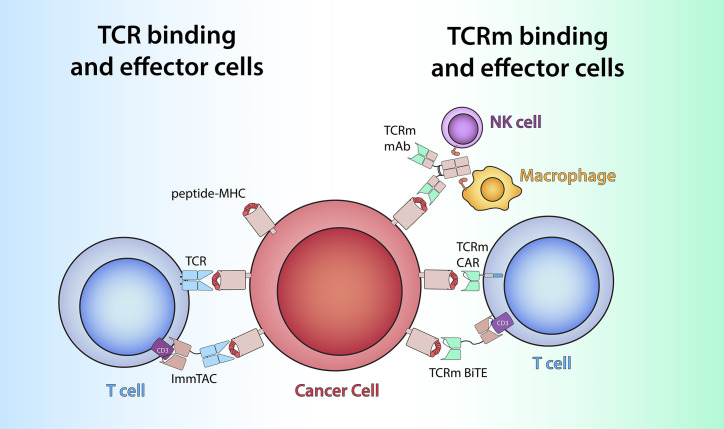
The use of T cells reactive with intracellular tumor-associated or tumor-specific antigens has been a promising strategy for cancer immunotherapies in the past three decades, but the approach has been constrained by a limited understanding of the T cell receptor's (TCR) complex functions and specificities. Newer TCR and T cell-based approaches are in development, including engineered adoptive T cells with enhanced TCR affinities, TCR mimic antibodies, and T cell-redirecting bispecific agents. These new therapeutic modalities are exciting opportunities by which TCR recognition can be further exploited for therapeutic benefit. In this review we summarize the development of TCR-based therapeutic strategies and focus on balancing efficacy and potency versus specificity, and hence, possible toxicity, of these powerful therapeutic modalities.
过去三十年,针对细胞内肿瘤相关或肿瘤特异性抗原的 T 细胞反应已成为癌症免疫疗法的一种有前途的策略,但由于对 T 细胞受体 (TCR) 复合物功能和特异性的理解有限,该方法受到了限制。目前正在开发新型 TCR 和基于 T 细胞的方法,包括增强 TCR 亲和力的工程过继 T 细胞、TCR 模拟抗体和 T 细胞重定向双特异性药物。这些新的治疗模式为 TCR 的识别提供了进一步的治疗获益的机会,令人兴奋。在这篇综述中,我们总结了基于 TCR 的治疗策略的发展,并重点关注这些强大的治疗模式的疗效和效力与特异性之间的平衡,因此可能存在毒性。