Zeng Qingpeng, Li Jiagen, Sun Nan, Xue Qi, Gao Yushun, Zhao Jun, Mao Yousheng, Mu Juwei, Wang Dali, Gao Shugeng, He Jie
Department of Thoracic Surgery, National Cancer Center/National Clinical Research Center for Cancer/Cancer Hospital, Chinese Academy of Medical Sciences and Peking Union Medical College, Beijing, China.
Transl Lung Cancer Res. 2021 Jan;10(1):18-31. doi: 10.21037/tlcr-20-960.
Pulmonary sarcomatoid carcinoma (PSC) is a rare lung cancer subtype. Studies concerning PSC are limited and controversial; therefore, we analyzed the treatment and outcomes of PSC utilizing a relatively large single-institution database.
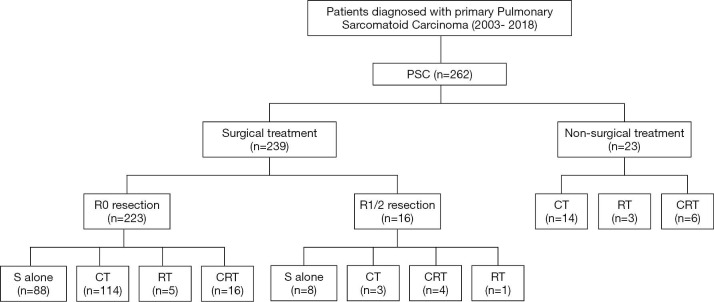
From January 2003 to December 2018, 262 consecutive PSC patients treated at our institution were retrospectively reviewed. The clinical characteristics, treatments, and outcomes were analyzed.
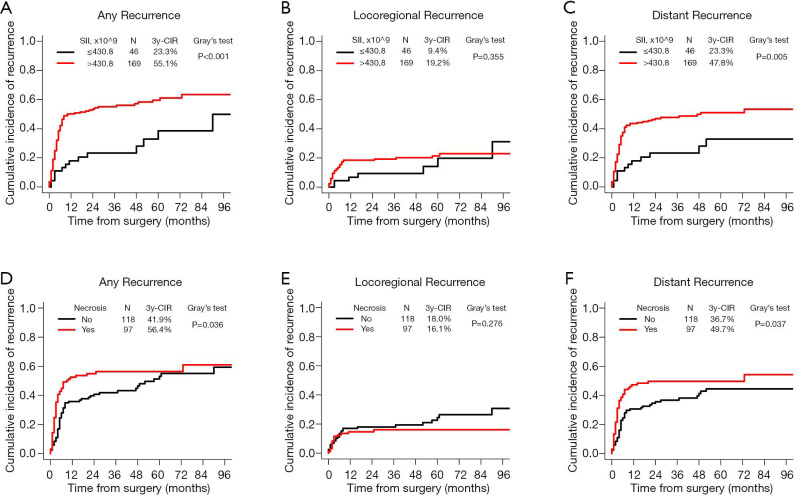
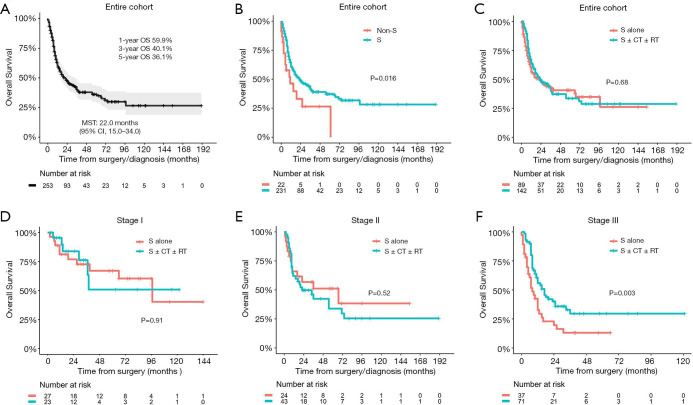
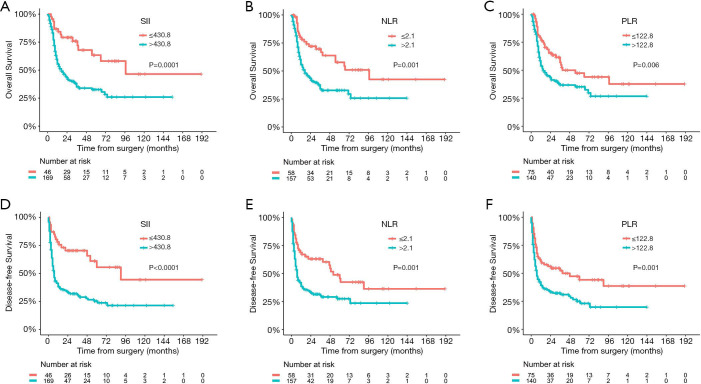
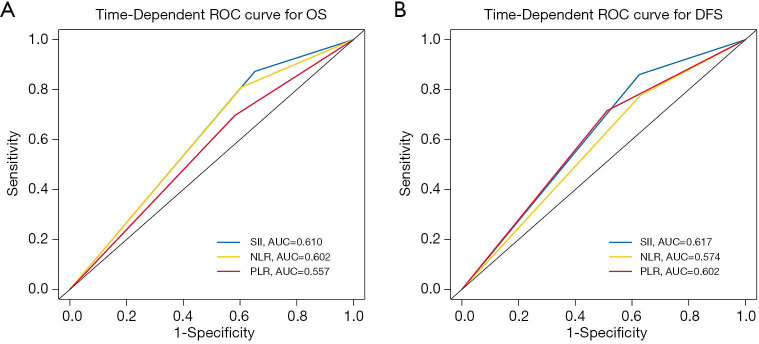
The median survival time (MST) was 22.0 months, with 1-, 3-, and 5-year overall survival (OS) rates of 59.9%, 40.1%, and 36.1%, respectively. Patients who underwent surgery had a significantly better prognosis than patients who received nonsurgical treatment (MST, 23.0 11.0 months, P=0.016). The use of surgery followed by adjuvant therapy significantly prolonged survival in stage III patients (MST, 17.0 8.0 months, P=0.003) but not in stage I and II patients. Multivariate analysis showed that a systemic inflammation-immune index (SII) value >430.8, TNM stage and necrosis were independent prognostic predictors of OS and disease-free survival (DFS) in radically resected PSC patients (P<0.05). In addition, SII and necrosis were independent risk factors for recurrence after the radical resection of PSC (P<0.05).
PSC is aggressive and has a poor prognosis. Surgery should be the mainstay treatment for operable cases, and adjuvant therapy is recommended for locally advanced disease. A novel potential biomarker, SII, which is an integrated parameter based on preoperative lymphocyte, neutrophil, and platelet counts, may be useful for prognostic prediction and the identification of resected PSC patients at high risk for recurrence.
肺肉瘤样癌(PSC)是一种罕见的肺癌亚型。关于PSC的研究有限且存在争议;因此,我们利用一个相对较大的单机构数据库分析了PSC的治疗方法和治疗结果。
回顾性分析了2003年1月至2018年12月在我院连续治疗的262例PSC患者。分析了其临床特征、治疗方法和治疗结果。
中位生存时间(MST)为22.0个月,1年、3年和5年总生存率(OS)分别为59.9%、40.1%和36.1%。接受手术治疗的患者预后明显好于接受非手术治疗的患者(MST,23.0对11.0个月,P = 0.016)。对于Ⅲ期患者,手术加辅助治疗显著延长了生存期(MST,17.0对8.0个月,P = 0.003),但对Ⅰ期和Ⅱ期患者无效。多因素分析显示,全身炎症免疫指数(SII)值>430.8、TNM分期和坏死是根治性切除的PSC患者总生存期(OS)和无病生存期(DFS)的独立预后预测因素(P<0.05)。此外,SII和坏死是PSC根治性切除术后复发的独立危险因素(P<0.05)。
PSC侵袭性强,预后差。手术应是可手术病例的主要治疗方法,对于局部晚期疾病建议进行辅助治疗。一种新的潜在生物标志物SII,它是基于术前淋巴细胞、中性粒细胞和血小板计数的综合参数,可能有助于预后预测和识别根治性切除后复发风险高的PSC患者。