Zhang Hongtao, Shi Nelson, Diao Zhuo, Chen Youhai, Zhang Yejia
Department of Pathology and Laboratory Medicine, Perelman School of Medicine, University of Pennsylvania, Philadelphia, PA, USA.
Department of Orthopaedic Surgery, Perelman School of Medicine, University of Pennsylvania, Philadelphia, PA, USA.
Genes Dis. 2020 Mar 3;8(1):38-47. doi: 10.1016/j.gendis.2020.02.004. eCollection 2021 Jan.
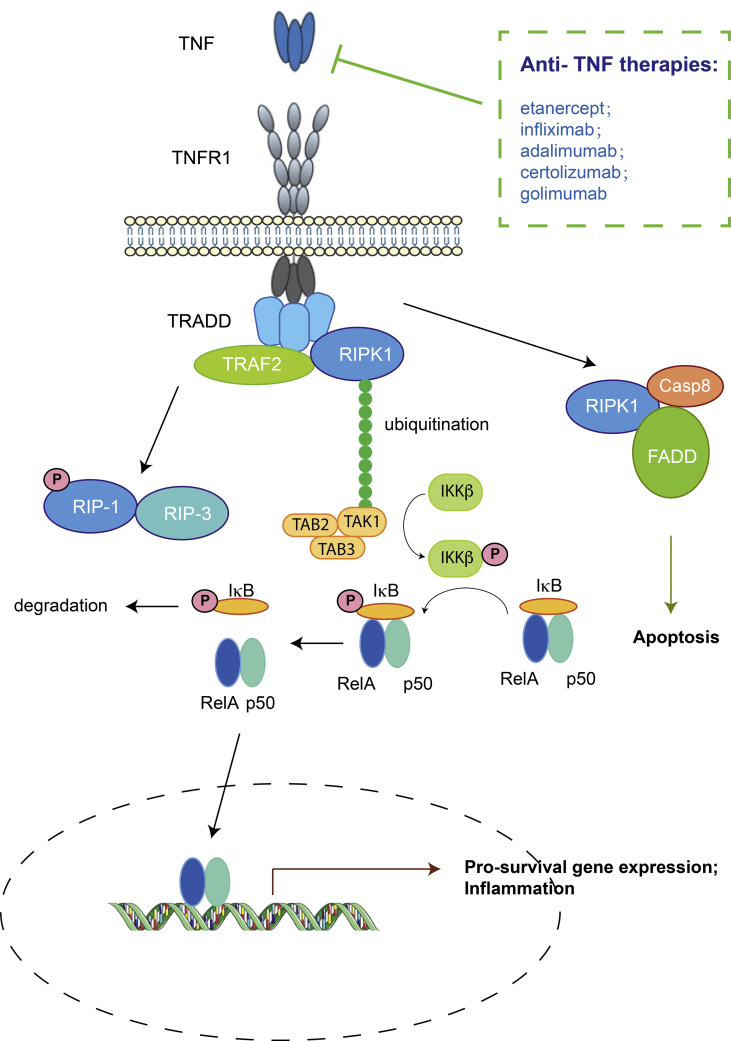
In the past 20 years, patients with rheumatoid arthritis (RA), Crohn's disease (CD), and other immune diseases have witnessed the impact of a great treatment advance with the availability of biological TNFα inhibitors. With 5 approved anti-TNFα biologics on the market and soon available biosimilars, patients have more treatment options and have benefited from understanding the biology of TNFα. Nevertheless, many unmet needs remain for people living with TNFα-related diseases, namely some side effects and tolerance of current anti-TNFα biologics and resistance to therapies. Furthermore, common diseases such as osteoarthritis and back/neck pain may respond to anti-TNFα therapies at early onset of symptoms. Development of new TNFα inhibitors focusing on TNFR1 specific inhibitors, preferably small molecules that can be delivered orally, is much needed.
在过去20年里,类风湿性关节炎(RA)、克罗恩病(CD)和其他免疫疾病患者见证了生物肿瘤坏死因子α(TNFα)抑制剂的问世所带来的重大治疗进展。市场上有5种已获批的抗TNFα生物制剂,且生物类似药也即将上市,患者有了更多治疗选择,并从对TNFα生物学的了解中受益。然而,对于患有TNFα相关疾病的人来说,仍有许多未满足的需求,即目前抗TNFα生物制剂存在一些副作用和耐受性问题以及对治疗产生耐药性。此外,骨关节炎和背部/颈部疼痛等常见疾病在症状早期可能对抗TNFα疗法有反应。因此,迫切需要开发新的TNFα抑制剂,尤其是针对TNFR1的特异性抑制剂,最好是能够口服给药的小分子抑制剂。