Liyanage Chamikara, Malik Adil, Abeysinghe Pevindu, Clements Judith, Batra Jyotsna
Faculty of Health, Institute of Health and Biomedical Innovation, School of Biomedical Sciences, Queensland University of Technology, Brisbane, QLD 4059, Australia.
Australian Prostate Cancer Research Centre-Queensland (APCRC-Q), Translational Research Institute, Queensland University of Technology, Brisbane, QLD 4012, Australia.
Cancers (Basel). 2021 Feb 9;13(4):715. doi: 10.3390/cancers13040715.
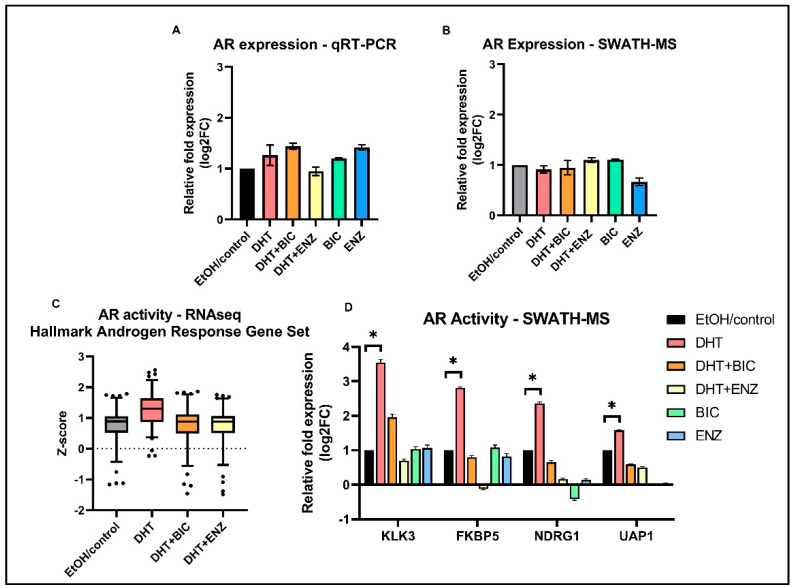
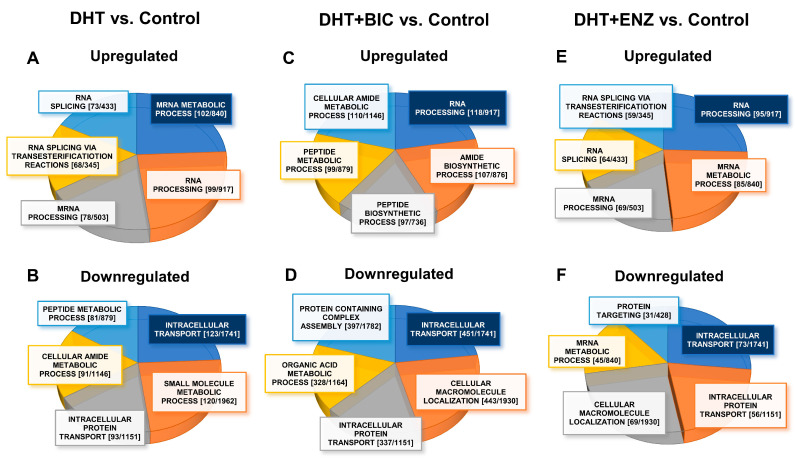
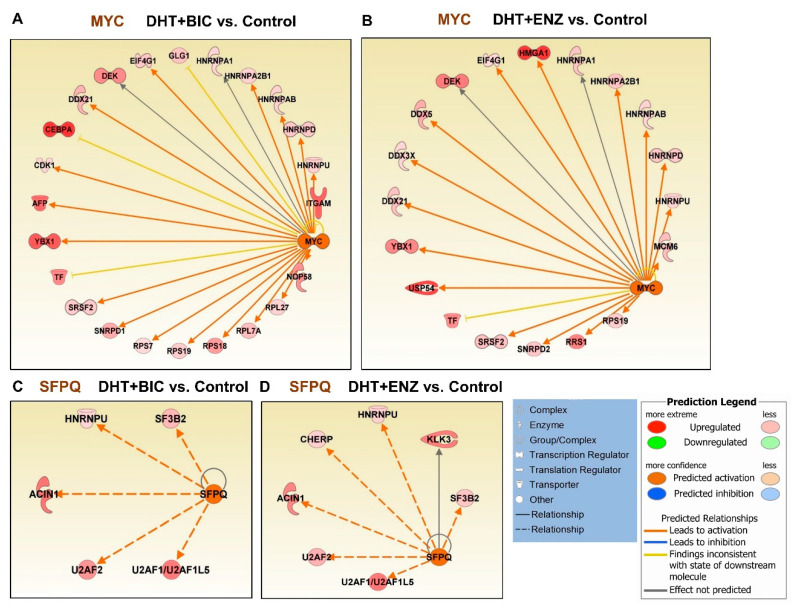
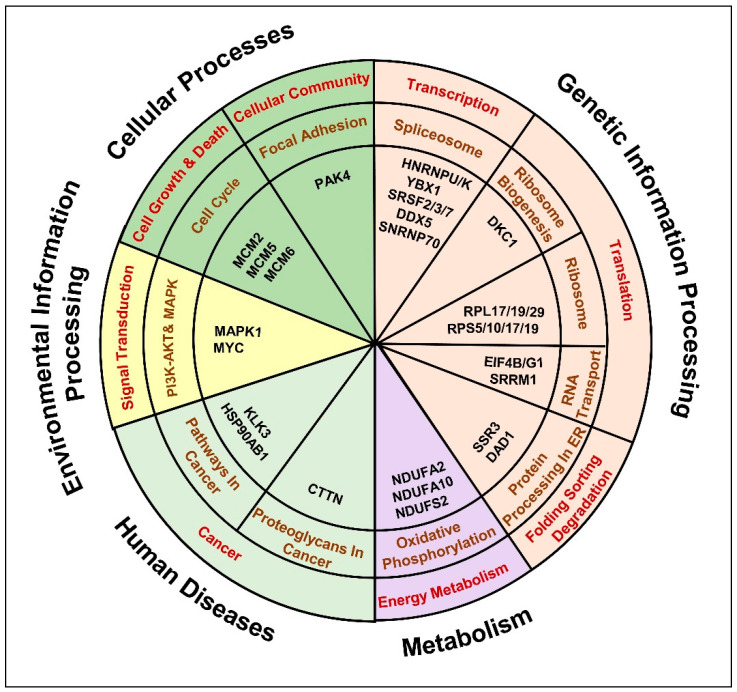
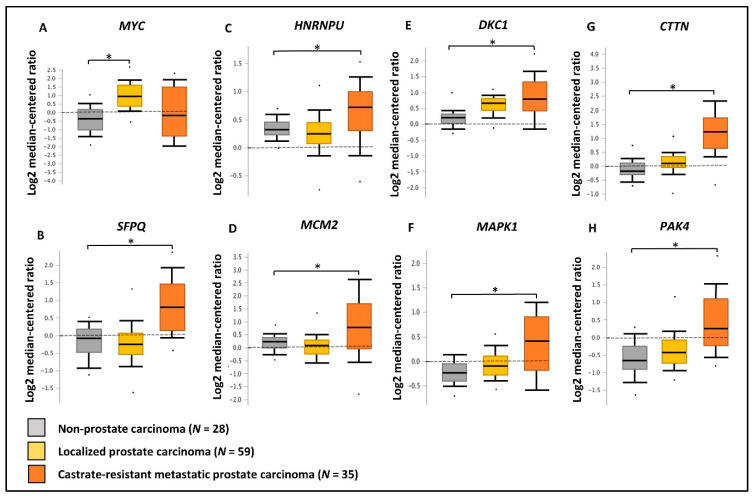
Prostate cancer (PCa) is the second most common cancer affecting men worldwide. PCa shows a broad-spectrum heterogeneity in its biological and clinical behavior. Although androgen targeted therapy (ATT) has been the mainstay therapy for advanced PCa, it inevitably leads to treatment resistance and progression to castration resistant PCa (CRPC). Thus, greater understanding of the molecular basis of treatment resistance and CRPC progression is needed to improve treatments for this lethal phenotype. The current study interrogated both proteomics and transcriptomic alterations stimulated in AR antagonist/anti-androgen (Bicalutamide and Enzalutamide) treated androgen-dependent cell model (LNCaP) in comparison with androgen-independent/castration-resistant cell model (C4-2B). The analysis highlighted the activation of MYC and PSF/SFPQ oncogenic upstream regulators in response to the anti-androgen treatment. Moreover, the study revealed anti-androgen induced genes/proteins related to transcription/translation regulation, energy metabolism, cell communication and signaling cascades promoting tumor growth and proliferation. In addition, these molecules were found dysregulated in PCa clinical proteomic and transcriptomic datasets, suggesting their potential involvement in PCa progression. In conclusion, our study provides key molecular signatures and associated pathways that might contribute to CRPC progression despite treatment with anti-androgens. Such molecular signatures could be potential therapeutic targets to improve the efficacy of existing therapies and/or predictive/prognostic value in CRPC for treatment response.
前列腺癌(PCa)是全球影响男性的第二大常见癌症。PCa在其生物学和临床行为上表现出广泛的异质性。尽管雄激素靶向治疗(ATT)一直是晚期PCa的主要治疗方法,但它不可避免地会导致治疗耐药性,并进展为去势抵抗性前列腺癌(CRPC)。因此,需要更深入地了解治疗耐药性和CRPC进展的分子基础,以改善对这种致命表型的治疗。本研究探讨了与雄激素非依赖性/去势抵抗性细胞模型(C4-2B)相比,在雄激素受体拮抗剂/抗雄激素(比卡鲁胺和恩杂鲁胺)处理的雄激素依赖性细胞模型(LNCaP)中刺激产生的蛋白质组学和转录组学变化。分析突出了MYC和PSF/SFPQ致癌上游调节因子在抗雄激素治疗反应中的激活。此外,该研究揭示了抗雄激素诱导的与转录/翻译调节、能量代谢、细胞通讯和促进肿瘤生长及增殖的信号级联相关的基因/蛋白质。此外,这些分子在PCa临床蛋白质组学和转录组学数据集中被发现失调,表明它们可能参与了PCa的进展。总之,我们的研究提供了关键的分子特征和相关途径,尽管使用了抗雄激素治疗,但这些特征和途径可能有助于CRPC的进展。这些分子特征可能是潜在的治疗靶点,以提高现有疗法的疗效和/或在CRPC中对治疗反应的预测/预后价值。