Galarce Nicolás, Arriagada Gabriel, Sánchez Fernando, Venegas Vladimir, Cornejo Javiera, Lapierre Lisette
Departamento de Medicina Preventiva Animal, Facultad de Ciencias Veterinarias y Pecuarias, Universidad de Chile, Santiago 8820000, Chile.
Núcleo Una Salud-FAVET, Facultad de Ciencias Veterinarias y Pecuarias, Universidad de Chile, Santiago 8820000, Chile.
Animals (Basel). 2021 Jan 30;11(2):348. doi: 10.3390/ani11020348.
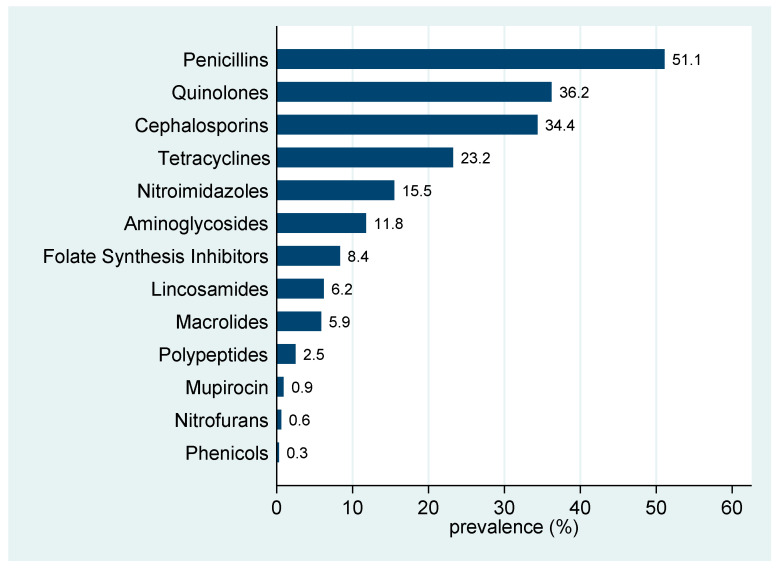
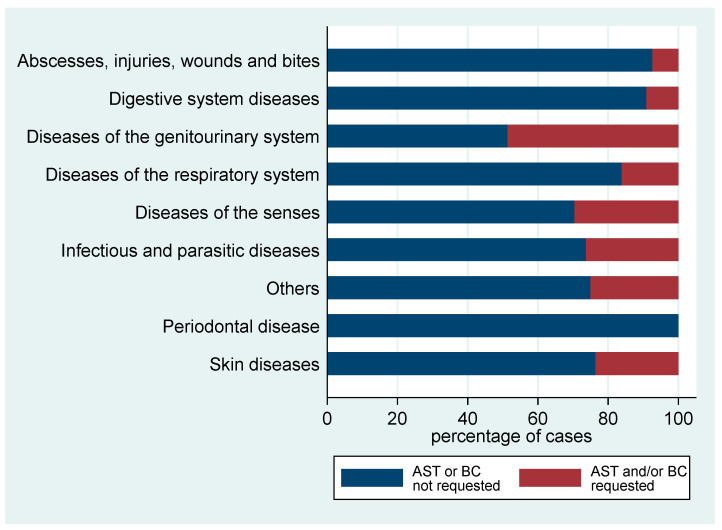
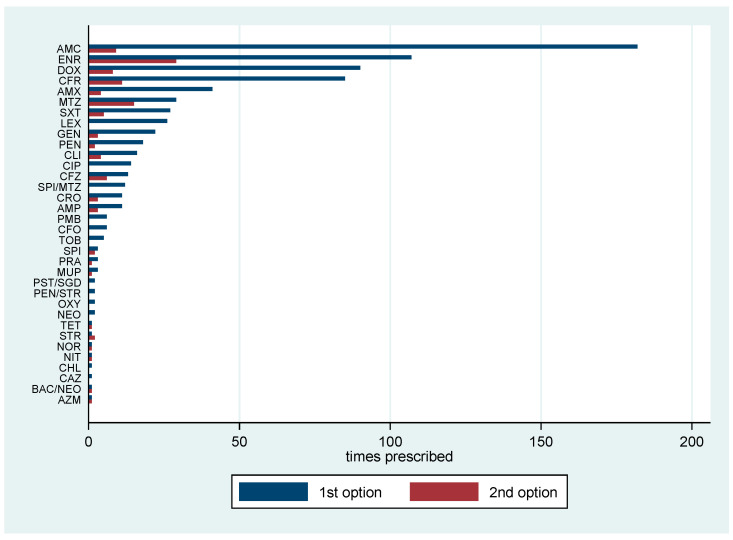
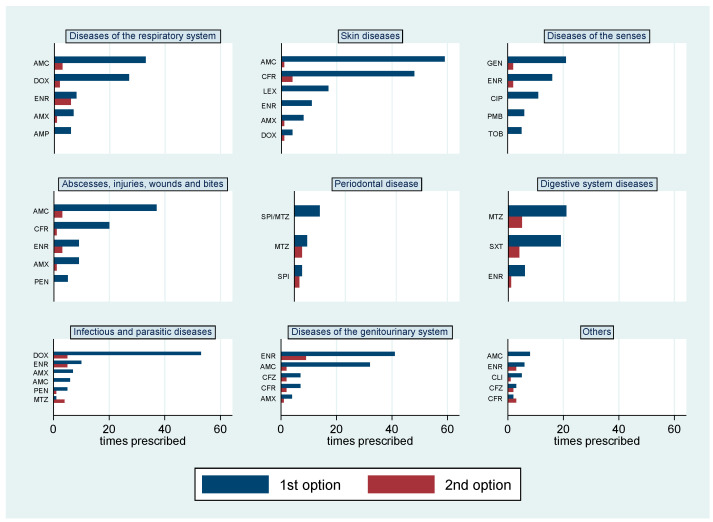
Although the relationship between the use of antimicrobials and the development of resistant bacteria is well established, information about the use of antimicrobials in companion animals has been poorly described, which represents a risk to public health. The aim of this study was to describe the antimicrobial prescription patterns of Chilean companion animal veterinarians. A nationally distributed survey targeted at companion animal veterinarians was designed. The survey included questions about the veterinarian's demographics, bacterial diseases treated, prescribed antimicrobials, and the use of laboratory diagnostic tools. Three hundred twenty-three responses were collected, most of the respondents were female (59.4%). The most frequently reported bacterial diseases were pyoderma (17.2%), followed by otitis and abscesses (7.4%). The antimicrobials most used corresponded with critically or highly important drugs for veterinary and human use, including β-lactams (65.3%), quinolones (36.2%) and tetracyclines (23.2%). Only 15% of the veterinarians reported the use of laboratory diagnostic tests, although 67% declared they were aware of the official antimicrobial classification schemes. Our results describe for the first time the usage of antimicrobials by veterinarian practitioners in Chile to treat different diseases in companion animals. The data presented here provide a baseline that could help to promote the implementation of clinical guidelines and regulations in order to improve current treatments.
尽管抗菌药物的使用与耐药菌的产生之间的关系已得到充分证实,但关于伴侣动物抗菌药物使用情况的描述却很少,这对公共卫生构成了风险。本研究的目的是描述智利伴侣动物兽医的抗菌药物处方模式。设计了一项针对伴侣动物兽医的全国性调查。该调查包括有关兽医的人口统计学、治疗的细菌性疾病、开具的抗菌药物以及实验室诊断工具使用情况的问题。共收集到323份回复,大多数受访者为女性(59.4%)。报告最多的细菌性疾病是脓皮病(17.2%),其次是中耳炎和脓肿(7.4%)。使用最多的抗菌药物与兽医和人类使用的极重要或非常重要的药物相对应,包括β-内酰胺类(65.3%)、喹诺酮类(36.2%)和四环素类(23.2%)。只有15%的兽医报告使用了实验室诊断测试,尽管67%的兽医宣称他们了解官方的抗菌药物分类方案。我们的结果首次描述了智利兽医从业者在治疗伴侣动物不同疾病时使用抗菌药物的情况。此处提供的数据提供了一个基线,有助于推动临床指南和法规的实施,以改善当前的治疗方法。