Department of Microbiology and Immunology, School of Medicine, University of Louisville, Louisville, KY 40202, USA.
Center for Predictive Medicine for Biodefense and Emerging Infectious diseases, University of Louisville, Louisville, KY 40202, USA.
Viruses. 2021 Jan 30;13(2):214. doi: 10.3390/v13020214.
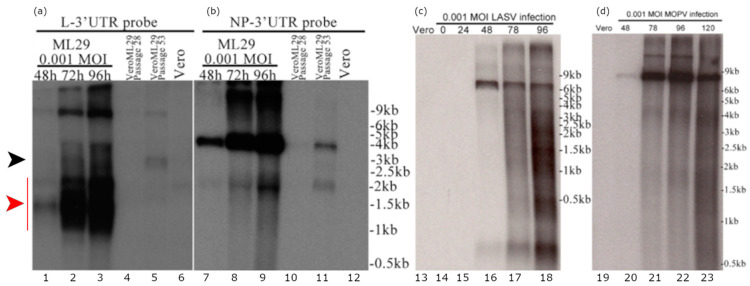
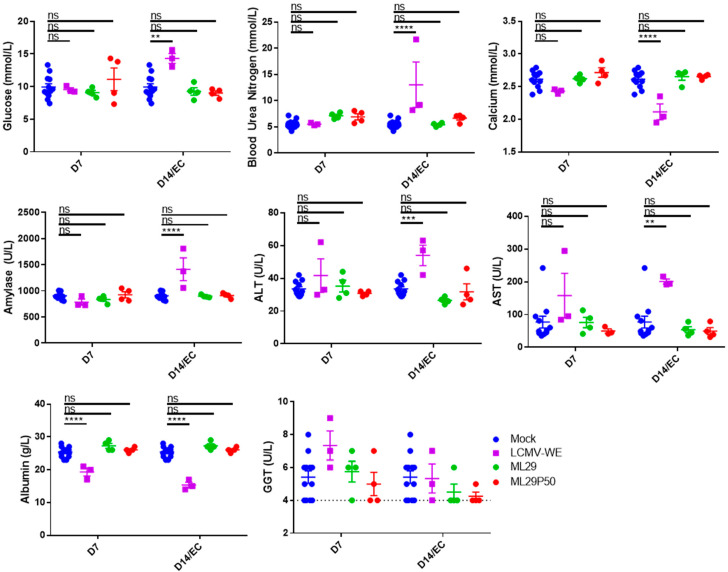
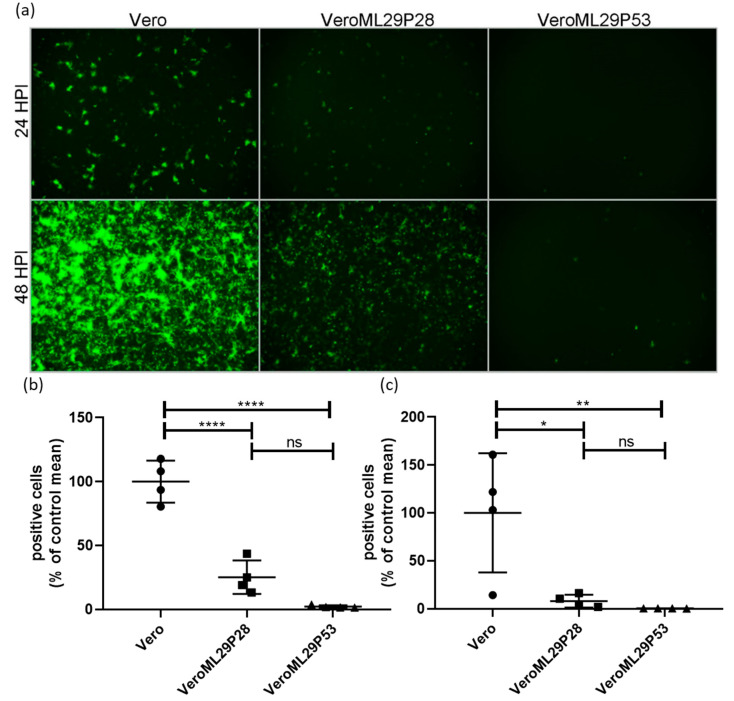
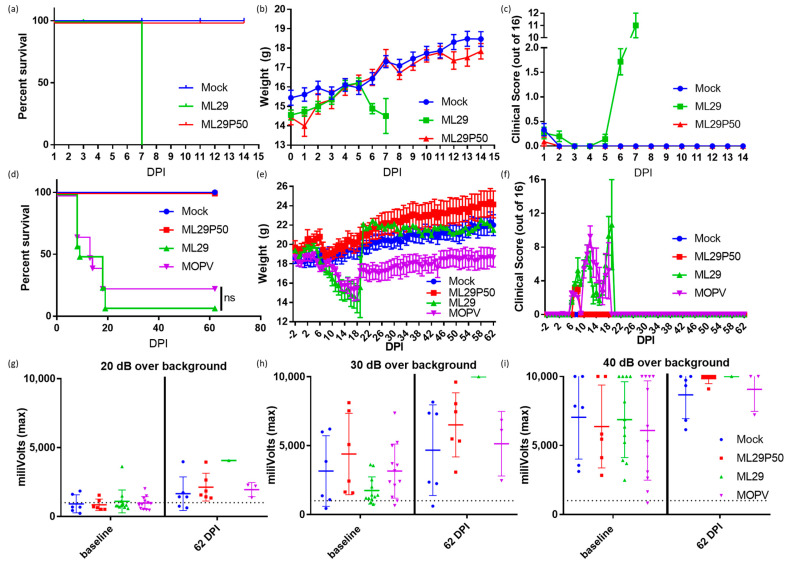
Defective interfering particles (DIPs) are naturally occurring products during virus replication in infected cells. DIPs contain defective viral genomes (DVGs) and interfere with replication and propagation of their corresponding standard viral genomes by competing for viral and cellular resources, as well as promoting innate immune antiviral responses. Consequently, for many different viruses, including mammarenaviruses, DIPs play key roles in the outcome of infection. Due to their ability to broadly interfere with viral replication, DIPs are attractive tools for the development of a new generation of biologics to target genetically diverse and rapidly evolving viruses. Here, we provide evidence that in cells infected with the Lassa fever (LF) vaccine candidate ML29, a reassortant that carries the nucleoprotein (NP) and glycoprotein (GP) dominant antigens of the pathogenic Lassa virus (LASV) together with the L polymerase and Z matrix protein of the non-pathogenic genetically related Mopeia virus (MOPV), L-derived truncated RNA species are readily detected following infection at low multiplicity of infection (MOI) or in persistently-infected cells originally infected at high MOI. In the present study, we show that expression of green fluorescent protein (GFP) driven by a tri-segmented form of the mammarenavirus lymphocytic choriomeningitis virus (r3LCMV-GFP/GFP) was strongly inhibited in ML29-persistently infected cells, and that the magnitude of GFP suppression was dependent on the passage history of the ML29-persistently infected cells. In addition, we found that DIP-enriched ML29 was highly attenuated in immunocompetent CBA/J mice and in Hartley guinea pigs. Likewise, STAT-1 mice, a validated small animal model for human LF associated hearing loss sequelae, infected with DIP-enriched ML29 did not exhibit any hearing abnormalities throughout the observation period (62 days).
缺陷干扰颗粒(DIPs)是病毒在感染细胞中复制时自然产生的产物。DIP 包含有缺陷的病毒基因组(DVGs),通过与相应的标准病毒基因组竞争病毒和细胞资源,并促进先天抗病毒免疫反应,从而干扰其复制和传播。因此,对于许多不同的病毒,包括沙粒病毒属病毒,DIP 在感染的结果中起着关键作用。由于它们能够广泛干扰病毒的复制,因此 DIP 是开发新一代生物制剂的有吸引力的工具,这些生物制剂可以针对遗传上多样化和快速进化的病毒。在这里,我们提供的证据表明,在感染 Lassa 热(LF)疫苗候选 ML29 的细胞中,一种重组体携带致病性 Lassa 病毒(LASV)的核蛋白(NP)和糖蛋白(GP)优势抗原,以及非致病性遗传上相关的 Mopeia 病毒(MOPV)的 L 聚合酶和 Z 基质蛋白,在低感染复数(MOI)或在最初高 MOI 感染的持续感染细胞中,很容易检测到 L 衍生的截断 RNA 物种。在本研究中,我们表明,由三片段形式的沙粒病毒淋巴细胞性脉络丛脑膜炎病毒(r3LCMV-GFP/GFP)驱动的绿色荧光蛋白(GFP)的表达在 ML29 持续感染的细胞中受到强烈抑制,并且 GFP 抑制的幅度取决于 ML29 持续感染细胞的传代史。此外,我们发现富含 DIP 的 ML29 在免疫功能正常的 CBA/J 小鼠和 Hartley 豚鼠中高度减毒。同样,在感染富含 DIP 的 ML29 的 STAT-1 小鼠(一种用于人类 LF 相关听力损失后遗症的验证性小动物模型)中,在整个观察期(62 天)内没有出现任何听力异常。