Aniscan Unit, INRAE, Saint-Gilles, 35590 Paris, France.
National Academy of Medicine, 75000 Paris, France.
Nutrients. 2021 Jan 30;13(2):467. doi: 10.3390/nu13020467.
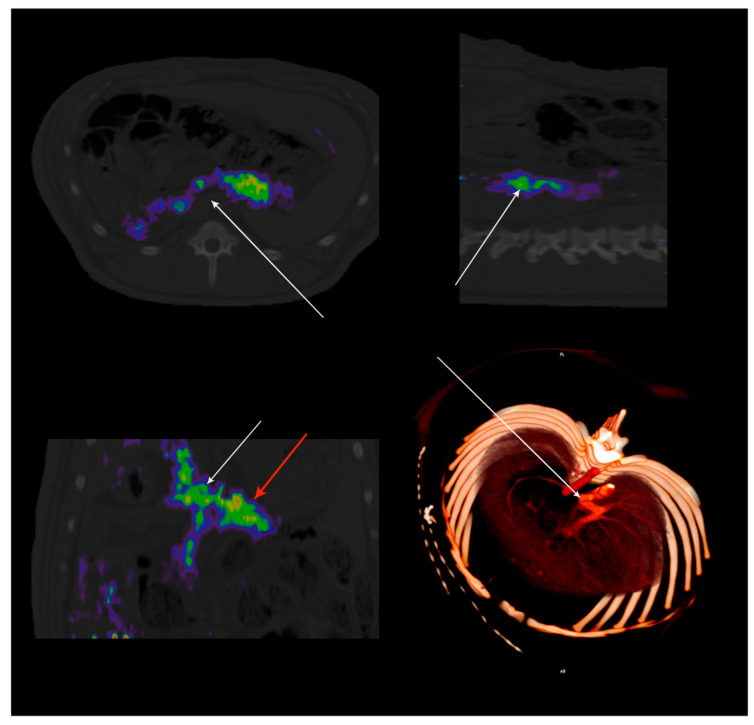
Signals arising from the upper part of the gut are essential for the regulation of food intake, particularly satiation. This information is supplied to the brain partly by vagal nervous afferents. The porcine model, because of its sizeable gyrencephalic brain, omnivorous regimen, and comparative anatomy of the proximal part of the gut to that of humans, has provided several important insights relating to the relevance of vagally mediated gut-brain relationships to the regulation of food intake. Furthermore, its large size combined with the capacity to become obese while overeating a western diet makes it a pivotal addition to existing murine models, especially for translational studies relating to obesity. How gastric, proximal intestinal, and portal information relating to meal arrival and transit are encoded by vagal afferents and their further processing by primary and secondary brain projections are reviewed. Their peripheral and central plasticities in the context of obesity are emphasized. We also present recent insights derived from chronic stimulation of the abdominal vagi with specific reference to the modulation of mesolimbic structures and their role in the restoration of insulin sensitivity in the obese miniature pig model.
来自肠道上部的信号对于食物摄入的调节至关重要,特别是饱腹感。这些信息部分通过迷走神经传入纤维传递给大脑。猪模型由于其大脑具有大量的脑回、杂食性的饮食以及与人类近端肠道的比较解剖结构,为与迷走神经介导的肠道-大脑关系相关的食物摄入调节提供了一些重要的见解。此外,它的体型较大,加上能够通过过度进食西方饮食而肥胖,使其成为现有鼠模型的重要补充,特别是对于与肥胖相关的转化研究。本文回顾了与餐食到达和转运有关的胃、近端肠道和门静脉信息如何通过迷走神经传入纤维编码,以及它们如何通过初级和次级脑投射进一步处理。强调了它们在肥胖背景下的外周和中枢可塑性。我们还介绍了最近从腹部迷走神经慢性刺激中获得的见解,特别是关于调节中脑边缘结构及其在肥胖小型猪模型中恢复胰岛素敏感性的作用。