Department of Biomedical, Metabolic and Neural Sciences and Center for Neuroscience and Neurotechnology, University of Modena and Reggio Emilia, Via Campi 287, 41125 Modena, Italy.
Department of Brain and behavioral sciences, University of Pavia, 27100 Pavia, Italy.
Int J Mol Sci. 2020 Mar 6;21(5):1805. doi: 10.3390/ijms21051805.
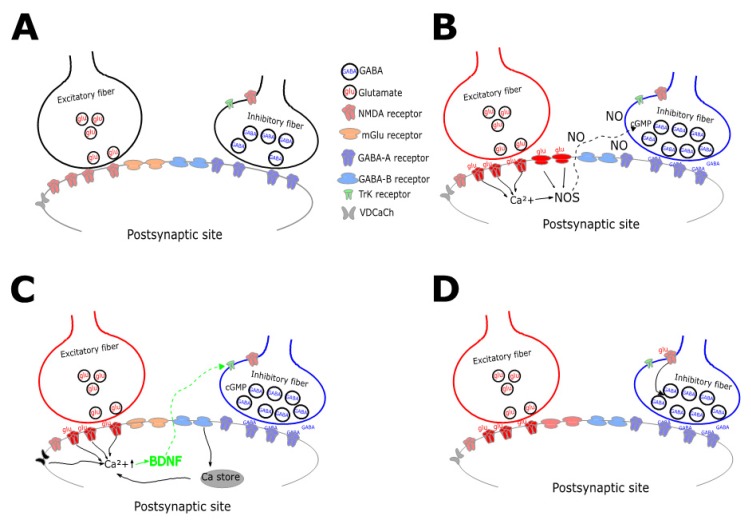
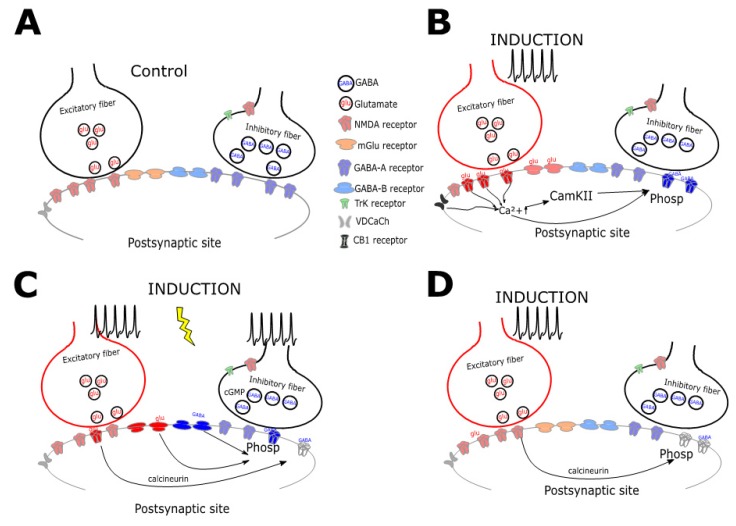
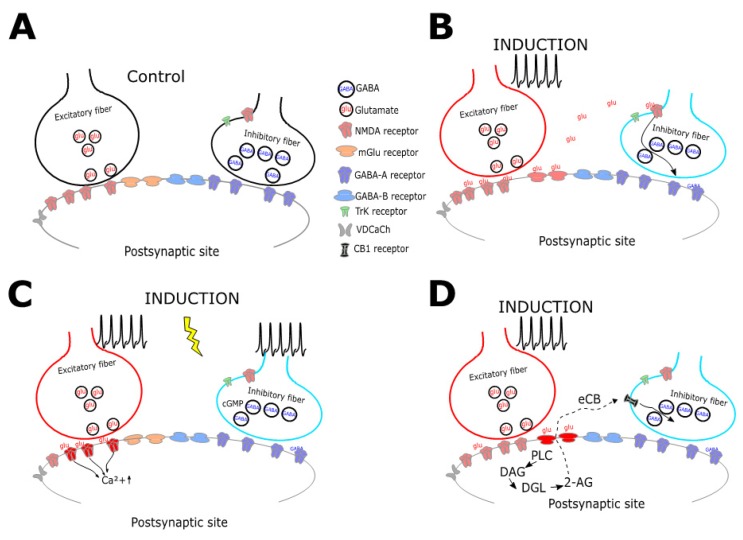
Synaptic plasticity is the cellular and molecular counterpart of learning and memory and, since its first discovery, the analysis of the mechanisms underlying long-term changes of synaptic strength has been almost exclusively focused on excitatory connections. Conversely, inhibition was considered as a fixed controller of circuit excitability. Only recently, inhibitory networks were shown to be finely regulated by a wide number of mechanisms residing in their synaptic connections. Here, we review recent findings on the forms of inhibitory plasticity (IP) that have been discovered and characterized in different brain areas. In particular, we focus our attention on the molecular pathways involved in the induction and expression mechanisms leading to changes in synaptic efficacy, and we discuss, from the computational perspective, how IP can contribute to the emergence of functional properties of brain circuits.
突触可塑性是学习和记忆的细胞和分子对应物,自首次发现以来,对支持突触强度长期变化的机制的分析几乎完全集中在兴奋性连接上。相反,抑制被认为是电路兴奋性的固定控制器。直到最近,人们才发现抑制性网络通过其突触连接中存在的大量机制进行精细调节。在这里,我们回顾了在不同脑区发现和表征的抑制性可塑性 (IP) 的形式的最新发现。特别是,我们将注意力集中在参与诱导和表达机制的分子途径上,这些机制导致突触效能的变化,并且我们从计算的角度讨论了 IP 如何有助于大脑电路功能特性的出现。