Liu Huihui, Li Jinlu, Lin Shuqin, Liu Ting, Zheng Chen
College of Animal Science and Technology, Gansu Agricultural University, Lan Zhou, Gansu, China.
PeerJ. 2021 Jan 28;9:e10308. doi: 10.7717/peerj.10308. eCollection 2021.
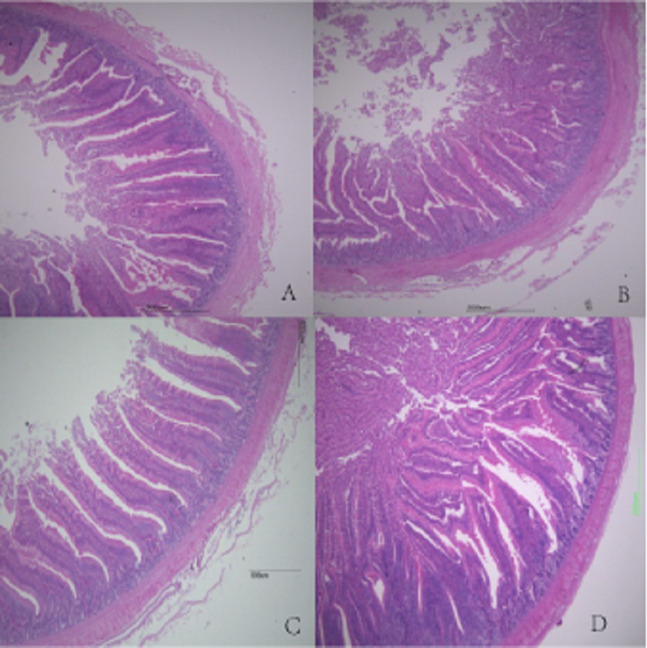
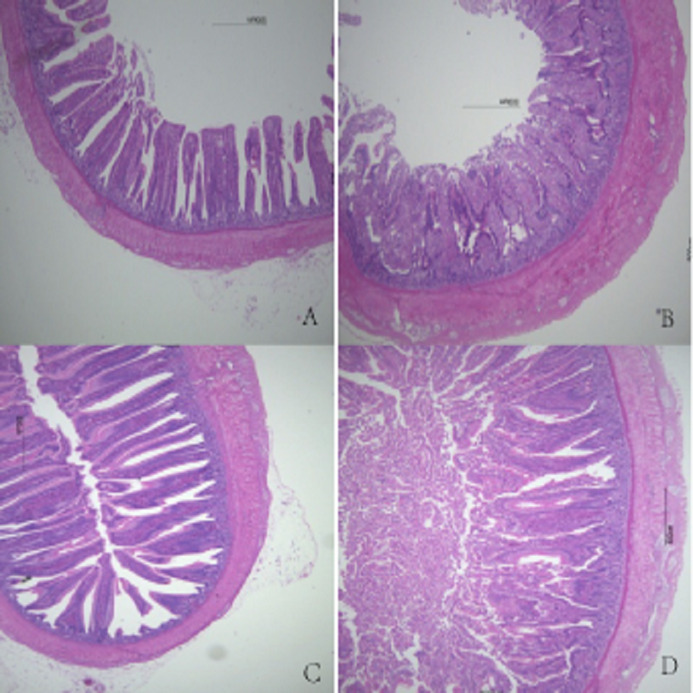
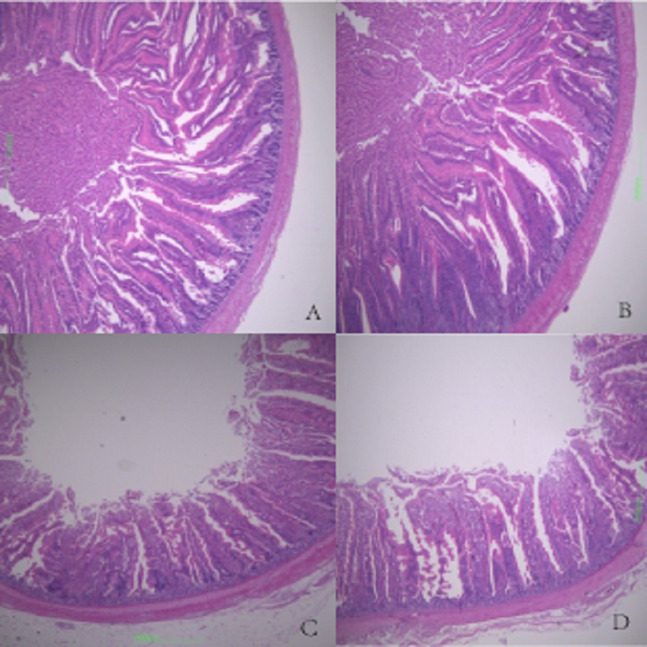
With the increasing demands in livestock and poultry breeding and the growing number of food-borne diseases, it is necessary to practice food safety and develop strategies to produce healthy livestock. Fennel ( Mill.) has been used as an additive in poultry production by some researchers, but there are few studies on the systemic beneficial effects of dietary fennel seed powder supplementation on broilers. Therefore, this study aimed to investigate the effect of dietary fennel seed powder supplementation on feed intake, the apparent metabolic rate of nutrients, intestinal morphology, and carcass traits in Cobb broilers.
A single-factor experimental design was used. In total, 160 1-day-old Cobb broiler chicks were randomly assigned to four treatments, with four replicates each ( = 10/replicate). Broilers in the control (CN) group were fed a basal diet without fennel seed powder, and broilers in the treatment groups were fed a basal diet supplemented with 0.15% (LF), 0.30% (MF), or 0.45% (HF) fennel seed powder, respectively. Feeding trials lasted for 42 days under the conditions of ad libitum access to feed and water, and 24-h illumination. During the third and sixth weeks, digestive and metabolic assays were carried out. When the broilers were 42 days old, one chicken with a weight close to the average was selected from each repetition, euthanized by an intravenous injection of 5% sodium pentobarbital, and carcass traits were measured and intestinal samples were collected for morphological assessment.
There was no significant difference in growth performance of broilers ( > 0.05). The breast muscle percentage, fat width and fat width index, breast muscle area, and breast muscle area index of broilers in the LF group were higher than those in other groups ( < 0.05). Jejunum weight and length were higher in MF than in CN and LF broilers ( < 0.05). Additionally, duodenal villi height, ileal villi height, and ileal wall thickness were higher in MF than in CN broilers ( < 0.05). There were no significant differences in nutrient utilization among all groups ( > 0.05), except that the ash apparent metabolic rate in MF broilers at 21 days of age was higher than that in LF broilers ( < 0.05). In conclusion, dietary supplementation with a moderate concentration of fennel affects carcass performance, and intestinal morphology, and promotes the growth and development of broilers.
随着畜禽养殖需求的增加以及食源性疾病数量的不断上升,实施食品安全并制定生产健康家畜的策略很有必要。一些研究人员已将茴香(Mill.)用作家禽生产中的添加剂,但关于日粮添加茴香籽粉对肉鸡的系统性有益影响的研究较少。因此,本研究旨在探讨日粮添加茴香籽粉对科宝肉鸡采食量、养分表观代谢率、肠道形态和胴体性状的影响。
采用单因素实验设计。总共160只1日龄科宝肉鸡雏鸡被随机分为四个处理组,每组四个重复(每组10只)。对照组(CN)的肉鸡饲喂不含茴香籽粉的基础日粮,处理组的肉鸡分别饲喂添加0.15%(低剂量组,LF)、0.30%(中剂量组,MF)或0.45%(高剂量组,HF)茴香籽粉的基础日粮。在自由采食和饮水、24小时光照的条件下进行42天的饲养试验。在第三周和第六周进行消化和代谢测定。当肉鸡42日龄时,从每个重复中选取一只体重接近平均水平的鸡,通过静脉注射5%戊巴比妥钠使其安乐死,测量胴体性状并采集肠道样本进行形态学评估。
肉鸡的生长性能无显著差异(P>0.05)。低剂量组肉鸡的胸肌百分比、脂肪宽度和脂肪宽度指数、胸肌面积和胸肌面积指数均高于其他组(P<0.05)。中剂量组肉鸡的空肠重量和长度高于对照组和低剂量组肉鸡(P<0.05)。此外,中剂量组肉鸡的十二指肠绒毛高度、回肠绒毛高度和回肠壁厚度高于对照组肉鸡(P<0.05)。除21日龄时中剂量组肉鸡的灰分表观代谢率高于低剂量组肉鸡外(P<0.05),所有组之间的养分利用率无显著差异(P>0.05)。总之,日粮中添加适量浓度的茴香会影响胴体性能和肠道形态,并促进肉鸡的生长发育。