The Second Hospital of Lanzhou University, Lanzhou University, Lanzhou, 730000 Gansu, China.
The Second Clinical Medical College of Lanzhou University, Lanzhou University, Lanzhou, 730000 Gansu, China.
Biomed Res Int. 2021 Jan 9;2021:1930706. doi: 10.1155/2021/1930706. eCollection 2021.
The tumor-infiltrating immune cells are closely associated with the prognosis of gastric cancer (GC). This article is aimed at determining the composition change of immune cells and immune regulatory factors in GC and normal tissues, depicting their prognosis value in GC, and revealing the relationship between them and GC clinical parameters.
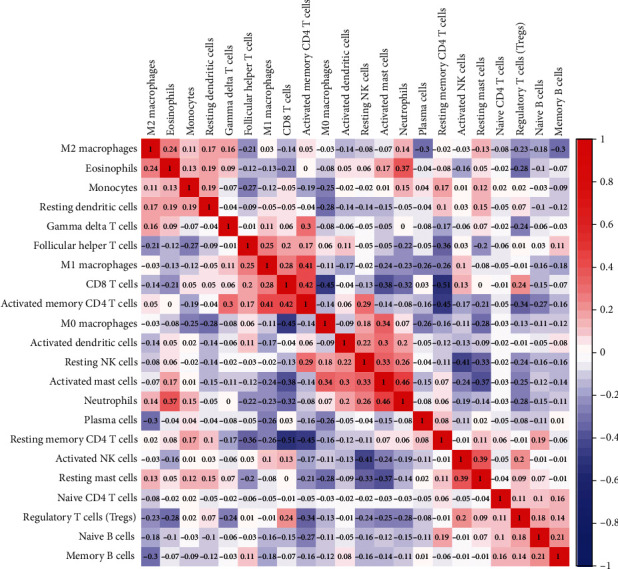
We used CIBERSORT to calculate the proportion of 22 immune cells in the GC or normal tissues; a -test was applied to assess the expression difference of immune cells and immune regulatory factors in normal and GC tissues. The relationship of the immune cells, immune regulatory factors, and GC patients' clinical characteristics was assessed by univariate analysis.
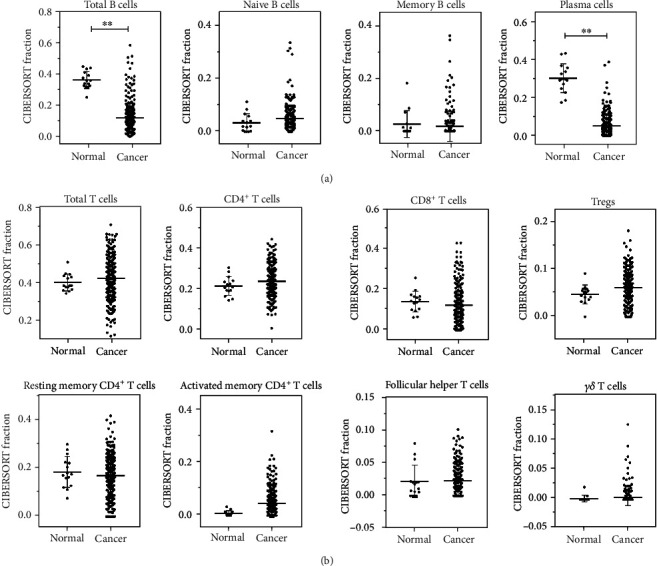
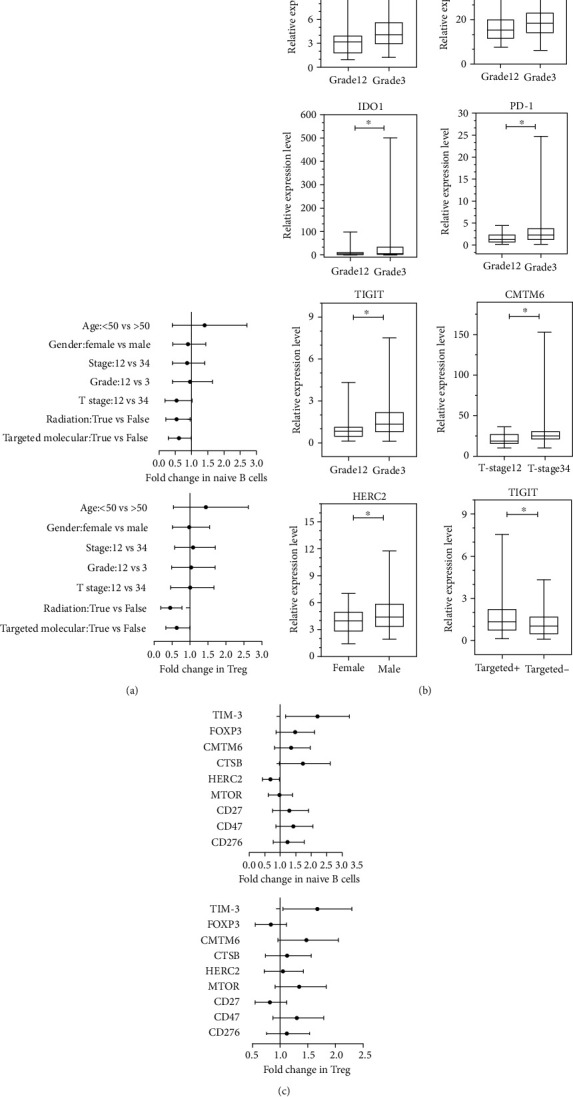
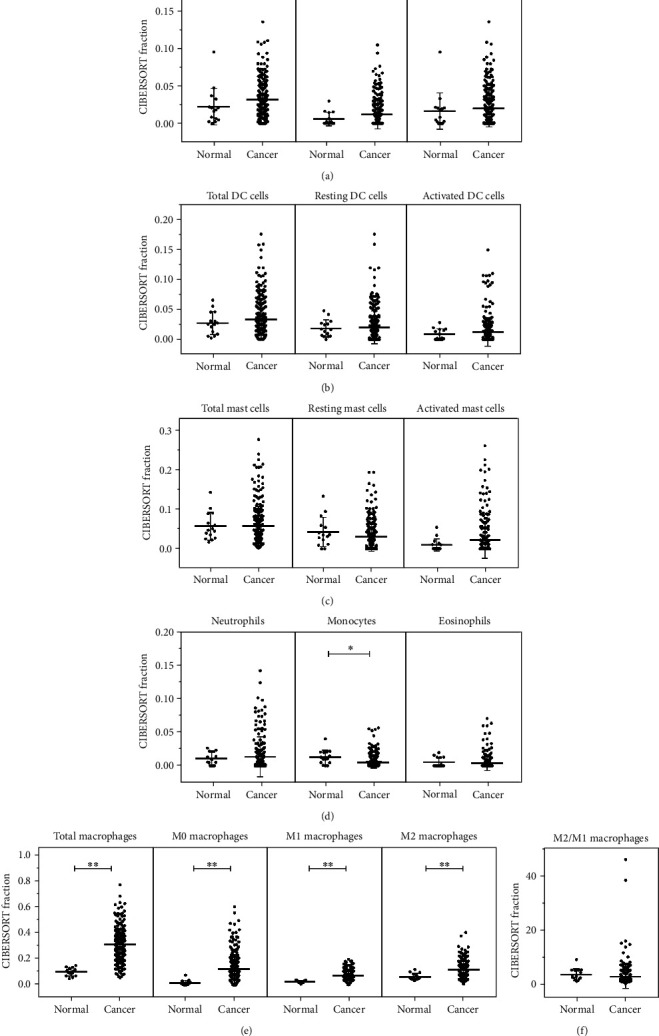
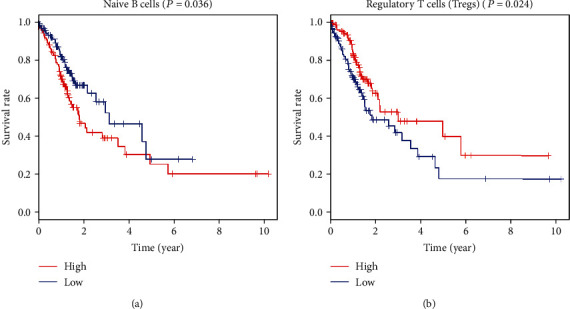
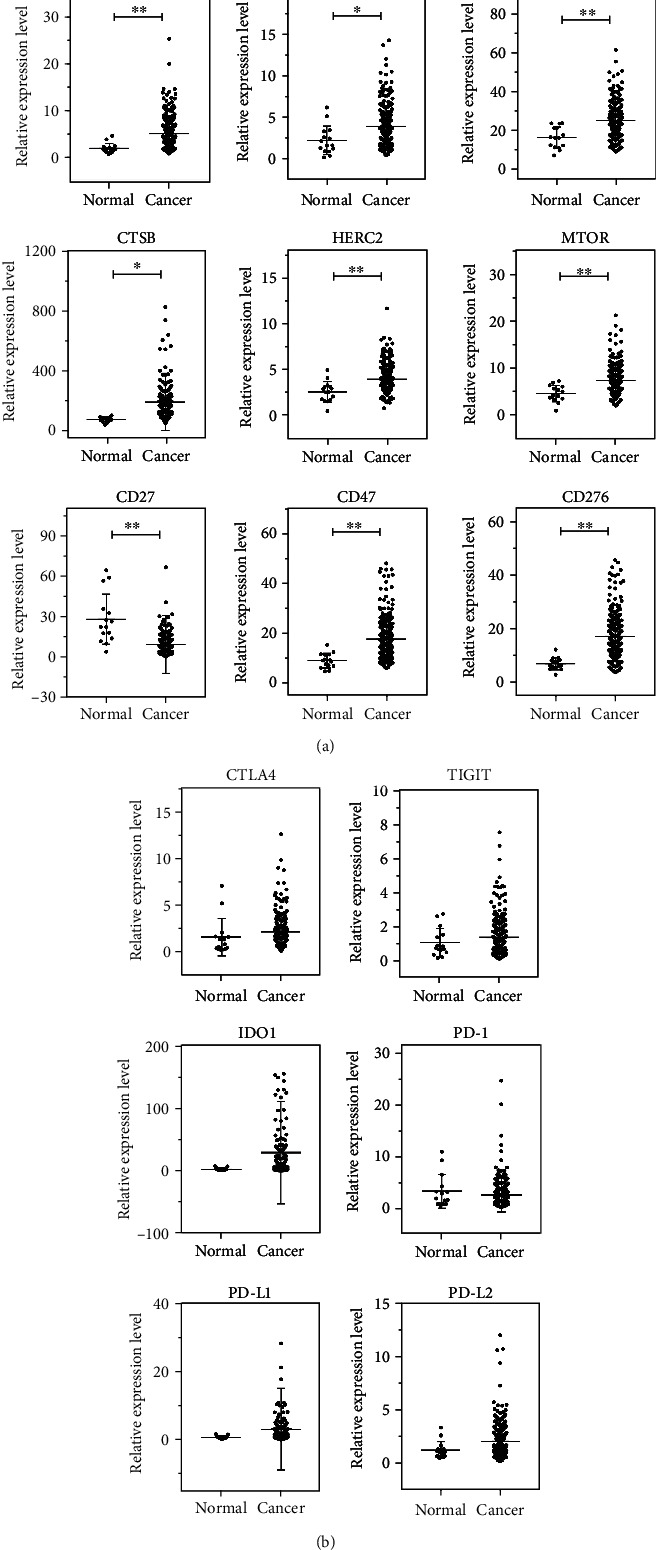
In this study, we found that the proportion of macrophages increased, while plasma cells and monocytes decreased in GC tissues. In these immune fractions, Tregs and naïve B cells were found to be correlated with GC patients' prognosis. Interestingly, the expression of immune regulatory factors was ambiguous with their classical function in GC tissues. For example, TIM-3, FOXP3, and CMTM6 were overexpressed, while CD27 and PD-1 were underexpressed in GC tissues. We also found that IDO1, PD-1, TIGIT, and TIM-3 were highly expressed in high-grade GC tissues, the HERC2 expression level was related to patients' gender, and the TIGIT expression level was sensitive to targeted therapy. Furthermore, our results suggested that the infiltration of Tregs and naive B cells was strongly correlated with the T stage, radiation therapy, targeted molecular therapy, and the expression levels of TIM-3 and FOXP3 in GC.
The expression pattern of tumor-infiltrating immune cells and immune regulatory factors was systematically depicted in the GC tumor microenvironment, indicating that individualized treatment based on the tumor-infiltrating immune cells and immune regulatory factors may be beneficial to GC patients.
浸润肿瘤的免疫细胞与胃癌(GC)的预后密切相关。本文旨在确定 GC 和正常组织中免疫细胞和免疫调节因子的组成变化,描绘它们在 GC 中的预后价值,并揭示它们与 GC 临床参数之间的关系。
我们使用 CIBERSORT 计算 GC 或正常组织中 22 种免疫细胞的比例;采用 t 检验评估免疫细胞和免疫调节因子在正常和 GC 组织中的表达差异。采用单因素分析评估免疫细胞、免疫调节因子与 GC 患者临床特征的关系。
在这项研究中,我们发现 GC 组织中巨噬细胞的比例增加,而浆细胞和单核细胞的比例减少。在这些免疫细胞中,Tregs 和幼稚 B 细胞与 GC 患者的预后相关。有趣的是,免疫调节因子的表达与其在 GC 组织中的经典功能不一致。例如,TIM-3、FOXP3 和 CMTM6 在 GC 组织中过表达,而 CD27 和 PD-1 则在 GC 组织中低表达。我们还发现 IDO1、PD-1、TIGIT 和 TIM-3 在高级别 GC 组织中高表达,HERC2 的表达水平与患者的性别有关,TIGIT 的表达水平对靶向治疗敏感。此外,我们的结果表明 Tregs 和幼稚 B 细胞的浸润与 GC 的 T 分期、放疗、靶向分子治疗以及 TIM-3 和 FOXP3 的表达水平强烈相关。
系统描绘了 GC 肿瘤微环境中浸润肿瘤的免疫细胞和免疫调节因子的表达模式,表明基于浸润免疫细胞和免疫调节因子的个体化治疗可能对 GC 患者有益。