Pharmacy Practice Research Unit, Department of Clinical Pharmacy, College of Pharmacy, Jazan University, Saudi Arabia.
Nalanda College of Pharmacy, Nalgonda, India.
Biomed Res Int. 2021 Jan 26;2021:6645720. doi: 10.1155/2021/6645720. eCollection 2021.
The study evaluated the neuroprotective effect and pharmacokinetic profile of turmeric extract and their metabolites in the blood and brain in an aluminum-induced neurotoxic animal model.
Swiss albino mice received turmeric extract (TE), TE-essential oil combination (TE+EO) at doses of 25 and 50 mg/kg/day orally, vehicle (control), and a positive control group. Neurotoxicity was induced by injecting aluminum chloride (40 mg/kg/day, i.p.), and the effect of the intervention was studied for 45 days. The pharmacokinetic and behavioral biochemical markers of brain function and brain histopathological changes were evaluated.
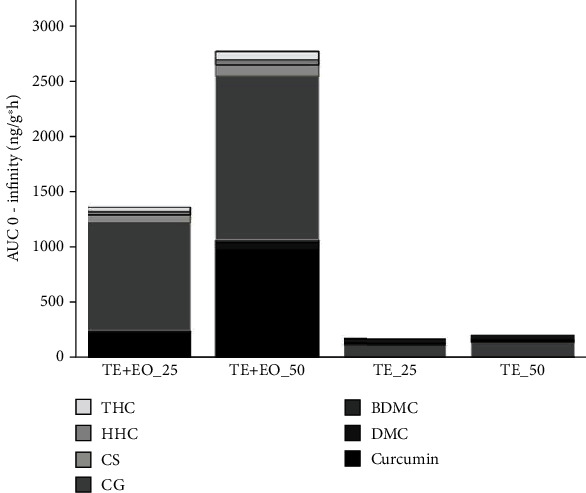
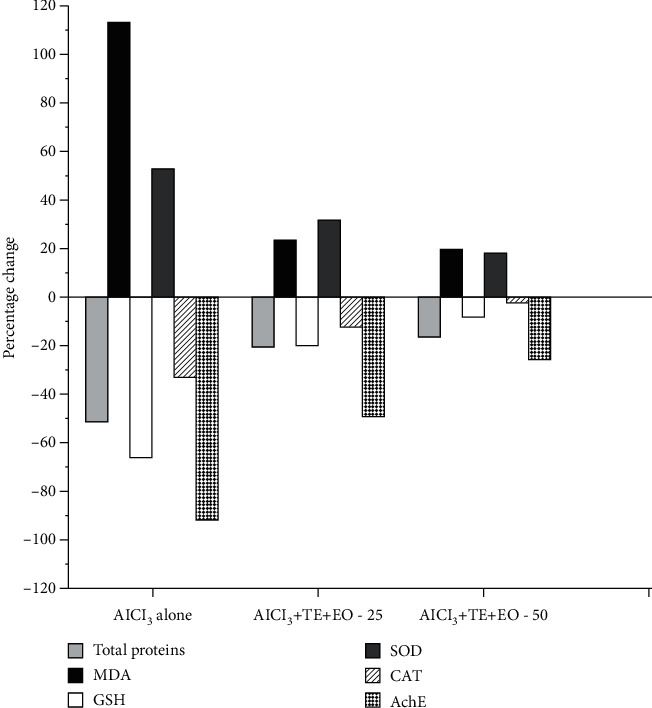
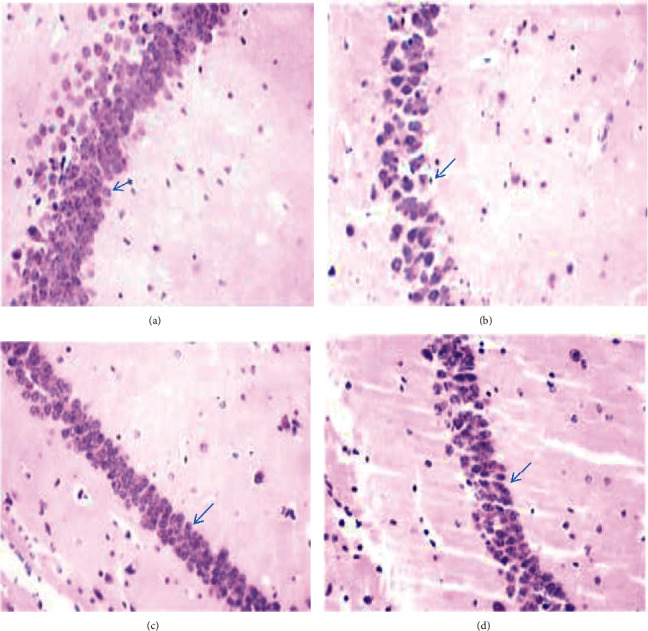
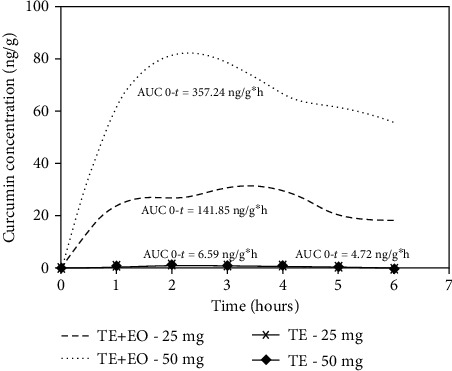
The AUC 0- showed a 30.1 and 54.2 times higher free curcumin concentration in plasma with 25 mg/kg and 50 mg/kg of TE+EO vs. TE, respectively. The concentration of free curcumin in the brain was 11.01 and 13.71-fold higher for 25 mg/kg and 50 mg/kg of TE+EO vs. TE, respectively. Aluminum impairs spatial learning and memory, which was significantly reversed with TE+EO by 28.6% (25 mg/kg) and 39.4% (50 mg/kg). In the elevated plus maze test, 44.8% (25 mg/kg) and 67.1% (50 mg/kg) improvements were observed. A significant reduction in aluminum-induced lipid peroxidation was observed. Also, the levels of glutathione, acetylcholinesterase, and catalase were improved with TE+EO. Damage to the hippocampal pyramidal cells was averted with TE+EO.
The neuroprotective and antioxidant response confirms the benefits of TE+EO against aluminum-induced neurotoxicity. The presence of free curcumin and its metabolites in the brain and plasma establishes its improved bioavailability and tissue distribution. Therefore, the benefits of TE+EO could be harnessed in neurodegenerative diseases.
本研究评估了姜黄提取物及其在血液和大脑中的代谢物在铝诱导的神经毒性动物模型中的神经保护作用和药代动力学特征。
将瑞士白化小鼠口服给予姜黄提取物(TE)、TE-精油混合物(TE+EO),剂量为 25 和 50mg/kg/天,给予载体(对照)和阳性对照组。用氯化铝(40mg/kg/天,腹腔注射)诱导神经毒性,并研究干预作用 45 天。评估了药代动力学和行为生化标志物以及脑功能和脑组织病理学变化。
AUC0-显示,与 TE 相比,25mg/kg 和 50mg/kg 的 TE+EO 使血浆中的游离姜黄素浓度分别提高了 30.1 和 54.2 倍。与 TE 相比,25mg/kg 和 50mg/kg 的 TE+EO 使大脑中的游离姜黄素浓度分别提高了 11.01 和 13.71 倍。铝损害空间学习和记忆,TE+EO 可将其分别显著逆转 28.6%(25mg/kg)和 39.4%(50mg/kg)。在高架十字迷宫测试中,观察到 44.8%(25mg/kg)和 67.1%(50mg/kg)的改善。铝诱导的脂质过氧化显著减少。此外,TE+EO 还提高了谷胱甘肽、乙酰胆碱酯酶和过氧化氢酶的水平。TE+EO 避免了海马锥体细胞的损伤。
神经保护和抗氧化反应证实了 TE+EO 对铝诱导的神经毒性的益处。脑和血浆中游离姜黄素及其代谢物的存在表明其生物利用度和组织分布得到了改善。因此,TE+EO 的益处可以在神经退行性疾病中得到利用。